Pleromelloida conserta
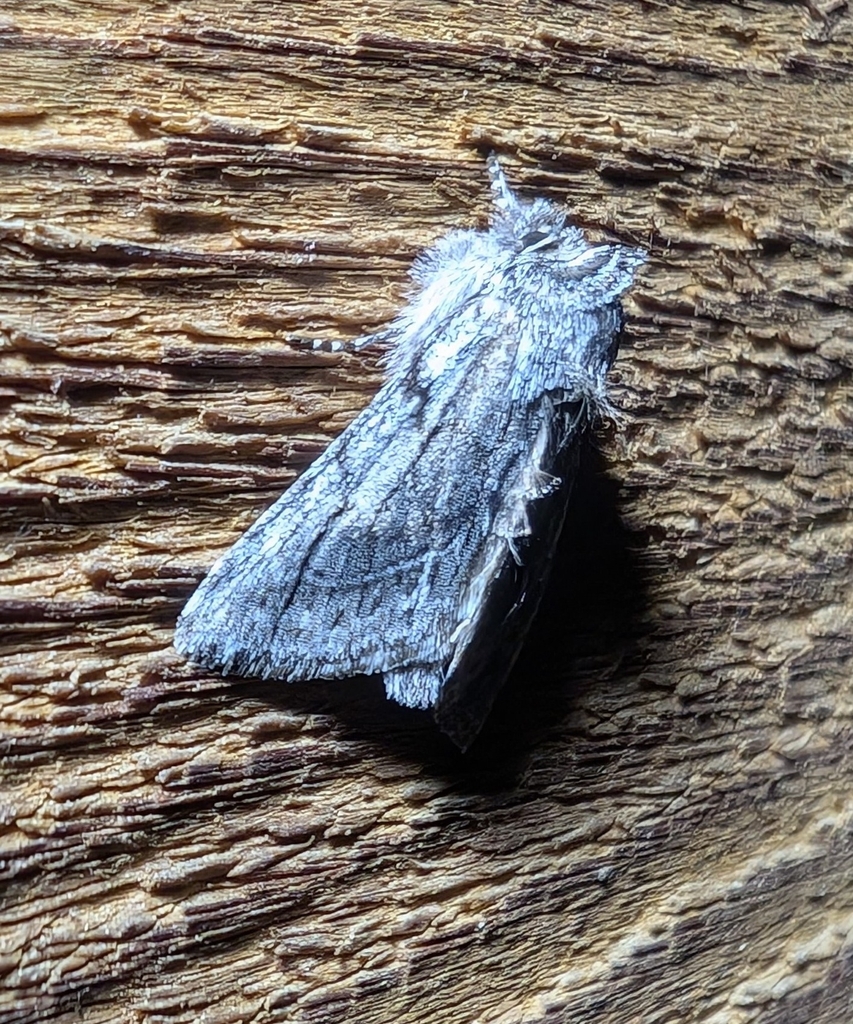
(c) Simone Littledale, some rights reserved (CC BY) · licence
Family: Noctuidae · Class: Insecta · Order: Lepidoptera
Pleromelloida conserta is a California animal in the Noctuidae family.
Pleromelloida conserta is a moth in the family Noctuidae, subfamily Oncocnemidinae. This species belongs to a small genus within the noctuid moths, with only four known species in the genus Pleromelloida according to U.S. Fish and Wildlife Service taxonomic records. The physical characteristics of P. conserta have not been extensively documented in the scientific literature. As a member of the Noctuidae, it likely exhibits the typical moth body plan with a robust thorax, thread-like or feathery antennae, and wings held horizontally when at rest. Specific details regarding wing coloration, wingspan measurements, and distinguishing morphological features require further taxonomic study. Based on available records, P. conserta occurs in western North America. The species has been documented from California, with records from Mono County including the June Lake area, and from Oregon in Wasco County along South Fork Mill Creek (Lepidopterists' Society 2004, 2014). The Oregon populations were collected at elevations around 7.5 miles southwest of The Dalles, suggesting the species may occupy montane or submontane habitats. Habitat preferences for P. conserta remain poorly characterized. The Mono County record from June Lake suggests an association with high-elevation lake systems in the Sierra Nevada, while the Oregon locality near Mill Creek indicates potential riparian or canyon habitats. The species may be associated with coniferous forest ecosystems or mixed forest-grassland ecotones typical of these elevations and geographic regions. Ecological information for P. conserta is extremely limited. Collection records indicate adult flight activity occurs from April through June, based on Oregon specimens collected between April 17 and June 7 (Lepidopterists' Society 2014). The California record from June Lake was collected on June 7, consistent with late spring to early summer adult emergence. Host plant relationships have not been documented, though many Oncocnemidinae species are associated with herbaceous plants or shrubs. Larval biology, overwintering strategy, and specific feeding ecology remain unknown. The conservation status of P. conserta has not been formally assessed. The species does not appear on federal or state endangered species lists, and its global conservation rank has not been established by NatureServe or other conservation organizations. The limited number of documented records suggests either a naturally rare species with restricted distribution, inadequate survey effort, or taxonomic uncertainty. Collection records spanning from 2003 to 2012 indicate the species persists in known localities, though population trends and abundance cannot be determined from available data. Primary information gaps include detailed morphological descriptions, comprehensive distribution mapping, host plant identification, and basic life history parameters. The species exemplifies the many lesser-known lepidopteran taxa that require focused taxonomic and ecological research to understand their conservation needs and ecological roles in western North American ecosystems.
Classification
Class: Insecta · Order: Lepidoptera · Family: Noctuidae
Frequently asked questions
How is Pleromelloida conserta classified?
Pleromelloida conserta belongs to class Insecta, order Lepidoptera, family Noctuidae.
What family does Pleromelloida conserta belong to?
Pleromelloida conserta is in the Noctuidae family.
What is Pleromelloida conserta?
Pleromelloida conserta is a moth in the family Noctuidae, subfamily Oncocnemidinae.
Is Pleromelloida conserta found in California?
Yes. Pleromelloida conserta is recorded in California in The California Species Project's catalogue.
Related species
Other California species in the same genus, family, or bioregion.
Data from The California Species Project — 14,000+ California species with verified data from CNPS, CDFW, USFWS, and more.