Plethodon stormi
Siskiyou Mountains salamander
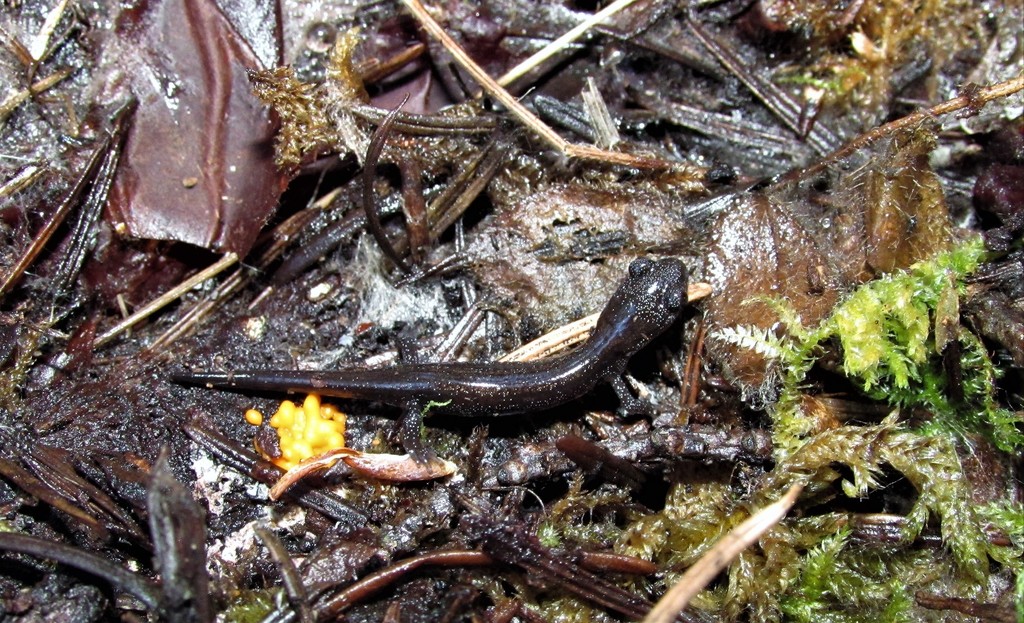
(c) Matt D'Agrosa, some rights reserved (CC BY) · licence
Family: Plethodontidae · Class: Amphibia · Order: Caudata
Conservation status: ST · G3? S3
Plethodon stormi (Siskiyou Mountains salamander) is a California animal in the Plethodontidae family.
The Siskiyou Mountains salamander (Plethodon stormi) is a terrestrial lungless salamander endemic to the Klamath-Siskiyou region of northern California and southern Oregon. Adults typically measure 80-120 mm (3.1-4.7 inches) in total length, with a robust build characteristic of the Plethodon genus. The dorsal coloration ranges from dark brown to black with scattered metallic flecks or light speckling. The ventral surface is typically lighter, ranging from gray to pale yellow. The species exhibits the webbed hind feet typical of rock-dwelling plethodontid salamanders, with moderately developed digital webbing that aids in climbing on rocky surfaces. Historically, Plethodon stormi occupied suitable habitat throughout the Siskiyou Mountains of Del Norte and Siskiyou counties in California, extending into Jackson and Josephine counties in Oregon. The California population is concentrated in the higher elevations of the Siskiyou Mountains, particularly in areas with appropriate talus and rock outcrop habitat. Current distribution appears fragmented compared to historical range, with populations documented at elevations typically between 300-1,800 meters (980-5,900 feet). The species inhabits rocky talus slopes, cliff faces, and areas with extensive rock outcroppings in mixed conifer forests. Preferred habitat includes Douglas fir, tanoak, and madrone forests with significant rock cover and moderate canopy closure. Salamanders shelter in rock crevices, beneath loose rocks, and in spaces between talus fragments during dry periods. Adequate moisture retention within the rock matrix is critical, as the species requires specific humidity levels to prevent desiccation. The microhabitat typically maintains cool temperatures year-round due to thermal buffering provided by rock masses. Siskiyou Mountains salamanders are primarily nocturnal and become active during periods of high humidity, particularly after rainfall. Adults emerge to forage on small invertebrates including springtails, beetles, mites, and other arthropods found on rock surfaces and within crevices. Reproduction follows the typical plethodontid pattern, with females depositing clutches of 6-12 eggs in protected rock crevices during late spring or early summer. Development is entirely terrestrial, with young undergoing direct development without an aquatic larval stage. Sexual maturity is reached at approximately 4-5 years of age. The California Department of Fish and Wildlife listed Plethodon stormi as threatened under the California Endangered Species Act. According to CDFW records, the species was considered as a candidate for delisting in 2005, with department reports presented through 2007, but no action was taken by the Fish and Game Commission. Primary threats include habitat fragmentation, timber harvest practices that alter forest structure and microclimate, and potential impacts from climate change affecting moisture regimes. Fire suppression activities and road construction through suitable habitat pose additional risks. The species' limited dispersal ability and specific habitat requirements make populations particularly vulnerable to local disturbances. Conservation efforts focus on protecting existing habitat and maintaining forest management practices that preserve the cool, moist microclimate conditions essential for population persistence.
Classification
Class: Amphibia · Order: Caudata · Family: Plethodontidae
Conservation status
ST · G3? S3
Frequently asked questions
How is Plethodon stormi classified?
Plethodon stormi belongs to class Amphibia, order Caudata, family Plethodontidae.
What family does Plethodon stormi belong to?
Plethodon stormi is in the Plethodontidae family.
Is Plethodon stormi protected or of conservation concern?
Plethodon stormi carries the following status: ST · G3? S3.
What is Plethodon stormi?
The Siskiyou Mountains salamander (Plethodon stormi) is a terrestrial lungless salamander endemic to the Klamath-Siskiyou region of northern California and southern Oregon.
Is Plethodon stormi found in California?
Yes. Plethodon stormi is recorded in California in The California Species Project's catalogue.
Related species
Other California species in the same genus, family, or bioregion.
Data from The California Species Project — 14,000+ California species with verified data from CNPS, CDFW, USFWS, and more.