Pleurobranchaea californica
California Side-gill Slug
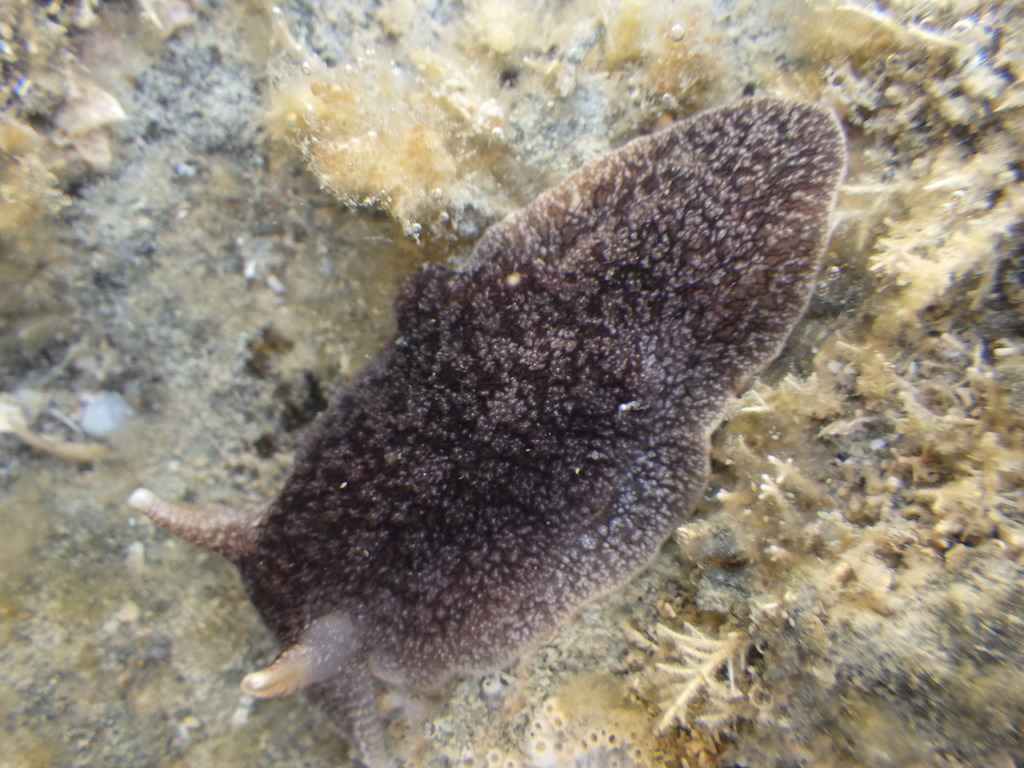
(c) Saryu Mae 前 朝琉, some rights reserved (CC BY) · licence
Family: Pleurobranchaeidae · Class: Gastropoda · Order: Pleurobranchida
Pleurobranchaea californica (California Side-gill Slug) is a California animal in the Pleurobranchaeidae family.
Pleurobranchaea californica is a large marine gastropod mollusk belonging to the family Pleurobranchaeidae. This deep-water sea slug ranks among the largest opisthobranchs in the northeastern Pacific Ocean. The species exhibits a distinctive body plan with a prominent side gill (pleurobranch) that gives the group its common name. The body is typically soft and gelatinous, with a broad foot used for locomotion along the seafloor. The mantle extends over much of the body, and the species lacks an external shell, characteristic of most opisthobranchs. Pleurobranchaea californica occurs along the west coast of the United States, with its range extending from California waters into deeper offshore areas. The species is found in the northeastern Pacific Ocean, inhabiting the continental shelf and slope regions off the California coast. Its distribution appears to be closely tied to specific depth and temperature requirements that limit its occurrence to deeper marine environments. This sea slug inhabits deep-water environments, typically found at depths between 9 to 365 meters (30 to 1,200 feet) (iNaturalist). The species occupies benthic habitats on the continental shelf and upper slope, where it moves along soft sediment substrates. These depths place P. californica below the photic zone in most areas, in environments characterized by relatively stable temperatures and limited light penetration. The species appears adapted to the specific conditions found in these deeper marine environments, including pressure, temperature, and food availability patterns. Pleurobranchaea californica is a predatory species with a relatively simple neural organization that nonetheless demonstrates sophisticated feeding behaviors (University of Illinois). Research has shown that this sea slug exhibits learning capabilities, particularly in distinguishing between suitable and unsuitable prey items through trial-and-error feeding. The species is carnivorous, preying on various marine organisms encountered in its deep-water habitat. Its feeding strategy involves active hunting and the ability to modify prey selection based on previous feeding experiences. Like other opisthobranchs, P. californica is hermaphroditic, possessing both male and female reproductive organs, though specific details about its reproductive biology and life cycle remain poorly documented in the scientific literature. Currently, Pleurobranchaea californica has no federal or state conservation listing status. The species' deep-water habitat may provide some protection from direct human impacts, though deep-sea environments face increasing pressures from activities such as bottom trawling, deep-water mining, and climate change effects including ocean acidification and warming. The limited scientific documentation of this species' population status, distribution patterns, and ecological requirements suggests a need for additional research to better understand its conservation needs. As with many deep-water marine invertebrates, baseline population data and long-term monitoring information are lacking, making it difficult to assess population trends or conservation status.
Classification
Class: Gastropoda · Order: Pleurobranchida · Family: Pleurobranchaeidae
Frequently asked questions
How is Pleurobranchaea californica classified?
Pleurobranchaea californica belongs to class Gastropoda, order Pleurobranchida, family Pleurobranchaeidae.
What family does Pleurobranchaea californica belong to?
Pleurobranchaea californica is in the Pleurobranchaeidae family.
What is Pleurobranchaea californica?
Pleurobranchaea californica is a large marine gastropod mollusk belonging to the family Pleurobranchaeidae.
Is Pleurobranchaea californica found in California?
Yes. Pleurobranchaea californica is recorded in California in The California Species Project's catalogue.
More California species
This species has no close relatives in our California data — here are other species to explore.
Data from The California Species Project — 14,000+ California species with verified data from CNPS, CDFW, USFWS, and more.