Plumatyla humerosa
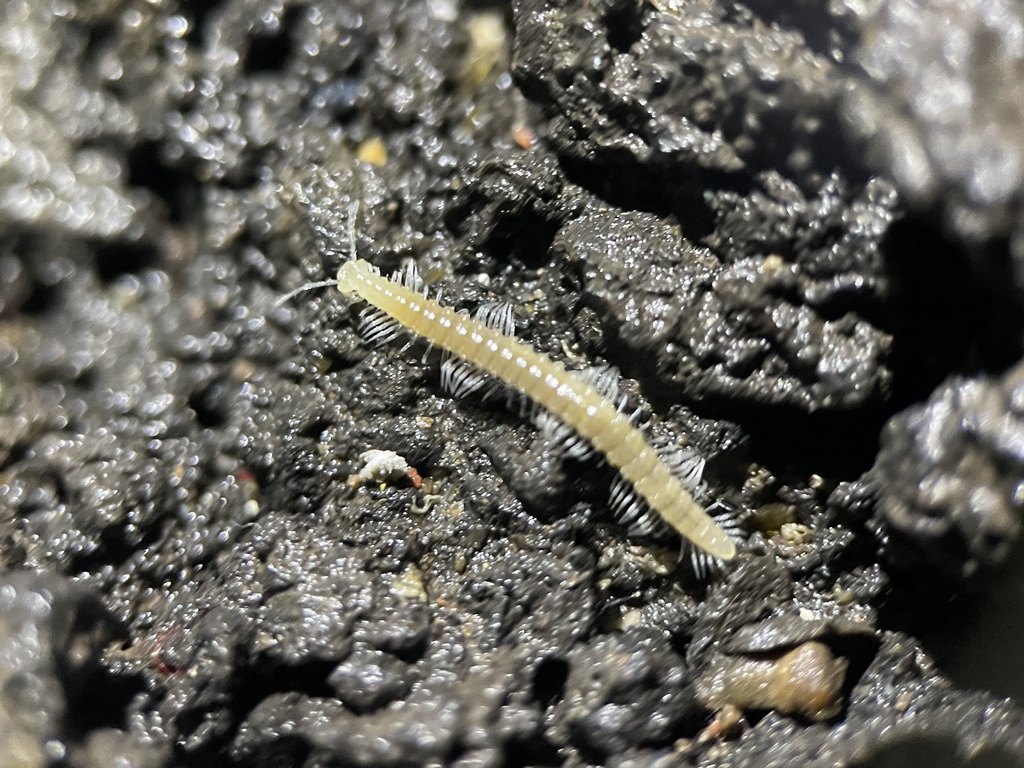
no rights reserved · CC0
Family: Conotylidae · Class: Diplopoda · Order: Chordeumatida
Plumatyla humerosa is a California animal in the Conotylidae family.
Plumatyla humerosa is a millipede species belonging to the family Conotylidae within the order Chordeumatida. This arthropod represents one of California's lesser-known invertebrate species, with extremely limited scientific documentation available in the literature. As a member of the class Diplopoda, P. humerosa exhibits the characteristic millipede body plan with numerous body segments, each typically bearing two pairs of legs. The species belongs to the infraclass Diplopoda and the superfamily Heterochordeumatoidea, placing it within a group of millipedes that are generally small to medium-sized detritivores. Specific morphological characteristics, including body length, coloration patterns, and distinguishing features, have not been well documented in accessible scientific literature. The distribution and range of P. humerosa in California remains poorly documented. The species appears in the U.S. Fish and Wildlife Service taxonomic database, indicating some level of federal recognition, though it lacks formal conservation status designations. Without detailed occurrence records or range maps, the specific counties, elevation ranges, or geographic regions where this species occurs cannot be definitively stated. Habitat requirements for P. humerosa have not been thoroughly studied or published. As a member of the Conotylidae family, the species likely inhabits soil and leaf litter environments typical of other chordeumatid millipedes. These millipedes generally prefer moist microhabitats with abundant organic matter, such as forest floors, decaying logs, or areas with deep leaf litter accumulation. However, specific vegetation associations, substrate preferences, or elevation tolerances for this species remain undocumented. Like other millipedes, P. humerosa is presumably a detritivore, feeding on decomposing organic matter including fallen leaves, decaying wood, and other plant materials. The species likely plays an ecological role in nutrient cycling and soil formation processes. Reproductive biology, seasonal activity patterns, life cycle duration, and population dynamics have not been studied or reported in available literature. The species may exhibit the typical millipede reproductive pattern of laying eggs in soil chambers, but specific details remain unknown. Plumatyla humerosa currently lacks federal or state conservation status designations. The species does not appear on endangered species lists, critical habitat designations, or species of special concern inventories. However, this absence of conservation status may reflect the limited scientific attention this group has received rather than actual population security. Many invertebrate species, particularly millipedes, remain understudied, making it difficult to assess population trends, threats, or conservation needs. The paucity of available information about P. humerosa reflects the broader challenge of documenting California's invertebrate fauna. Many arthropod species, especially soil-dwelling forms like millipedes, require specialized taxonomic expertise and intensive field surveys to study effectively. As California continues to face habitat loss and environmental changes, the conservation status of poorly known species like P. humerosa remains uncertain. Scientific documentation for this species remains extremely limited. If you have additional verified information about this species' biology, distribution, or ecology, please contact us to help improve this species account.
Classification
Class: Diplopoda · Order: Chordeumatida · Family: Conotylidae
Frequently asked questions
How is Plumatyla humerosa classified?
Plumatyla humerosa belongs to class Diplopoda, order Chordeumatida, family Conotylidae.
What family does Plumatyla humerosa belong to?
Plumatyla humerosa is in the Conotylidae family.
What is Plumatyla humerosa?
Plumatyla humerosa is a millipede species belonging to the family Conotylidae within the order Chordeumatida.
Is Plumatyla humerosa found in California?
Yes. Plumatyla humerosa is recorded in California in The California Species Project's catalogue.
More California species
This species has no close relatives in our California data — here are other species to explore.
Data from The California Species Project — 14,000+ California species with verified data from CNPS, CDFW, USFWS, and more.