Plutella xylostella
Diamondback Moth
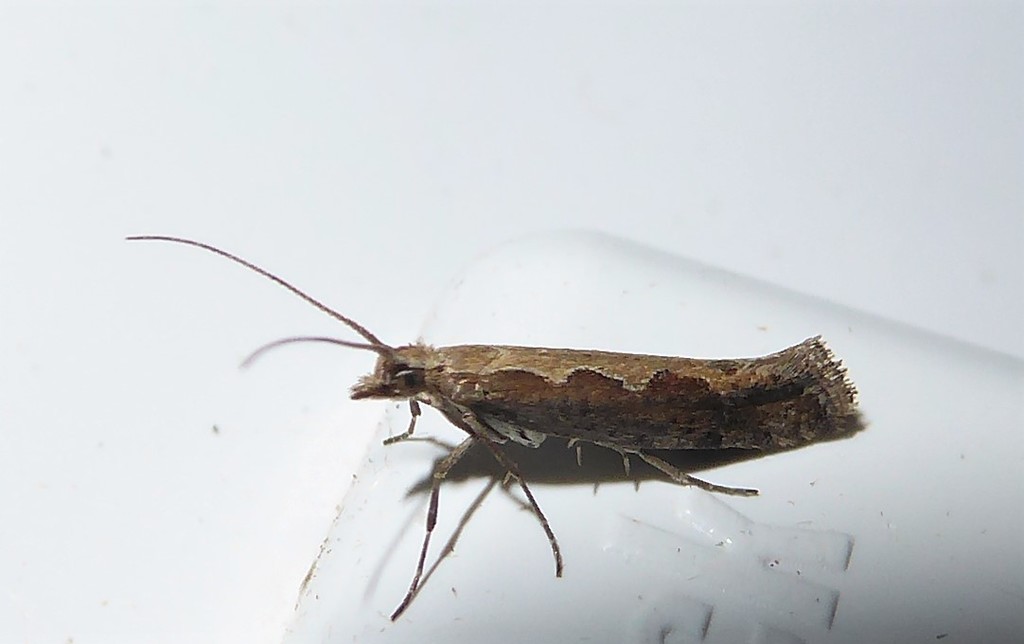
(c) Aalbert Rebergen, some rights reserved (CC BY) · licence
Family: Plutellidae · Class: Insecta · Order: Lepidoptera
Plutella xylostella (Diamondback Moth) is a California animal in the Plutellidae family.
The diamondback moth is a small, cosmopolitan pest species that has become one of the most widely distributed lepidopterans globally. Adults measure 8 to 12 mm (0.3 to 0.5 inches) in wingspan, with forewings that are grayish-brown and display distinctive pale yellow or cream-colored diamond-shaped markings along the posterior margin when wings are folded at rest. The hindwings are pale gray to whitish with long fringes. Males are typically smaller than females and can be distinguished by their more pointed forewings and distinctive genitalia. Larvae are pale green caterpillars measuring 10 to 12 mm (0.4 to 0.5 inches) when fully grown, with a distinctive forked tail and sparse, short setae. The diamondback moth occurs on every continent except Antarctica and is found throughout California from sea level to elevations exceeding 1,500 meters (4,900 feet). The species is believed to have originated in the Mediterranean region but has achieved nearly global distribution through human-mediated dispersal. In California, populations are present year-round in coastal and inland valleys, with seasonal migrations occurring between agricultural regions. The species demonstrates extensive dispersal ability, with adults capable of long-distance flight and passive transport on air currents. This species inhabits agricultural areas, home gardens, and disturbed sites where cruciferous plants occur. Primary habitat includes cultivated fields of cabbage, broccoli, cauliflower, and other Brassicaceae crops, as well as weedy areas containing wild mustards and other brassicaceous plants. The moth thrives in temperate to subtropical climates and can complete development across a wide range of environmental conditions, contributing to its global success as an invasive species. Diamondback moths are multivoltine, producing multiple generations annually in favorable climates. In California, the species can complete 12 to 15 generations per year, with development time from egg to adult ranging from 14 to 51 days depending on temperature. Females deposit pale yellow, oval eggs singly or in small groups on host plant leaves, with each female capable of laying 150 to 300 eggs. Larvae are specialist feeders on Brassicaceae, creating characteristic irregular holes in leaves and often feeding on the undersides of foliage. Adults are primarily nocturnal and are attracted to artificial lights. The diamondback moth is not listed under federal or state endangered species legislation, as it is considered an agricultural pest rather than a conservation concern. Population levels fluctuate seasonally and in response to host plant availability and natural enemies. The species has developed resistance to numerous classes of insecticides, making it one of the most difficult agricultural pests to manage globally. Biological control programs utilizing parasitoid wasps and other natural enemies have been implemented worldwide, with varying degrees of success. Climate change may expand the species' range and increase generation frequency in temperate regions.
Classification
Class: Insecta · Order: Lepidoptera · Family: Plutellidae
Frequently asked questions
How is Plutella xylostella classified?
Plutella xylostella belongs to class Insecta, order Lepidoptera, family Plutellidae.
What family does Plutella xylostella belong to?
Plutella xylostella is in the Plutellidae family.
What is Plutella xylostella?
The diamondback moth is a small, cosmopolitan pest species that has become one of the most widely distributed lepidopterans globally.
Is Plutella xylostella found in California?
Yes. Plutella xylostella is recorded in California in The California Species Project's catalogue.
Related species
Other California species in the same genus, family, or bioregion.
Data from The California Species Project — 14,000+ California species with verified data from CNPS, CDFW, USFWS, and more.