Podabrus pruinosus
Downy Leather-winged Beetle
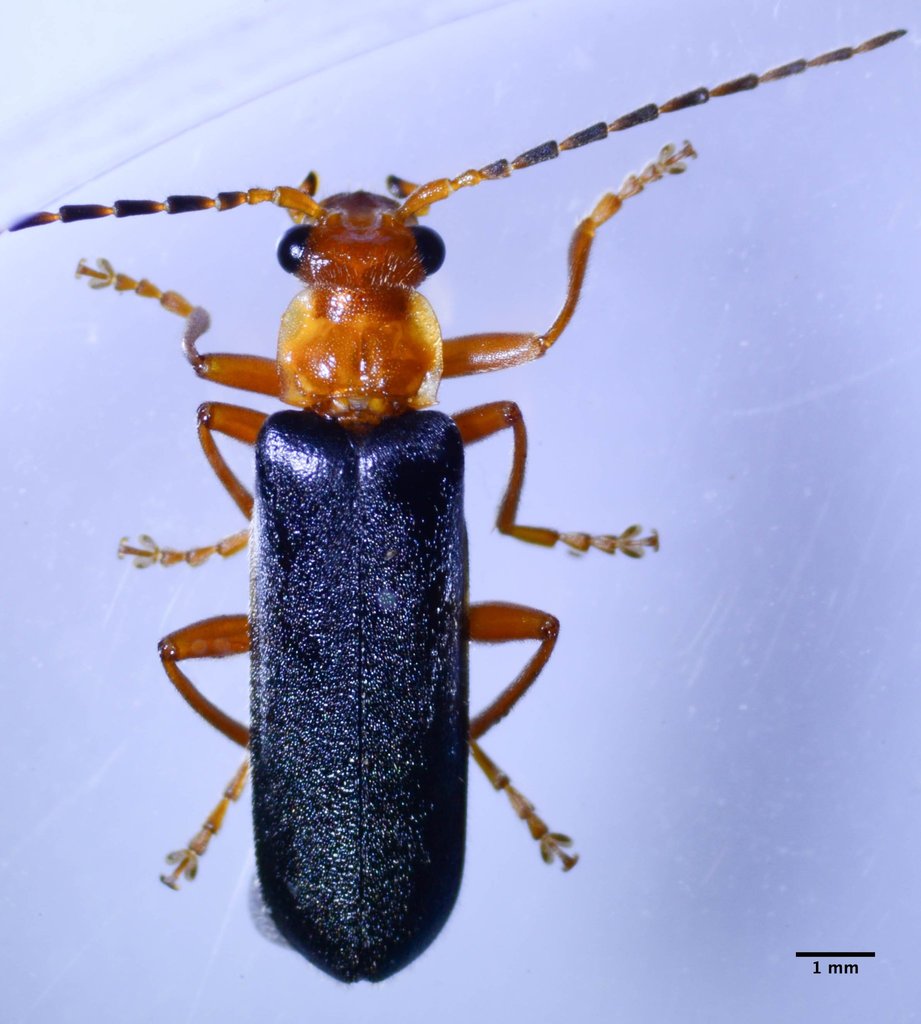
(c) Don Loarie, some rights reserved (CC BY) · licence
Family: Cantharidae · Class: Insecta · Order: Coleoptera
Podabrus pruinosus (Downy Leather-winged Beetle) is a California animal in the Cantharidae family.
The Downy Leather-winged Beetle (Podabrus pruinosus) is a member of the family Cantharidae, commonly known as soldier beetles or leather-winged beetles. This species belongs to a group characterized by soft, flexible elytra (wing covers) that give the family its common name. Adult Podabrus beetles typically measure 8 to 15 millimeters (0.3 to 0.6 inches) in length and display the characteristic elongated, somewhat flattened body form typical of cantharids. Podabrus pruinosus occurs across a broad range in North America, with documented populations extending from eastern Canada south through the eastern United States. The species has been recorded in multiple states where it appears on Species of Greatest Conservation Need lists, including New York, Louisiana, and Texas. In Texas, the subspecies P. p. gradatus occurs in the southern counties of Hidalgo and Cameron, where it was identified among 84 beetle species considered conservation priorities (Riley & King 2008-2009). The species' range extends into California, though specific distribution records within the state require further documentation. Soldier beetles in the genus Podabrus typically inhabit woodland and forest edge environments, where adults are commonly found on flowers and vegetation. These beetles are associated with both deciduous and mixed forest habitats, often occurring in areas with abundant flowering plants that provide nectar sources. The species may also utilize deadwood habitats, as many cantharid beetles have larvae that develop in decaying organic matter or soil rich in decomposing plant material. Adult Downy Leather-winged Beetles are primarily active during warmer months, typically from late spring through early fall. Like other soldier beetles, they are predatory as adults, feeding on aphids, caterpillars, and other soft-bodied insects found on vegetation. Adults also visit flowers to feed on pollen and nectar, making them beneficial both as predators of pest insects and as pollinators. Larvae are typically soil-dwelling predators that feed on various invertebrates in the leaf litter and upper soil layers. The species likely has one generation per year, with adults emerging in summer to mate and lay eggs. Currently, Podabrus pruinosus lacks federal conservation status, but its inclusion on multiple state Species of Greatest Conservation Need lists suggests populations may be experiencing decline or face habitat pressures. The species' conservation status varies by region, with Texas considering the subspecies P. p. gradatus a conservation priority in the Rio Grande Valley. Primary threats likely include habitat loss from forest fragmentation and conversion, as well as pesticide use that affects both the beetles and their prey species. Climate change may also impact the species through altered precipitation patterns and temperature regimes affecting forest ecosystems. Specific population trends and conservation needs require additional research and monitoring to develop appropriate management strategies.
Classification
Class: Insecta · Order: Coleoptera · Family: Cantharidae
Frequently asked questions
How is Podabrus pruinosus classified?
Podabrus pruinosus belongs to class Insecta, order Coleoptera, family Cantharidae.
What family does Podabrus pruinosus belong to?
Podabrus pruinosus is in the Cantharidae family.
What is Podabrus pruinosus?
The Downy Leather-winged Beetle (Podabrus pruinosus) is a member of the family Cantharidae, commonly known as soldier beetles or leather-winged beetles.
Is Podabrus pruinosus found in California?
Yes. Podabrus pruinosus is recorded in California in The California Species Project's catalogue.
Related species
Other California species in the same genus, family, or bioregion.
Data from The California Species Project — 14,000+ California species with verified data from CNPS, CDFW, USFWS, and more.