Podilymbus podiceps
Pied-billed Grebe
no rights reserved · CC0
Family: Podicipedidae · Class: Aves · Order: Podicipediformes
Podilymbus podiceps (Pied-billed Grebe) is a California animal in the Podicipedidae family.
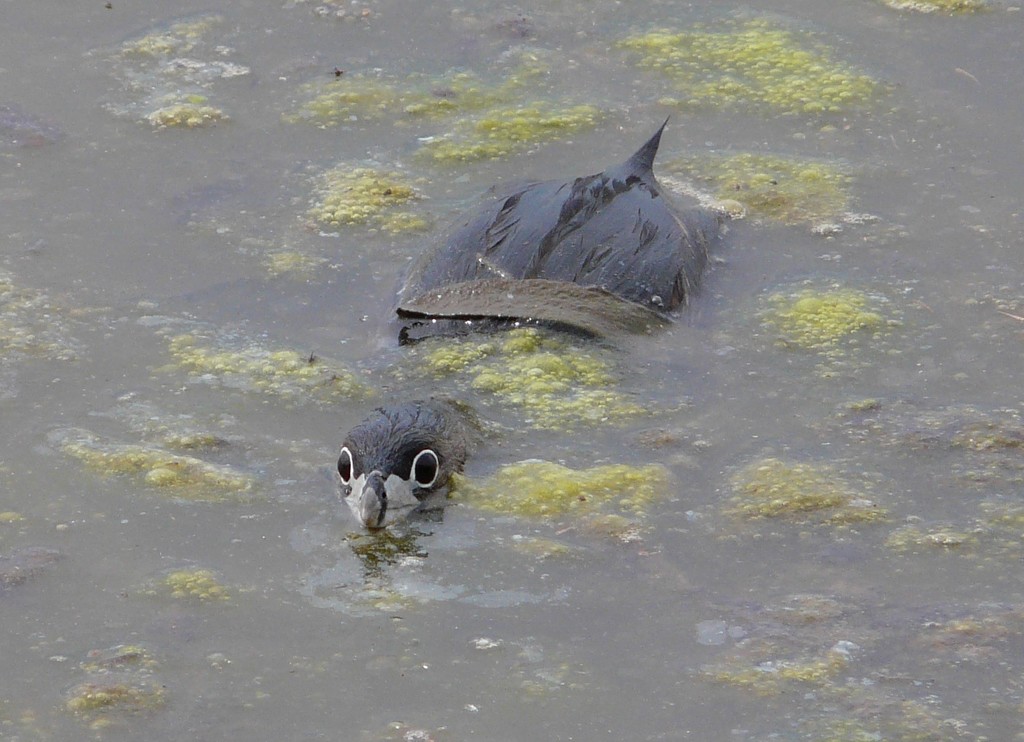
The Pied-billed Grebe is a small, stocky diving waterbird measuring 31 to 38 cm (12 to 15 inches) in length with a wingspan of 46 to 62 cm (18 to 24 inches). Adults weigh between 253 to 568 grams (9 to 20 ounces). During breeding season, adults display dark brown to blackish upperparts with lighter brown underparts and a distinctive black band around the pale, thick bill, from which the species derives its name. The throat appears black in breeding plumage. Non-breeding adults lose the bill band and throat patch, becoming more uniformly grayish-brown. Juveniles show striped patterns on the head and neck. Unlike other grebes, the Pied-billed Grebe has a more chicken-like bill rather than a sharp, pointed one. Pied-billed Grebes have one of the most extensive ranges of any grebe species in the Americas. In California, they occur throughout the state as year-round residents in suitable habitat, with populations supplemented by migrants from northern regions during winter months. The species breeds from central Alaska and southern Canada south through most of the United States to central Argentina. California populations are present in all bioregions where appropriate aquatic habitat exists, from the Central Valley to coastal areas and mountain lakes up to approximately 2,400 meters (8,000 feet) elevation. The species inhabits a variety of freshwater wetlands including ponds, lakes, marshes, slow-moving rivers, and irrigation canals. They prefer waters with emergent vegetation such as cattails, tules, and sedges that provide nesting cover and foraging areas. Water depth typically ranges from 0.5 to 3 meters (2 to 10 feet), though they can utilize deeper waters. During winter, some individuals move to brackish coastal lagoons and estuaries, though freshwater habitats remain preferred. Pied-billed Grebes are primarily piscivorous, feeding on small fish, aquatic invertebrates, crustaceans, and occasionally amphibians and aquatic plants. They are accomplished divers, using their lobed toes for underwater propulsion while hunting prey. The species exhibits strong site fidelity during breeding season, with pairs constructing floating nests anchored to emergent vegetation. Breeding occurs from March through August in California, with peak activity from April to June. Females lay 2 to 10 eggs, typically 4 to 7, with an incubation period of 23 to 27 days. Young are precocial and can swim shortly after hatching, often riding on parents' backs for the first several weeks. Pied-billed Grebes are not federally or state listed in California and maintain stable populations across most of their range. The species is classified as Least Concern by the International Union for Conservation of Nature. However, local populations face threats from habitat loss due to wetland drainage, water diversions, and urban development. Water pollution, particularly pesticide runoff, can impact prey availability and reproductive success. Climate change may affect breeding timing and habitat availability, particularly in drought-prone regions of California. Conservation efforts focus on wetland habitat protection and restoration through programs such as the North American Waterfowl Management Plan and California's wetland conservation initiatives.
Classification
Class: Aves · Order: Podicipediformes · Family: Podicipedidae
Frequently asked questions
How is Podilymbus podiceps classified?
Podilymbus podiceps belongs to class Aves, order Podicipediformes, family Podicipedidae.
What family does Podilymbus podiceps belong to?
Podilymbus podiceps is in the Podicipedidae family.
What is Podilymbus podiceps?
The Pied-billed Grebe is a small, stocky diving waterbird measuring 31 to 38 cm (12 to 15 inches) in length with a wingspan of 46 to 62 cm (18 to 24 inches).
Is Podilymbus podiceps found in California?
Yes. Podilymbus podiceps is recorded in California in The California Species Project's catalogue.
Related species
Other California species in the same genus, family, or bioregion.
Data from The California Species Project — 14,000+ California species with verified data from CNPS, CDFW, USFWS, and more.