Poecile rufescens rufescens
Chestnut-backed Chickadee (subspecies)
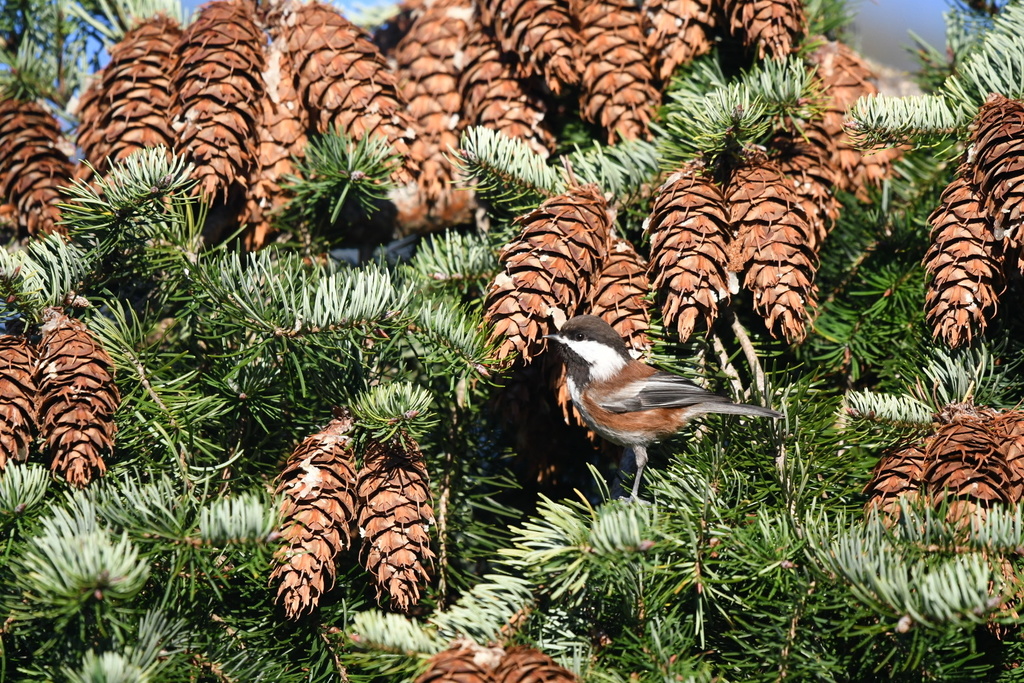
(c) John Leszczynski, some rights reserved (CC BY) · licence
Family: Paridae · Class: Aves · Order: Passeriformes
Poecile rufescens rufescens (Chestnut-backed Chickadee (subspecies)) is a California animal in the Paridae family.
The Chestnut-backed Chickadee (Poecile rufescens rufescens) is a small songbird measuring 11-12 cm (4.3-4.7 inches) in length with a wingspan of 19-20 cm (7.5-7.9 inches). The subspecies rufescens is distinguished by its distinctive plumage pattern: a sooty black cap and bib contrast sharply with white cheeks, while the back, sides, and flanks display rich chestnut-brown coloration. The wings and tail are grayish-black, and the underparts are white to pale gray. Males and females appear similar, though males may show slightly more vibrant chestnut coloring during breeding season. Historically, this subspecies occupied humid coastal forests from southeastern Alaska through northern California. The nominate subspecies P. r. rufescens occurs along the immediate Pacific coast, while P. r. barlowi inhabits the central California coast and P. r. neglectus ranges through interior mountains. During the past five decades, the species has expanded its geographic range by colonizing forest habitats in the central Sierra Nevada and suburban areas in eastern San Francisco Bay, California (Dahlsten et al. 2024). The exact reasons for this geographic expansion remain unknown despite proposed explanations. Chestnut-backed Chickadees inhabit coniferous and mixed forests, primarily in humid coastal regions. They occur less frequently in pine forests, oak woodlands, pine-oak associations, and thickets (NatureServe 2025). The species shows strong preference for Douglas fir (Pseudotsuga menziesii) forests and other conifer-dominated habitats in the humid Pacific Northwest, though they also utilize broad-leaved trees. Elevation ranges vary by location, but the species generally occurs from sea level to mid-elevation montane forests. These chickadees exhibit specialized foraging behavior, focusing primarily on insects and arthropods that inhabit Douglas fir and other conifer species (Dahlsten et al. 2024). They also make considerable use of arthropod prey from deciduous trees. Like other chickadees, they are cavity nesters, utilizing natural tree holes and readily accepting nest boxes (Brennan et al. 1999). During winter, they form mixed-species foraging flocks with other chickadee species and small songbirds. Breeding occurs from April through July, with females laying 5-9 eggs in excavated or natural cavities. The Chestnut-backed Chickadee subspecies rufescens appears on the U.S. Fish and Wildlife Service Birds of Conservation Concern list, indicating the subspecies warrants monitoring due to potential population declines or habitat threats (USFWS 2024). While not federally listed as threatened or endangered, this designation suggests conservation attention is needed. The species benefits from forest conservation efforts and maintains stable populations in protected coastal forest habitats. Climate change and continued development pressure in coastal California represent potential long-term threats to the subspecies' specialized humid forest requirements.
Classification
Class: Aves · Order: Passeriformes · Family: Paridae
Frequently asked questions
How is Poecile rufescens rufescens classified?
Poecile rufescens rufescens belongs to class Aves, order Passeriformes, family Paridae.
What family does Poecile rufescens rufescens belong to?
Poecile rufescens rufescens is in the Paridae family.
What is Poecile rufescens rufescens?
The Chestnut-backed Chickadee (Poecile rufescens rufescens) is a small songbird measuring 11-12 cm (4.3-4.7 inches) in length with a wingspan of 19-20 cm (7.5-7.9 inches).
Is Poecile rufescens rufescens found in California?
Yes. Poecile rufescens rufescens is recorded in California in The California Species Project's catalogue.
Related species
Other California species in the same genus, family, or bioregion.
Data from The California Species Project — 14,000+ California species with verified data from CNPS, CDFW, USFWS, and more.