Poecilia latipinna
Sailfin molly
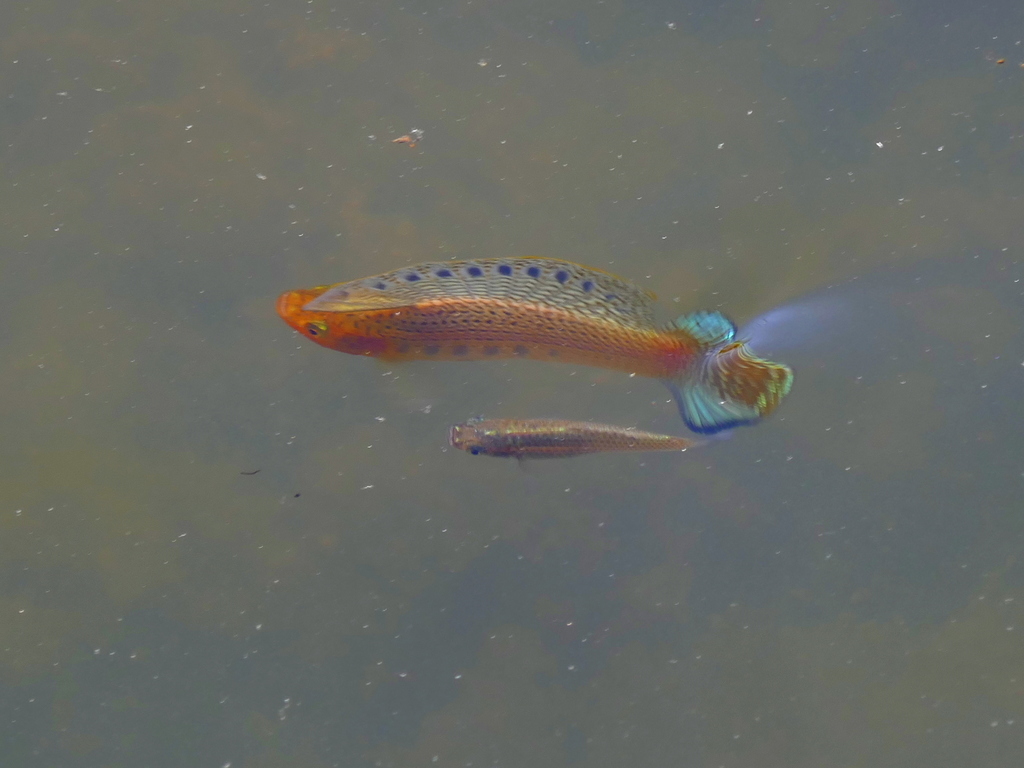
(c) Kai Squires, some rights reserved (CC BY) · licence
Family: Poeciliidae · Class: Actinopterygii · Order: Cyprinodontiformes
Poecilia latipinna (Sailfin molly) is a California animal in the Poeciliidae family.
The sailfin molly is a freshwater fish native to the southeastern United States, characterized by its distinctive elongated dorsal fin in males. Adult males typically reach 10 to 15 cm (4 to 6 inches) in length, while females are generally smaller at 8 to 12 cm (3 to 5 inches). Males display the species' namesake sailfin, an enlarged dorsal fin that can be erected during courtship displays and territorial interactions. The body coloration varies from olive-green to bluish-gray with darker vertical bars or spots. Females and juveniles exhibit more subdued coloration with a rounded dorsal fin. Naturally, sailfin mollies occur along the Atlantic and Gulf coasts from North Carolina to Mexico, inhabiting coastal marshes, estuaries, and slow-moving freshwater systems. The species demonstrates broad salinity tolerance, thriving in freshwater, brackish water, and even full-strength seawater. In California, sailfin mollies have been introduced through aquarium releases and are now established in various water bodies, particularly in southern California's slower-moving streams, canals, and ornamental ponds. Sailfin mollies prefer shallow, vegetated waters with temperatures ranging from 18 to 28°C (64 to 82°F). They inhabit areas with dense aquatic vegetation, including submerged and emergent plants that provide cover and foraging opportunities. The species tolerates a wide range of water conditions but performs best in slightly alkaline water with pH levels between 7.0 and 8.5. They commonly occupy areas with minimal current, such as backwaters, sloughs, and pond margins. As omnivores, sailfin mollies feed on algae, small invertebrates, detritus, and plant matter. Their diet includes mosquito larvae, small crustaceans, and various aquatic insects, making them effective biological control agents for mosquitoes in some contexts. The species exhibits livebearing reproduction, with females giving birth to fully-formed juveniles after a gestation period of approximately 35 to 45 days. Broods typically contain 10 to 140 young, depending on female size and environmental conditions. Breeding occurs year-round in suitable climates, with peak activity during warmer months. Sailfin mollies are not listed under federal or California endangered species legislation. As a non-native species in California waters, they are considered established but not necessarily problematic in most ecosystems. However, their presence may impact native fish communities through competition for food resources and habitat. The species' tolerance for poor water quality and ability to reproduce rapidly allows populations to persist in disturbed aquatic environments. In their native range, sailfin mollies face habitat loss from coastal development and water pollution, though populations remain stable overall. Climate change may expand suitable habitat northward while potentially degrading conditions in southern portions of their range through increased temperatures and altered precipitation patterns.
Classification
Class: Actinopterygii · Order: Cyprinodontiformes · Family: Poeciliidae
Frequently asked questions
How is Poecilia latipinna classified?
Poecilia latipinna belongs to class Actinopterygii, order Cyprinodontiformes, family Poeciliidae.
What family does Poecilia latipinna belong to?
Poecilia latipinna is in the Poeciliidae family.
What is Poecilia latipinna?
The sailfin molly is a freshwater fish native to the southeastern United States, characterized by its distinctive elongated dorsal fin in males.
Is Poecilia latipinna found in California?
Yes. Poecilia latipinna is recorded in California in The California Species Project's catalogue.
Related species
Other California species in the same genus, family, or bioregion.
Data from The California Species Project — 14,000+ California species with verified data from CNPS, CDFW, USFWS, and more.