Poeciliopsis gracilis
Porthole livebearer
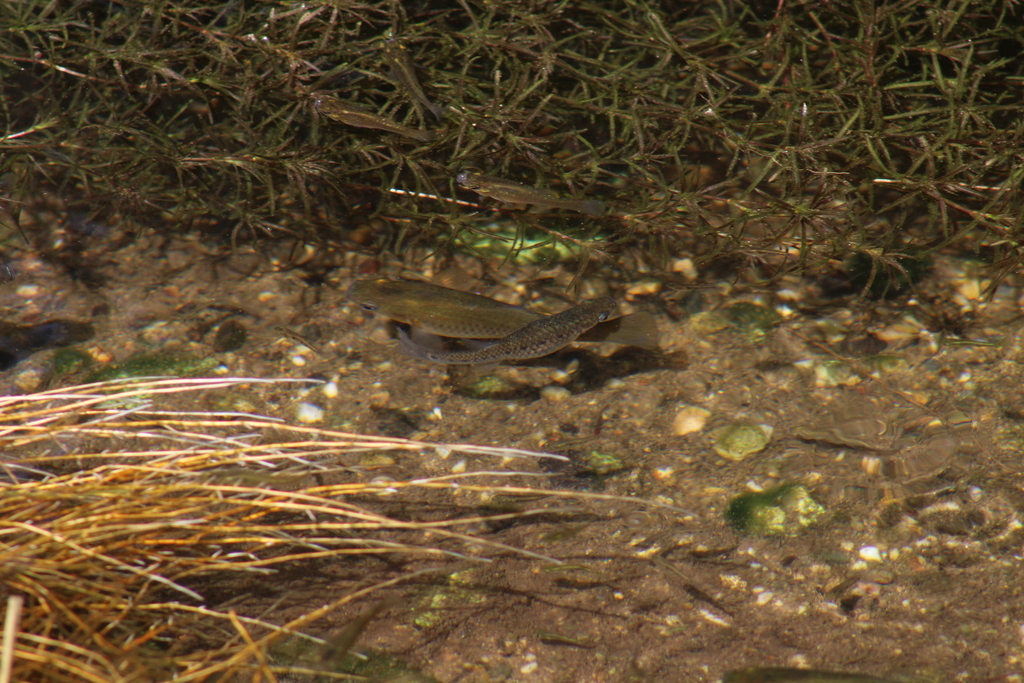
(c) Carlos Domínguez-Rodríguez, some rights reserved (CC BY) · licence
Family: Poeciliidae · Class: Actinopterygii · Order: Cyprinodontiformes
Poeciliopsis gracilis (Porthole livebearer) is a California animal in the Poeciliidae family.
The Porthole livebearer is a small freshwater fish belonging to the family Poeciliidae, which includes guppies, mollies, and other livebearing fishes. Adults typically measure 25 to 40 mm (1.0 to 1.6 inches) in total length, with females generally larger than males. The species exhibits sexual dimorphism common to poeciliids, with males displaying modified anal fins called gonopodia used for internal fertilization. The body is elongated and laterally compressed, with a distinctive dark spot or "porthole" marking behind the gill cover that gives the species its common name. Coloration varies from olive-brown to grayish-silver with darker vertical bars along the sides. Poeciliopsis gracilis is native to western Mexico, with its natural range extending from Sonora south through Sinaloa and Nayarit. The species inhabits Pacific coastal drainages and associated river systems in this region. Historical records indicate populations occurred in various tributaries and coastal streams, though current distribution may be more restricted due to habitat modifications and water management practices. This species typically inhabits slow-moving freshwater streams, springs, and associated pools within desert and semi-arid environments. Porthole livebearers prefer areas with moderate water temperatures ranging from 20 to 28 degrees Celsius (68 to 82 degrees Fahrenheit) and neutral to slightly alkaline pH conditions. They are commonly found in areas with aquatic vegetation, which provides cover and feeding opportunities. The species can tolerate some salinity variation, allowing occupation of brackish areas where freshwater streams approach coastal zones. Porthole livebearers are omnivorous, feeding on small invertebrates, algae, plant matter, and organic detritus. Their diet includes mosquito larvae, small crustaceans, aquatic insects, and various forms of periphyton. Like other poeciliids, this species exhibits internal fertilization and gives birth to live young rather than laying eggs. Females can produce multiple broods per year, with gestation periods typically lasting 28 to 35 days. Brood sizes range from 10 to 40 fry, depending on female size and environmental conditions. Sexual maturity is reached at approximately 3 to 4 months of age. The conservation status of Poeciliopsis gracilis remains poorly documented, with limited recent population assessments available. The species faces potential threats common to other Mexican freshwater fishes, including habitat modification through agricultural development, water diversions for irrigation, and urban expansion along coastal areas. Introduction of non-native species may create additional competitive pressures. Climate change impacts, including altered precipitation patterns and increased temperatures, could further affect stream habitats critical to the species' survival. The lack of comprehensive population surveys and formal conservation assessments highlights the need for additional research to determine current status and conservation requirements for this species.
Classification
Class: Actinopterygii · Order: Cyprinodontiformes · Family: Poeciliidae
Frequently asked questions
How is Poeciliopsis gracilis classified?
Poeciliopsis gracilis belongs to class Actinopterygii, order Cyprinodontiformes, family Poeciliidae.
What family does Poeciliopsis gracilis belong to?
Poeciliopsis gracilis is in the Poeciliidae family.
What is Poeciliopsis gracilis?
The Porthole livebearer is a small freshwater fish belonging to the family Poeciliidae, which includes guppies, mollies, and other livebearing fishes.
Is Poeciliopsis gracilis found in California?
Yes. Poeciliopsis gracilis is recorded in California in The California Species Project's catalogue.
Related species
Other California species in the same genus, family, or bioregion.
Data from The California Species Project — 14,000+ California species with verified data from CNPS, CDFW, USFWS, and more.