Poeciliopsis occidentalis
Gila topminnow (incl. Yaqui)
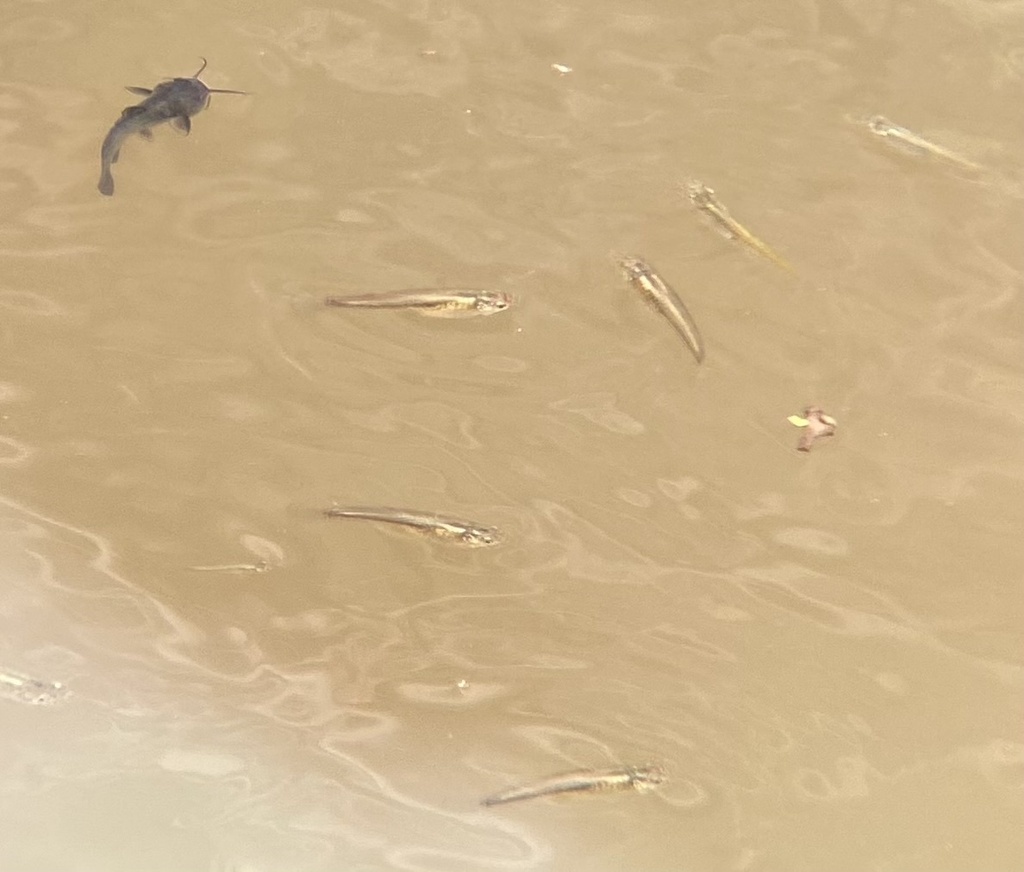
(c) Tristan A. McKnight, some rights reserved (CC BY) · licence
Family: Poeciliidae · Class: Actinopterygii · Order: Cyprinodontiformes
Conservation status: Endangered
Poeciliopsis occidentalis (Gila topminnow (incl. Yaqui)) is a California animal in the Poeciliidae family.
The Gila topminnow is a small, silvery fish measuring 2.5 to 5.0 cm (1.0 to 2.0 inches) in length. The species exhibits a guppy-like appearance and is live-bearing rather than egg-laying. Males display distinct breeding coloration, becoming black with bright yellow fins during reproductive periods. The species lacks dark spots on the fins and possesses an asymmetrical gonopodium (modified anal fin) that curves to the left, distinguishing it from the introduced western mosquitofish. Historically, Gila topminnow occurred throughout the Gila River basin in Arizona and New Mexico, extending into northern Mexico including the Yaqui River system. The species' current distribution is severely restricted compared to its historical range. In Arizona, populations persist in scattered locations including Cienega Creek and its tributaries, where it occurs alongside other native species such as Gila chub and longfin dace. Some populations remain in New Mexico, though the species has been extirpated from much of its former range. Gila topminnow inhabits shallow, slow-moving waters including springs, cienegas, backwaters, and quiet pools of streams and rivers. The species prefers areas with dense aquatic vegetation and typically occurs in waters with temperatures ranging from cool spring-fed systems to warmer desert streams. It occupies both permanent and intermittent water bodies, often in association with emergent vegetation such as cattails and submerged aquatic plants. As a live-bearing species, females give birth to fully formed young rather than laying eggs. The species feeds on small invertebrates, algae, and organic detritus. Gila topminnow serves as an important prey species for native predators including gartersnakes and larger fish. The species exhibits schooling behavior and can tolerate a range of water conditions, though it requires permanent or semi-permanent water sources for successful reproduction. The U.S. Fish and Wildlife Service listed the Gila topminnow as endangered under the Endangered Species Act on March 11, 1967. The primary threat to the species is competition and predation from introduced western mosquitofish, which have eliminated native topminnow populations within 1 to 3 years of establishment in many locations. Additional threats include habitat modification, water diversions, pollution, and drought. The aggressive behavior of mosquitofish displaces topminnows from preferred microhabitats and reduces reproductive success. Conservation efforts focus on maintaining mosquitofish-free refugia and establishing new populations in suitable habitat. As of December 2025, the species remains federally endangered, though a petition was submitted in 2018 to reclassify it from endangered to threatened status. Recovery depends on protecting existing populations from mosquitofish invasion and restoring native fish communities in formerly occupied habitats. The species' persistence in locations like Cienega Creek, which supports only native fishes, demonstrates the importance of maintaining intact desert aquatic ecosystems.
Classification
Class: Actinopterygii · Order: Cyprinodontiformes · Family: Poeciliidae
Conservation status
Endangered
Frequently asked questions
How is Poeciliopsis occidentalis classified?
Poeciliopsis occidentalis belongs to class Actinopterygii, order Cyprinodontiformes, family Poeciliidae.
What family does Poeciliopsis occidentalis belong to?
Poeciliopsis occidentalis is in the Poeciliidae family.
Is Poeciliopsis occidentalis protected or of conservation concern?
Poeciliopsis occidentalis carries the following status: Endangered.
What is Poeciliopsis occidentalis?
The Gila topminnow is a small, silvery fish measuring 2.5 to 5.0 cm (1.0 to 2.0 inches) in length.
Is Poeciliopsis occidentalis found in California?
Yes. Poeciliopsis occidentalis is recorded in California in The California Species Project's catalogue.
Related species
Other California species in the same genus, family, or bioregion.
Data from The California Species Project — 14,000+ California species with verified data from CNPS, CDFW, USFWS, and more.