Pogonomyrmex subnitidus
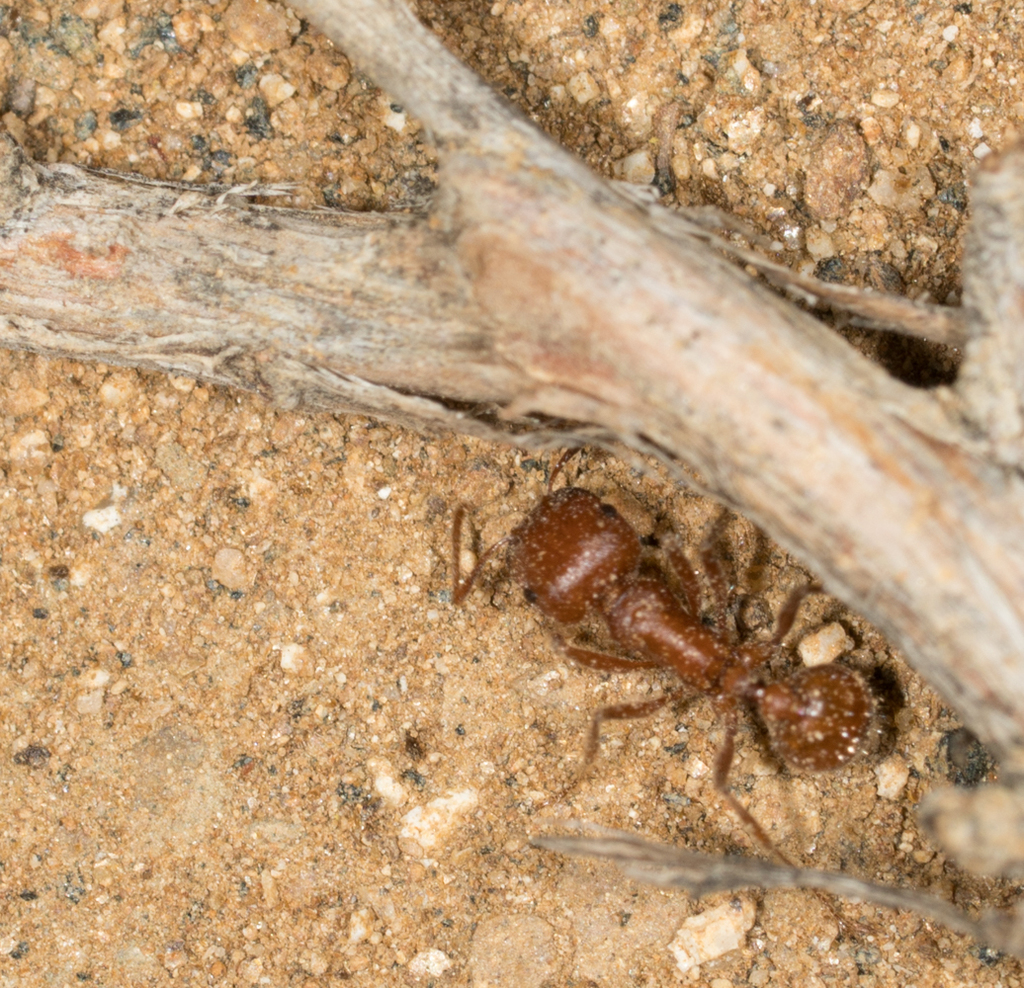
no rights reserved · CC0
Family: Formicidae · Class: Insecta · Order: Hymenoptera
Pogonomyrmex subnitidus is a California animal in the Formicidae family.
Pogonomyrmex subnitidus is an ant species belonging to the harvester ant genus Pogonomyrmex within the family Formicidae. This species is part of a diverse group of seed-collecting ants that play important ecological roles in arid and semi-arid ecosystems. As with other Pogonomyrmex species, P. subnitidus likely exhibits the characteristic robust build and well-developed mandibles adapted for seed processing, though specific morphological details for this species have not been extensively documented in the scientific literature. The distribution and range of Pogonomyrmex subnitidus appear to be poorly documented in current taxonomic databases and field guides. Limited occurrence records suggest the species may be found in western North America, potentially including parts of California, though specific range boundaries and county-level distributions have not been clearly established. The species' presence in California's diverse ecosystems remains to be thoroughly surveyed and documented. Habitat requirements for P. subnitidus have not been well characterized in published literature. Based on the ecological preferences of related Pogonomyrmex species, this ant likely inhabits arid or semi-arid environments with sparse to moderate vegetation cover. Harvester ants typically establish colonies in areas with suitable soil conditions for excavating underground nest chambers and galleries. The species may occur in desert scrub, grassland, or chaparral habitats, though specific elevation ranges and microhabitat preferences remain undocumented. Like other members of the genus Pogonomyrmex, P. subnitidus is presumed to be a granivorous species, collecting and storing seeds in underground chambers. Harvester ants play crucial ecological roles as seed dispersers and soil aerators in their native ecosystems. Colonies typically consist of workers that forage individually or in small groups, gathering seeds from various plant species within their territory. Reproductive biology, including nuptial flight timing and colony founding behavior, has not been specifically studied for this species. Pogonomyrmex subnitidus currently lacks formal conservation status designation at federal or state levels. The species does not appear on the U.S. Fish and Wildlife Service's list of threatened or endangered species as of December 2025, nor is it included in California's special status species lists. However, the limited available information about this ant's distribution, abundance, and ecological requirements makes it difficult to assess its conservation needs. Many invertebrate species, particularly ants, remain understudied and may face population pressures from habitat loss, climate change, and other anthropogenic factors without formal recognition. The taxonomic status and species boundaries within the Pogonomyrmex genus continue to be refined through molecular and morphological studies. Some historical records or identifications of P. subnitidus may require verification through modern taxonomic methods. Scientific documentation for this species remains extremely limited, and detailed ecological studies are lacking. Additional field research, museum specimen examination, and molecular analysis would greatly enhance understanding of this ant's biology, distribution, and conservation status. We welcome contributions of verified scientific data, photographs, or field observations to enhance this species account.
Classification
Class: Insecta · Order: Hymenoptera · Family: Formicidae
Frequently asked questions
How is Pogonomyrmex subnitidus classified?
Pogonomyrmex subnitidus belongs to class Insecta, order Hymenoptera, family Formicidae.
What family does Pogonomyrmex subnitidus belong to?
Pogonomyrmex subnitidus is in the Formicidae family.
What is Pogonomyrmex subnitidus?
Pogonomyrmex subnitidus is an ant species belonging to the harvester ant genus Pogonomyrmex within the family Formicidae.
Is Pogonomyrmex subnitidus found in California?
Yes. Pogonomyrmex subnitidus is recorded in California in The California Species Project's catalogue.
Related species
Other California species in the same genus, family, or bioregion.
Data from The California Species Project — 14,000+ California species with verified data from CNPS, CDFW, USFWS, and more.