Polioptila californica californica
Coastal California gnatcatcher
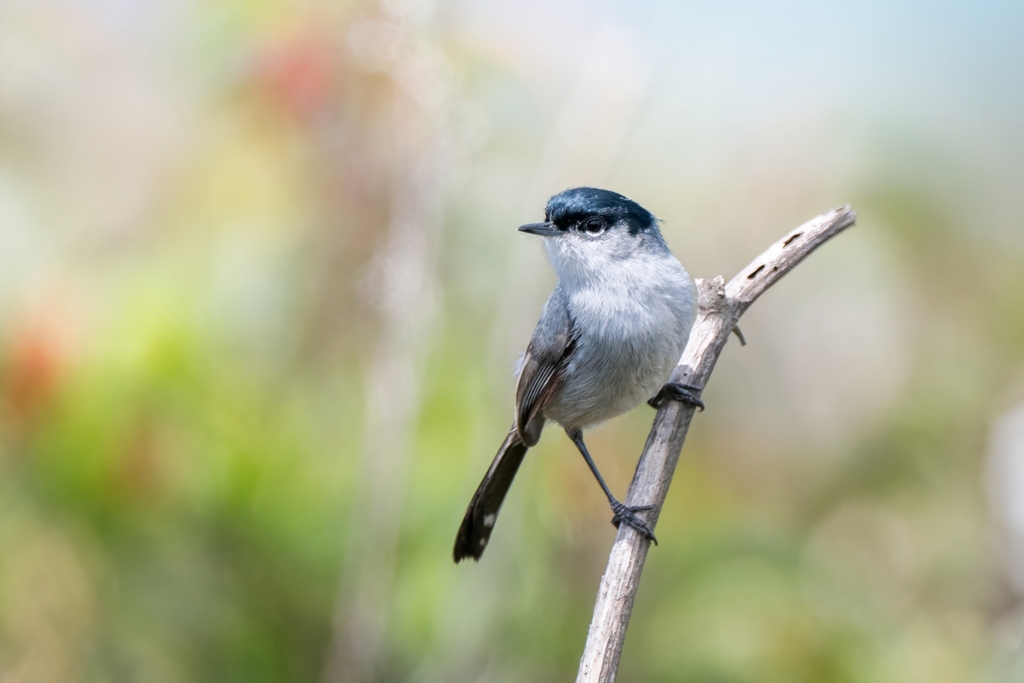
(c) cello caruso-turiello, some rights reserved (CC BY) · licence
Family: Polioptilidae · Class: Aves · Order: Passeriformes
Conservation status: Threatened · G4G5T3Q S2
Polioptila californica californica (Coastal California gnatcatcher) is a California animal in the Polioptilidae family.
The coastal California gnatcatcher is a small, nonmigratory songbird measuring approximately 10-11 centimeters (4-4.3 inches) in length. Adults are slender, gray birds with long, black tails narrowly edged and tipped with white. During the breeding season, males develop a distinctive glossy black cap that extends from the bill to the nape. Females and nonbreeding males lack this black cap and display warmer, brownish tones on the back, flanks, and belly. The species is distinguished from the similar Black-tailed Gnatcatcher by its kittenlike mewing calls and slightly larger size. The coastal California gnatcatcher is restricted to coastal Southern California and Baja California, Mexico. In California, the subspecies occurs from southern Ventura and southwestern San Bernardino counties south through Los Angeles, Orange, Riverside, and San Diego counties. The range extends into Baja California to approximately 30 degrees north latitude near El Rosario. According to USFWS, 56 percent of the range occurs in the United States and 44 percent in Mexico. The species has experienced significant range contraction, with populations in the lower Santa Clara River Valley in Ventura County likely having contracted southeastward, and the current consistent range in Los Angeles County not extending north of the San Gabriel Valley. The species primarily inhabits coastal sage scrub, a plant community characterized by relatively low-growing, dry-season deciduous and succulent plants including California sagebrush. Coastal California gnatcatchers also utilize chaparral, grassland, and riparian plant communities where they occur adjacent to or intermixed with sage scrub. The species generally occurs below 500 meters (1,640 feet) elevation. These habitats occur in a patchy, mosaic distribution pattern throughout the species' range and may serve as critical areas for dispersal or foraging during adverse conditions. Breeding pairs are generally monogamous and sedentary, with both sexes participating in nest construction, incubation, and care of young. The breeding season extends from approximately February 15 through August 30, with peak nesting activity occurring from mid-March through mid-May. Incubation takes 14 days, and young fledge at 8 to 13 days of age, remaining dependent on their parents for three to four weeks. High rates of nest predation are offset by rapid and persistent renesting efforts, with as many as 10 nesting attempts possible in a single year, producing up to three successful broods. Juveniles typically disperse less than 10 kilometers from their natal territories and establish pair bonds within several months of fledging. The coastal California gnatcatcher was listed as federally threatened in 1993 due to historical and ongoing habitat loss and predation, including brood parasitism by brown-headed cowbirds. Fewer than 5,000 pairs now persist in coastal Southern California, where explosive human population growth and suburban sprawl have reduced and fragmented coastal sage scrub habitat. Since listing, the U.S. Fish and Wildlife Service and California Department of Fish and Wildlife have worked with local jurisdictions to develop large-scale habitat conservation plans to protect remaining populations and habitat.
Classification
Class: Aves · Order: Passeriformes · Family: Polioptilidae
Conservation status
Threatened · G4G5T3Q S2
Frequently asked questions
How is Polioptila californica californica classified?
Polioptila californica californica belongs to class Aves, order Passeriformes, family Polioptilidae.
What family does Polioptila californica californica belong to?
Polioptila californica californica is in the Polioptilidae family.
Is Polioptila californica californica protected or of conservation concern?
Polioptila californica californica carries the following status: Threatened · G4G5T3Q S2.
What is Polioptila californica californica?
The coastal California gnatcatcher is a small, nonmigratory songbird measuring approximately 10-11 centimeters (4-4.3 inches) in length.
Is Polioptila californica californica found in California?
Yes. Polioptila californica californica is recorded in California in The California Species Project's catalogue.
Related species
Other California species in the same genus, family, or bioregion.
Data from The California Species Project — 14,000+ California species with verified data from CNPS, CDFW, USFWS, and more.