Polistes apachus
Apache Paper Wasp
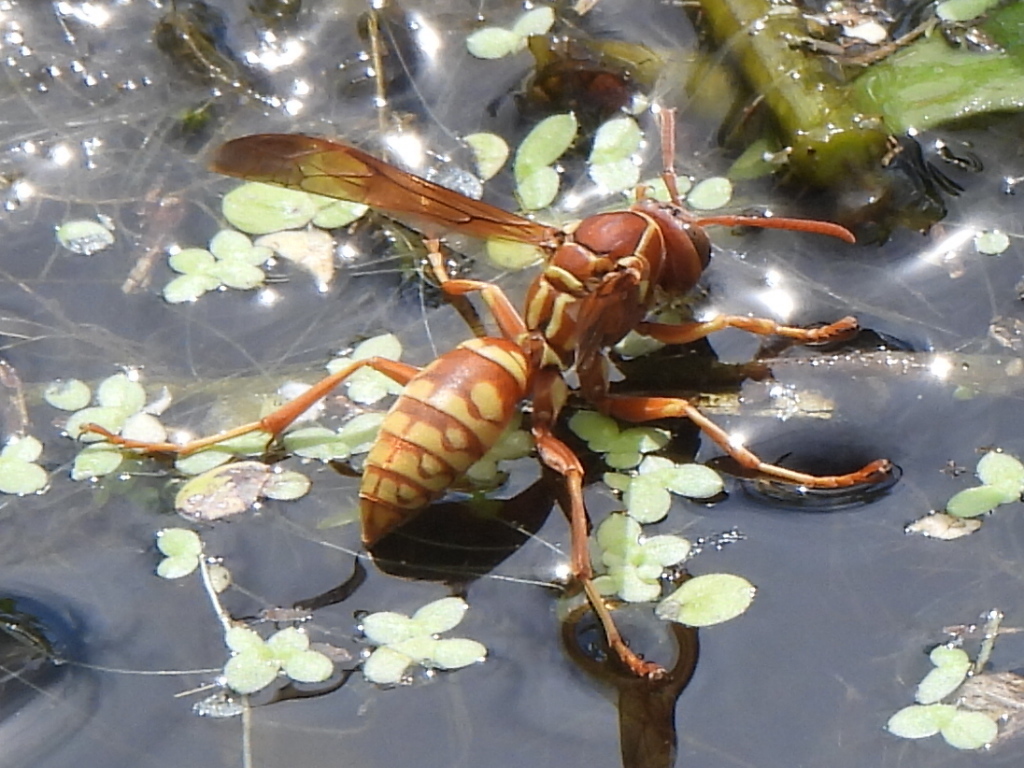
(c) Sam Kieschnick, some rights reserved (CC BY) · licence
Family: Vespidae · Class: Insecta · Order: Hymenoptera
Polistes apachus (Apache Paper Wasp) is a California animal in the Vespidae family.
The Apache Paper Wasp (Polistes apachus) is a medium-sized social wasp belonging to the subfamily Polistinae within the family Vespidae. This species is also known as the Texas Paper Wasp in some regions. Adults typically measure 12-18 mm (0.47-0.71 inches) in length, with queens being slightly larger than workers. The species displays the characteristic paper wasp body plan with a narrow waist, elongated legs, and distinctive coloration patterns that can vary among individuals. Polistes apachus has a broad distribution across the southwestern United States, with confirmed populations extending from Texas westward through New Mexico, Arizona, and into southeastern California. The species' range also extends southward into Mexico. According to BugGuide, observations have been documented from various locations throughout this range, including desert and semi-arid regions of the Chihuahuan and Sonoran deserts. This species inhabits a variety of dry habitats typical of southwestern North America, including desert scrublands, grasslands, and areas with mixed shrub vegetation. The Apache Paper Wasp constructs its characteristic umbrella-shaped paper nests from chewed wood pulp mixed with saliva, typically suspending them from protected overhangs such as rock ledges, building eaves, or dense vegetation. Nests are often found in areas that provide some protection from direct sun and rain while maintaining good visibility for the colony. Apache Paper Wasps are social insects that live in colonies founded by overwintered queens in spring. The founding queen constructs the initial nest cells and raises the first generation of workers. As the colony grows throughout the summer, workers take over nest construction, foraging, and brood care duties while the queen focuses on egg laying. Adult wasps are predatory, capturing various arthropods including caterpillars, flies, and other soft-bodied insects to feed to developing larvae. Adults also feed on nectar from flowers and other carbohydrate sources. The species is active during warmer months, with colony activity typically peaking in mid to late summer. Polistes apachus is not federally or state listed as endangered or threatened. The species appears to maintain stable populations throughout its range, likely benefiting from its adaptability to various habitat types and its ability to utilize human-modified environments for nesting sites. Like other paper wasps, this species can be beneficial for natural pest control as adults hunt various arthropod prey. However, colonies may occasionally come into conflict with humans when nests are built in proximity to high-traffic areas, as the wasps will defend their colonies if threatened. Taxonomically, Polistes apachus belongs to the subgenus Fuscopolistes within the genus Polistes (BugGuide). The species can be distinguished from closely related paper wasps through examination of morphological characters, though field identification often requires careful observation of coloration patterns and body proportions. Further research on the specific ecology and population dynamics of this species would enhance understanding of its role in southwestern ecosystems.
Classification
Class: Insecta · Order: Hymenoptera · Family: Vespidae
Frequently asked questions
How is Polistes apachus classified?
Polistes apachus belongs to class Insecta, order Hymenoptera, family Vespidae.
What family does Polistes apachus belong to?
Polistes apachus is in the Vespidae family.
What is Polistes apachus?
The Apache Paper Wasp (Polistes apachus) is a medium-sized social wasp belonging to the subfamily Polistinae within the family Vespidae.
Is Polistes apachus found in California?
Yes. Polistes apachus is recorded in California in The California Species Project's catalogue.
Related species
Other California species in the same genus, family, or bioregion.
Data from The California Species Project — 14,000+ California species with verified data from CNPS, CDFW, USFWS, and more.