Polistes dominula
European Paper Wasp
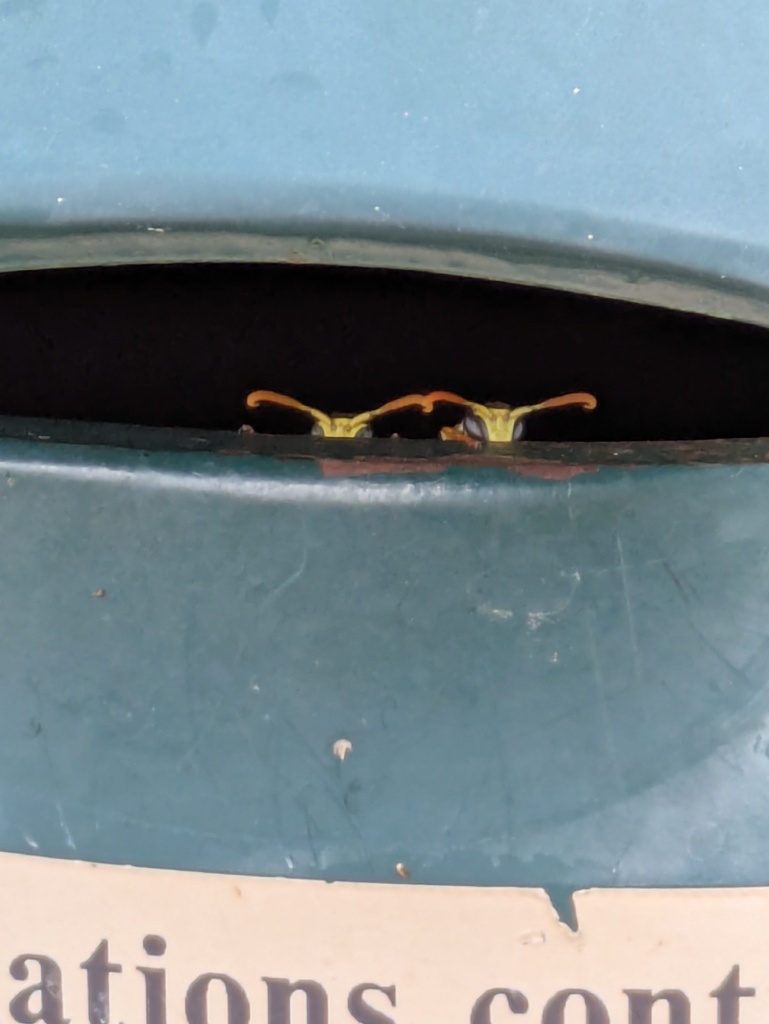
(c) antimatterbee, some rights reserved (CC BY) · licence
Family: Vespidae · Class: Insecta · Order: Hymenoptera
Polistes dominula (European Paper Wasp) is a California animal in the Vespidae family.
The European paper wasp is a medium-sized social wasp measuring 11-15 mm (0.4-0.6 inches) in length. The species displays distinctive yellow and black coloration with bright yellow legs, which distinguishes it from native North American paper wasps. The thorax is primarily black with yellow markings, while the abdomen features alternating yellow and black bands. Wings appear amber-tinted when folded, and the antennae are entirely yellow in females and partially yellow in males. Polistes dominula is native to Europe and Asia but has established invasive populations across North America since the 1980s (BugGuide). The species now occurs throughout much of the continental United States and southern Canada, with documented populations in California, the Pacific Northwest, and across the Great Lakes region. In California, the wasp has been recorded from coastal areas to inland valleys, including documented presence at American Camp on San Juan Island, Washington, where it impacts native butterfly populations (Federal Register 2018). The species inhabits a wide range of environments, from urban and suburban areas to agricultural landscapes and natural habitats. European paper wasps construct characteristic umbrella-shaped nests suspended from eaves, branches, or other protected overhangs. These nests are composed of wood fiber mixed with saliva to create a gray paper-like material. The wasps gather wood fibers from dead wood, fence posts, and deck rails, leaving distinctive scrape marks approximately 3 mm (0.125 inches) wide (Xerces Society). European paper wasps are social insects that establish annual colonies beginning in spring when overwintered foundress queens emerge. Queens initiate nest construction and begin egg-laying, with worker development occurring through summer months. The species is primarily carnivorous, feeding on caterpillars and other soft-bodied insects. Adult wasps hunt Lepidoptera larvae extensively, with studies indicating they feed primarily on caterpillars (Liebert et al. 2006). Workers masticate prey items before feeding them to developing larvae in the nest. Colony size typically peaks in late summer with 50-200 individuals before declining in autumn. As an introduced species, Polistes dominula poses conservation concerns for native ecosystems. The wasp has been documented predating eggs and larvae of the federally endangered island marble butterfly (Euchloe ausonides insulanus), contributing to population pressure on this rare subspecies (Federal Register 2018). Research indicates that European paper wasps may also impact monarch butterfly populations, consuming monarch caterpillars along with other native Lepidoptera species (De Anda and Oberhauser 2015). The species' aggressive foraging behavior and adaptability to diverse environments allow it to compete effectively with native paper wasp species for nesting sites and prey resources. Unlike native Polistes species, P. dominula demonstrates higher tolerance for cooler temperatures and can establish larger colony sizes, potentially displacing native wasp communities. Management of this invasive species focuses on monitoring population spread and protecting sensitive native butterfly habitats, particularly in areas supporting federally listed species.
Classification
Class: Insecta · Order: Hymenoptera · Family: Vespidae
Frequently asked questions
How is Polistes dominula classified?
Polistes dominula belongs to class Insecta, order Hymenoptera, family Vespidae.
What family does Polistes dominula belong to?
Polistes dominula is in the Vespidae family.
What is Polistes dominula?
The European paper wasp is a medium-sized social wasp measuring 11-15 mm (0.4-0.6 inches) in length.
Is Polistes dominula found in California?
Yes. Polistes dominula is recorded in California in The California Species Project's catalogue.
Related species
Other California species in the same genus, family, or bioregion.
Data from The California Species Project — 14,000+ California species with verified data from CNPS, CDFW, USFWS, and more.