Polites carus
Carus Skipper
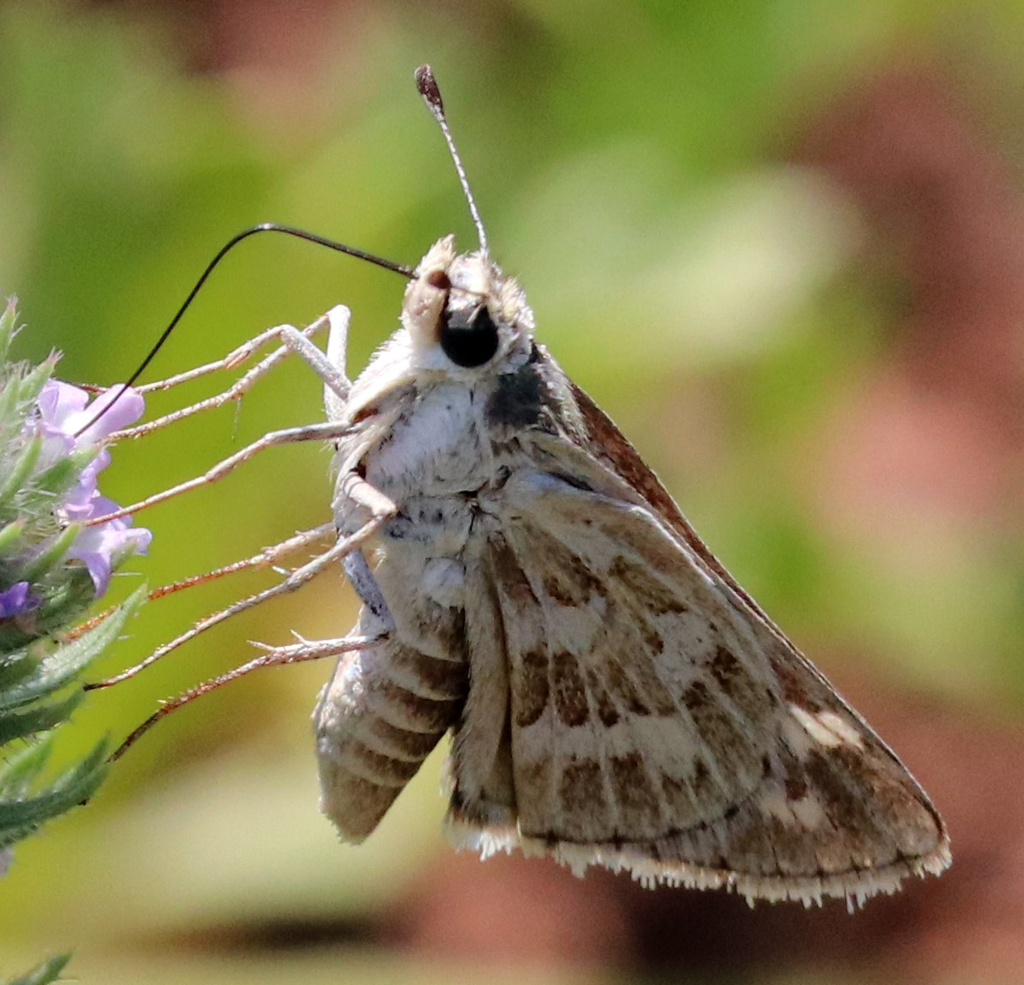
(c) Catherine C. Galley, some rights reserved (CC BY) · licence
Family: Hesperiidae · Class: Insecta · Order: Lepidoptera
Polites carus (Carus Skipper) is a California animal in the Hesperiidae family.
The Carus skipper is a small butterfly belonging to the grass skipper family Hesperiidae. Adults typically measure 20 to 30 mm (0.8 to 1.2 inches) in wingspan. Males display orange-brown forewings with dark borders and a distinctive dark stigma (scent patch) along the forewing costa. The hindwings are orange-brown with faint pale spotting. Females are generally darker with more subdued coloration and lack the male's stigma. The undersides of both sexes show pale yellow-brown coloration with indistinct light spotting on the hindwings. The Carus skipper occurs in three separate populations within California, representing a disjunct distribution pattern typical of many western North American skippers. Beyond California, the species ranges through southern Arizona eastward to southwest Texas, extending into Mexico. This fragmented distribution suggests historical habitat connectivity that has been reduced through environmental changes or habitat loss. The species inhabits grassland areas, prairie edges, and open woodland clearings where native grasses are abundant. In California, populations are typically found in valley grasslands and foothill areas with suitable grass communities. The butterfly shows a preference for areas with mixed grass species and some topographic relief, often utilizing south-facing slopes and drainage areas where moisture supports diverse grass growth. Carus skippers are univoltine, producing one generation per year with adults typically flying from late spring through early summer. Males exhibit typical skipper territorial behavior, perching on low vegetation or bare ground to watch for females and chase away intruders. Mating occurs during peak flight periods, with females subsequently searching for appropriate host plants for oviposition. Larvae develop on various grass species within the family Poaceae, though specific host preferences remain incompletely documented. The caterpillars construct silk shelters by folding grass blades and feed primarily during cooler morning and evening hours. Pupation occurs in a silk girdle attached to the host plant or nearby vegetation. While not currently listed under federal or state endangered species acts, the Carus skipper's uncommon status and disjunct California populations warrant monitoring attention. The species faces potential threats common to grassland-dependent insects, including habitat conversion, altered fire regimes, and invasive plant species that displace native grasses. Urban development and agricultural conversion have reduced suitable grassland habitat throughout much of the species' range. Climate change may further impact populations through altered precipitation patterns affecting grass growth and phenology. The fragmented nature of California populations makes them particularly vulnerable to local extirpations, as recolonization from distant populations would be unlikely. Conservation of remaining native grassland habitats and management practices that maintain diverse grass communities are important for the species' persistence in California.
Classification
Class: Insecta · Order: Lepidoptera · Family: Hesperiidae
Frequently asked questions
How is Polites carus classified?
Polites carus belongs to class Insecta, order Lepidoptera, family Hesperiidae.
What family does Polites carus belong to?
Polites carus is in the Hesperiidae family.
What is Polites carus?
The Carus skipper is a small butterfly belonging to the grass skipper family Hesperiidae.
Is Polites carus found in California?
Yes. Polites carus is recorded in California in The California Species Project's catalogue.
Related species
Other California species in the same genus, family, or bioregion.
Data from The California Species Project — 14,000+ California species with verified data from CNPS, CDFW, USFWS, and more.