Polites sonora
Sonora Skipper
no rights reserved · CC0
Family: Hesperiidae · Class: Insecta · Order: Lepidoptera
Polites sonora (Sonora Skipper) is a California animal in the Hesperiidae family.
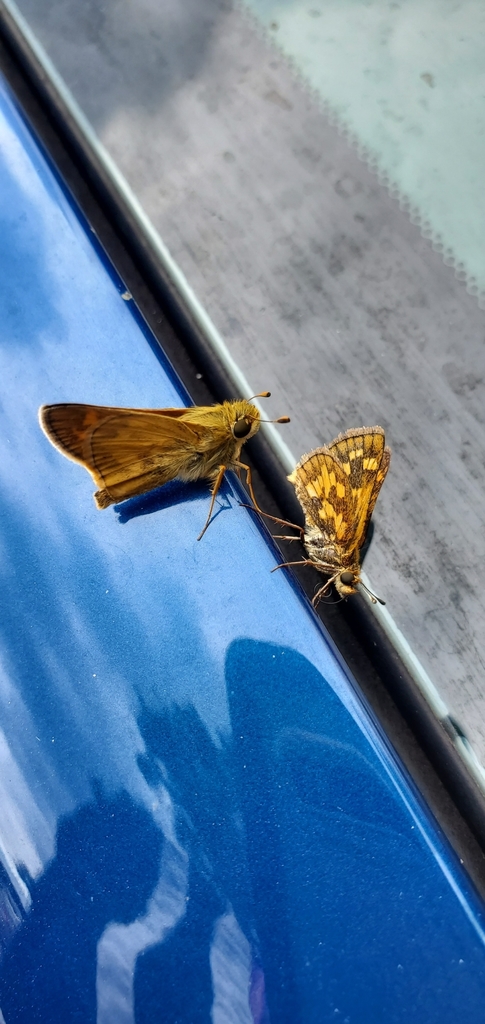
The Sonora skipper is a small butterfly in the family Hesperiidae, characterized by the typical skipper morphology of a compact body, relatively large head, and triangular wings. Adults have a wingspan of approximately 25-30 mm (1.0-1.2 inches). Males display orange-brown forewings with distinctive dark borders and a narrow dark stigma (scent patch) along the leading edge. The hindwings are typically orange-brown with lighter spotting. Females are generally darker than males, with more subdued coloration and less prominent orange markings. The antennae terminate in a curved club, and the body is robust and densely covered in scales. The Sonora skipper ranges from southern British Columbia south to southern California, extending eastward to Idaho, Wyoming, and Colorado. In California, the species occurs primarily in mountainous regions and foothills, though specific county-level distribution data requires further documentation. The species' range suggests adaptation to varied elevation zones across western North America, from sea-level coastal areas to montane environments. This skipper inhabits open grasslands, meadows, and woodland clearings where native bunch grasses are present. The species shows a preference for areas with scattered shrubs or trees that provide shelter and necktaring opportunities. Elevation ranges vary significantly across the geographic distribution, from near sea level in coastal British Columbia to several thousand feet in montane regions of Colorado and Wyoming. Habitat requirements appear closely tied to the presence of suitable host plants and flowering resources. The Sonora skipper's larval host plant is possibly Idaho fescue (Festuca idahoensis), a native perennial bunch grass common throughout much of the species' range. Adults are active during summer months, typically from June through August, depending on elevation and local climate conditions. Males engage in territorial behavior, perching on elevated spots to watch for females and chase away intruders. Females deposit eggs singly on or near host plant leaves. The species is univoltine, producing one generation per year. Adults nectar on various wildflowers, showing no strong preference for specific plant families. The Sonora skipper currently holds no federal or state conservation listing status. Population trends and conservation needs are poorly documented, reflecting the limited research attention given to many skipper species. The species' broad geographic range and apparent habitat flexibility may provide some resilience against localized threats. However, like many grassland-associated butterflies, the Sonora skipper may face pressure from habitat conversion, invasive plant species that displace native grasses, and altered fire regimes that affect grassland ecosystems. Climate change could potentially shift suitable habitat to higher elevations, particularly in the southern portions of the range. The tentative identification of Idaho fescue as the host plant requires confirmation through detailed life history studies, which would inform habitat management recommendations.
Classification
Class: Insecta · Order: Lepidoptera · Family: Hesperiidae
Frequently asked questions
How is Polites sonora classified?
Polites sonora belongs to class Insecta, order Lepidoptera, family Hesperiidae.
What family does Polites sonora belong to?
Polites sonora is in the Hesperiidae family.
What is Polites sonora?
The Sonora skipper is a small butterfly in the family Hesperiidae, characterized by the typical skipper morphology of a compact body, relatively large head, and triangular wings.
Is Polites sonora found in California?
Yes. Polites sonora is recorded in California in The California Species Project's catalogue.
Related species
Other California species in the same genus, family, or bioregion.
Data from The California Species Project — 14,000+ California species with verified data from CNPS, CDFW, USFWS, and more.