Pollicipes polymerus
Gooseneck Barnacle
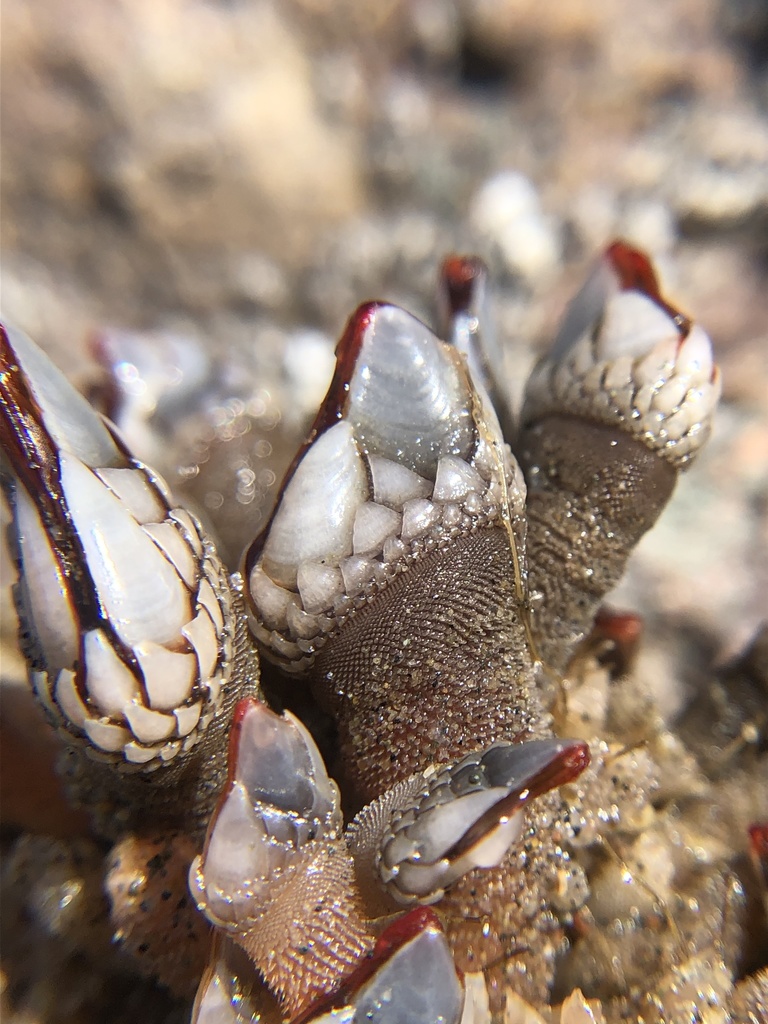
(c) Amelia Tauber, some rights reserved (CC BY) · licence
Family: Pollicipedidae · Class: Thecostraca · Order: Pedunculata
Pollicipes polymerus (Gooseneck Barnacle) is a California animal in the Pollicipedidae family.
The gooseneck barnacle (Pollicipes polymerus) is a distinctive marine crustacean that attaches to hard substrates in the rocky intertidal zone. Adults consist of a fleshy, muscular stalk (peduncle) topped by a shell-covered head (capitulum). The stalk can reach lengths of 7.5 to 15 centimeters (3 to 6 inches) and is covered in tough, leathery skin that ranges from dark brown to black. The capitulum contains five primary white to cream-colored shell plates that protect the feeding appendages, with the largest plate positioned dorsally. Gooseneck barnacles occur along the Pacific coast from southeastern Alaska to Baja California, Mexico. In California, they are found from the Oregon border south to Point Conception, with populations extending into Southern California waters. The species is particularly abundant along the central and northern California coast, where suitable rocky habitat is extensive. This species inhabits exposed rocky shores in the mid to low intertidal zone, typically between mean lower low water and 1.5 meters (5 feet) above mean lower low water. Gooseneck barnacles require hard substrates such as granite, sandstone, or concrete surfaces for attachment. They thrive in areas with high wave energy and strong water circulation, which brings the planktonic food they require. The species is commonly found growing alongside California mussels (Mytilus californianus), sea palms (Postelsia palmaeformis), and various algae in the surf-swept rocky intertidal community. Gooseneck barnacles are filter feeders that extend feathery appendages called cirri from their shell opening to capture zooplankton, phytoplankton, and organic detritus from the water column. They can only feed when submerged or when waves splash over them, making their positioning in the tidal zone critical for survival. Reproduction occurs through cross-fertilization, with individuals releasing larvae into the water column. The larvae undergo several planktonic stages before settling on suitable hard surfaces and metamorphosing into the sessile adult form. Settlement typically occurs during spring and summer months when planktonic larvae are most abundant. Gooseneck barnacles face threats from habitat modification, pollution, and climate change effects including ocean acidification and rising sea levels. Coastal development and armoring can eliminate or degrade rocky intertidal habitat. The species is also harvested for human consumption in some areas, particularly in Europe and parts of South America, though this practice is less common in California. Oil spills pose a significant threat, as the species' intertidal habitat makes it vulnerable to petroleum contamination. Marine protected areas such as Kashtayit State Marine Conservation Area help protect populations by restricting take and preserving habitat quality. The species currently has no special conservation status, but monitoring of populations continues as part of broader rocky intertidal ecosystem assessments along the California coast.
Classification
Class: Thecostraca · Order: Pedunculata · Family: Pollicipedidae
Frequently asked questions
How is Pollicipes polymerus classified?
Pollicipes polymerus belongs to class Thecostraca, order Pedunculata, family Pollicipedidae.
What family does Pollicipes polymerus belong to?
Pollicipes polymerus is in the Pollicipedidae family.
What is Pollicipes polymerus?
The gooseneck barnacle (Pollicipes polymerus) is a distinctive marine crustacean that attaches to hard substrates in the rocky intertidal zone.
Is Pollicipes polymerus found in California?
Yes. Pollicipes polymerus is recorded in California in The California Species Project's catalogue.
More California species
This species has no close relatives in our California data — here are other species to explore.
Data from The California Species Project — 14,000+ California species with verified data from CNPS, CDFW, USFWS, and more.