Polyergus mexicanus
Western Amazon Ant
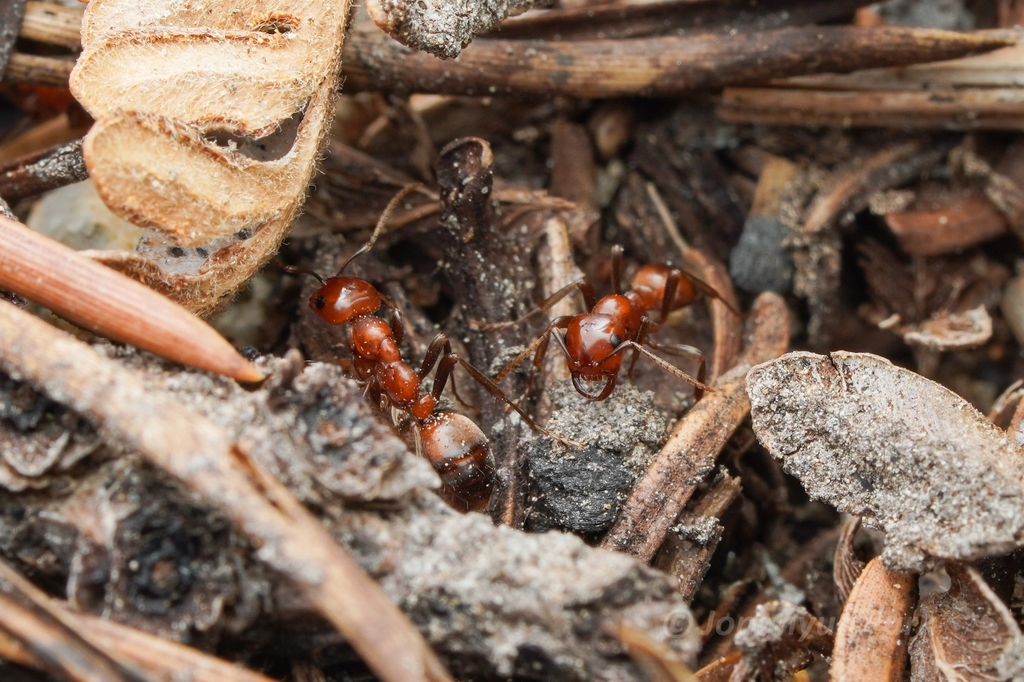
(c) Jonghyun Park, some rights reserved (CC BY) · licence
Family: Formicidae · Class: Insecta · Order: Hymenoptera
Polyergus mexicanus (Western Amazon Ant) is a California animal in the Formicidae family.
The Western Amazon Ant is a medium-sized ant species measuring approximately 7 mm in length. Workers display the characteristic saber-shaped mandibles typical of Amazon ants, which are specialized for their parasitic lifestyle. The species exhibits a reddish-brown to dark brown coloration, distinguishing it from other Polyergus species in the region. Like other Amazon ants, P. mexicanus lacks a worker caste capable of caring for their own brood and instead relies entirely on slave-making raids. Polyergus mexicanus occurs throughout much of western North America, with documented populations in California, Nevada, Utah, Colorado, and extending into Mexico. In California, the species has been recorded in Santa Barbara County, including Burton Mesa chaparral habitats, and likely occurs in other counties with suitable habitat. The species was previously classified as a subspecies of Polyergus rufescens but was elevated to full species status by Trager in 2013 (NatureServe Explorer). The Western Amazon Ant inhabits diverse environments including open conifer and broadleaf woodlands, pinyon-juniper communities, cold desert shrublands, fields, parks, gardens, and prairies (BugGuide). In California, the species has been documented in chaparral habitats on hard-packed rocky soils beneath manzanita shrubs. This habitat preference reflects the species' need for areas where suitable host ant colonies can be found and successfully raided. As an obligate social parasite, P. mexicanus conducts organized slave-making raids on colonies of Formica species, particularly F. gnava and related taxa. During raids, Amazon ant workers use their specialized mandibles to penetrate host nests and capture pupae, which are then transported back to their own colony. The captured pupae develop into workers that perform all colony maintenance tasks, including brood care, nest construction, and foraging, while the Amazon ant workers specialize exclusively in raiding behavior. Raids typically occur during summer months and involve coordinated columns of workers following chemical trails to target colonies. The species exhibits typical annual colony cycles with nuptial flights occurring in late summer. Polyergus mexicanus currently lacks formal conservation status designations at federal or state levels. The species appears to have stable populations across much of its range, though like many specialized ant species, it may be vulnerable to habitat fragmentation and changes in host ant populations. The obligate parasitic relationship with Formica species makes P. mexicanus particularly dependent on ecosystem health and the availability of suitable host colonies. Climate change and habitat modification could potentially impact both the species and its required hosts, though specific population trend data are not available. The species' broad habitat tolerance and wide geographic range suggest relative resilience compared to more habitat-specialized ant species, but long-term monitoring would be valuable given the complex ecological relationships involved in its parasitic lifestyle.
Classification
Class: Insecta · Order: Hymenoptera · Family: Formicidae
Frequently asked questions
How is Polyergus mexicanus classified?
Polyergus mexicanus belongs to class Insecta, order Hymenoptera, family Formicidae.
What family does Polyergus mexicanus belong to?
Polyergus mexicanus is in the Formicidae family.
What is Polyergus mexicanus?
The Western Amazon Ant is a medium-sized ant species measuring approximately 7 mm in length.
Is Polyergus mexicanus found in California?
Yes. Polyergus mexicanus is recorded in California in The California Species Project's catalogue.
Related species
Other California species in the same genus, family, or bioregion.
Data from The California Species Project — 14,000+ California species with verified data from CNPS, CDFW, USFWS, and more.