Polygonia gracilis
Hoary Comma
no rights reserved · CC0
Family: Nymphalidae · Class: Insecta · Order: Lepidoptera
Polygonia gracilis (Hoary Comma) is a California animal in the Nymphalidae family.
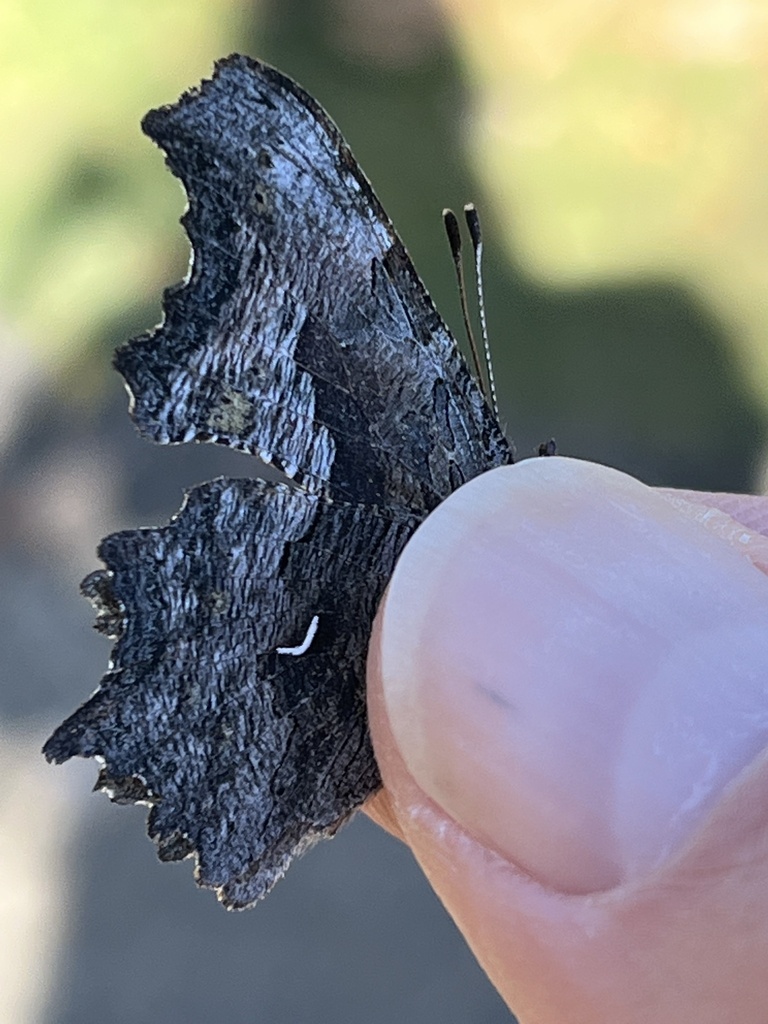
The Hoary Comma (Polygonia gracilis) is a medium-sized butterfly in the family Nymphalidae, distinguished by its irregular wing margins and distinctive white comma-shaped mark on the underside of the hindwing. Adults have a wingspan of 44-64 mm (1.7-2.5 inches), with forewings displaying orange-brown coloration marked by dark spots and borders. The wing undersides are cryptically colored in mottled browns and grays, providing effective camouflage when at rest on tree bark or fallen leaves. The irregular, deeply indented wing edges give this species its characteristic angular appearance, typical of anglewing butterflies. The Hoary Comma occupies a broad range across boreal North America south of the tundra zone. The species extends from central Alaska south to central California and northern New Mexico, ranging east across southern Canada and the Great Lakes region to New England and the Maritime provinces. In California, populations occur primarily in montane regions of the Sierra Nevada and Cascade Range, typically at elevations between 1,200-2,400 meters (4,000-8,000 feet). The species reaches its southern distributional limit in the mountains of central California. This butterfly inhabits coniferous and mixed forests, riparian woodlands, and mountain meadow edges where host plants are abundant. Adults frequent forest clearings, streamside areas, and woodland margins with dappled sunlight. The species shows a preference for moist microsites near streams and seeps where currants and gooseberries thrive. Habitat requirements include proximity to both nectar sources and larval host plants within forested landscapes. Larval development occurs on currants and gooseberries (Ribes species), western azalea (Rhododendron occidentale), and mock azalea (Menziesia glabella). Females deposit single eggs on host plant leaves, typically on new growth. Caterpillars are solitary feeders, reaching 32-38 mm in length when mature, with branched spines and variable coloration ranging from brown to green with yellow markings. The species typically produces one generation per year in most of its range, with adults flying from late spring through summer. Adults hibernate as adults, seeking shelter under loose bark, in tree crevices, or among leaf litter. Males establish territories in sunny openings and engage in perching behavior to locate mates. Adults nectar on various flowers including buddleia, milkweed, and rotting fruit. The Hoary Comma lacks formal conservation status listings at federal or state levels, reflecting its relatively stable populations across much of its range. However, like many forest-associated butterflies, the species faces potential threats from habitat fragmentation, forest management practices, and climate change impacts on montane ecosystems. Forest fires and logging operations can temporarily reduce suitable habitat, though the species appears capable of recolonizing restored areas. Climate change may shift the species' elevational range upward in mountain regions, potentially reducing available habitat at lower elevations while expanding opportunities at higher elevations where suitable host plants occur.
Classification
Class: Insecta · Order: Lepidoptera · Family: Nymphalidae
Frequently asked questions
How is Polygonia gracilis classified?
Polygonia gracilis belongs to class Insecta, order Lepidoptera, family Nymphalidae.
What family does Polygonia gracilis belong to?
Polygonia gracilis is in the Nymphalidae family.
What is Polygonia gracilis?
The Hoary Comma (Polygonia gracilis) is a medium-sized butterfly in the family Nymphalidae, distinguished by its irregular wing margins and distinctive white comma-shaped mark on the underside of the hindwing.
Is Polygonia gracilis found in California?
Yes. Polygonia gracilis is recorded in California in The California Species Project's catalogue.
Related species
Other California species in the same genus, family, or bioregion.
Data from The California Species Project — 14,000+ California species with verified data from CNPS, CDFW, USFWS, and more.