Polygonia oreas
Oreas Comma
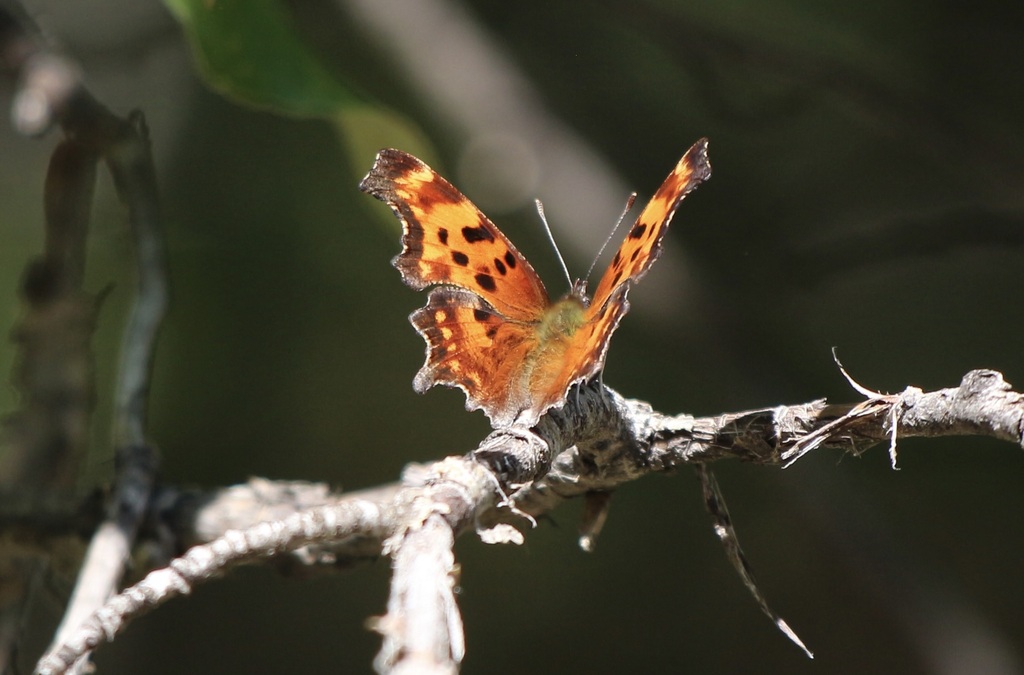
no rights reserved · CC0
Family: Nymphalidae · Class: Insecta · Order: Lepidoptera
Polygonia oreas (Oreas Comma) is a California animal in the Nymphalidae family.
The Oreas comma is a medium-sized butterfly in the family Nymphalidae, with a wingspan measuring 45 to 65 mm (1.8 to 2.6 inches). The dorsal wing surfaces are orange-brown with dark irregular markings and black borders. Males typically display more vibrant orange coloration than females. The ventral hindwings are mottled brown and gray with distinctive pale markings, including a characteristic white comma-shaped mark that gives the species its common name. The wing undersides provide excellent camouflage when the butterfly rests with wings closed on tree bark or leaf litter. Polygonia oreas occurs from British Columbia south through eastern Washington and eastern Oregon, extending along the Pacific Slope to central California. The species ranges southeast through the northern Rockies to southern Wyoming, Colorado, and Utah. In California, populations are documented primarily in the Sierra Nevada and northern mountains, typically at elevations between 1,200 and 3,000 meters (4,000 to 10,000 feet). The distribution follows mountainous terrain and is often discontinuous across the range. This species inhabits coniferous and mixed forests, particularly areas with openings, clearings, and forest edges. Oreas commas are commonly found in riparian zones, mountain meadows adjacent to forest, and areas recovering from logging or fire disturbance. Adults frequent sunny spots along forest trails, stream corridors, and clearings where host plants are present. The species shows a preference for cooler, moister forest environments compared to other comma butterflies. Oreas comma larvae feed exclusively on gooseberries (Ribes species), though other host plants may be utilized. Females lay eggs singly on young leaves or stems of host plants, typically selecting plants growing in partial shade. The species produces one generation annually in most of its range, with adults flying from late May through August, depending on elevation and latitude. Adults exhibit territorial behavior, with males perching on prominent objects to intercept passing females. Mating occurs during summer months, and the species overwinters as hibernating adults in protected locations such as tree crevices, under loose bark, or in woodpiles. Adults are opportunistic nectar feeders, visiting a variety of flowering plants including rabbitbrush, asters, and thistles. Males also engage in puddling behavior, gathering at mud puddles, dung, and other moisture sources to obtain minerals. The species demonstrates strong site fidelity, with individuals often returning to the same perching and feeding locations. The Oreas comma is not currently listed under federal or state endangered species acts. Populations appear stable across most of the species' range, though local declines may occur due to habitat loss from development, intensive forest management, and climate change impacts on montane ecosystems. Forest fragmentation and the removal of understory vegetation can reduce suitable habitat for both adults and host plants. Conservation efforts focus on maintaining diverse forest structure and protecting riparian corridors where Ribes species thrive.
Classification
Class: Insecta · Order: Lepidoptera · Family: Nymphalidae
Frequently asked questions
How is Polygonia oreas classified?
Polygonia oreas belongs to class Insecta, order Lepidoptera, family Nymphalidae.
What family does Polygonia oreas belong to?
Polygonia oreas is in the Nymphalidae family.
What is Polygonia oreas?
The Oreas comma is a medium-sized butterfly in the family Nymphalidae, with a wingspan measuring 45 to 65 mm (1.8 to 2.6 inches).
Is Polygonia oreas found in California?
Yes. Polygonia oreas is recorded in California in The California Species Project's catalogue.
Related species
Other California species in the same genus, family, or bioregion.
Data from The California Species Project — 14,000+ California species with verified data from CNPS, CDFW, USFWS, and more.