Polygonus leo
Hammock Skipper
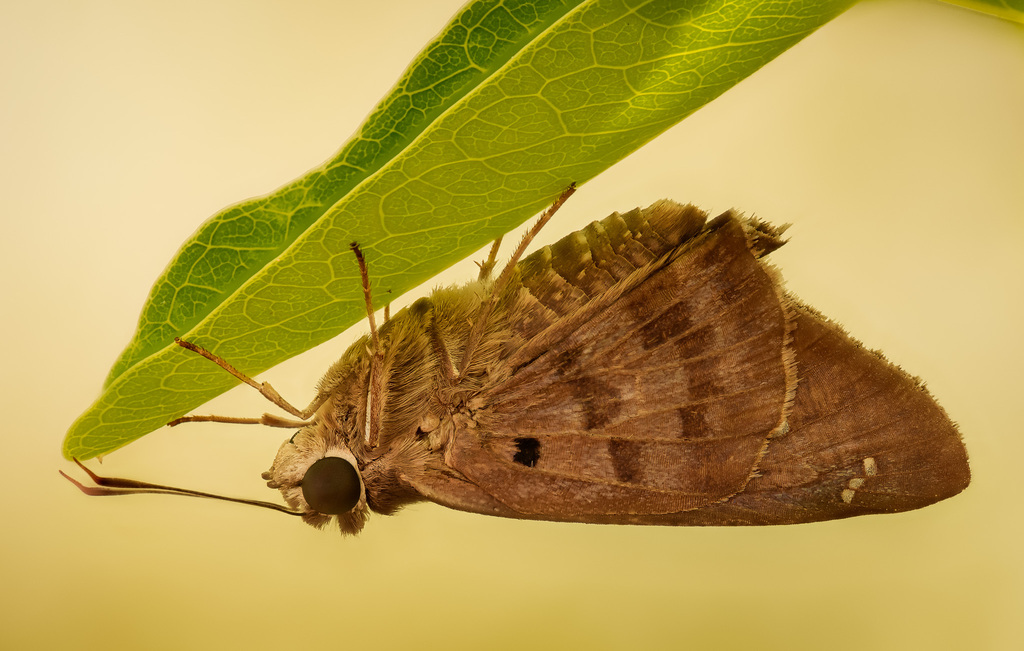
(c) Claus Giloi, some rights reserved (CC BY) · licence
Family: Hesperiidae · Class: Insecta · Order: Lepidoptera
Polygonus leo (Hammock Skipper) is a California animal in the Hesperiidae family.
The Hammock Skipper (Polygonus leo) is a medium-sized butterfly in the family Hesperiidae, characterized by its robust build and distinctive wing patterns. Adults have a wingspan of approximately 38 to 44 mm (1.5 to 1.7 inches). The dorsal wing surfaces are dark brown to blackish-brown with prominent white or pale yellow spots arranged in bands across the forewings. The hindwings display a series of pale spots along the outer margin. The ventral surfaces are lighter, typically grayish-brown with more pronounced pale markings. Males possess a distinctive stigma, a specialized scent patch on the forewings used in courtship behaviors. The species exhibits a broad neotropical distribution, ranging from Argentina north through Central America and Mexico to the West Indies and southern Florida. Within the United States, established populations are primarily confined to extreme southern Florida, particularly in the Florida Keys and coastal areas of Miami-Dade County. The species occasionally strays northward to Texas and southwestern states, likely aided by favorable wind patterns, though these represent temporary dispersal events rather than established breeding populations. Hammock Skippers inhabit tropical and subtropical hardwood forests, coastal hammocks, and disturbed areas where their host plants occur. In Florida, they are typically found in native tropical hardwood hammocks at elevations near sea level. The species shows a strong association with edges and openings in forested areas, where adults engage in basking and nectar-feeding behaviors. They frequent flowering plants including firebush, wild coffee, and various ornamental species in urban gardens. Larvae are specialized feeders on leguminous plants, with host plant preferences varying geographically. In Florida, caterpillars develop on Jamaican dogwood (Piscidia piscipula) and karum tree (Pongamia pinnata), while populations elsewhere utilize other legumes. Females deposit eggs singly on host plant foliage, typically on the undersides of leaves. Larvae construct shelters by folding leaves and securing them with silk, feeding within these protective structures. Development from egg to adult requires approximately 6 to 8 weeks under favorable conditions. Multiple generations occur annually in tropical regions, with continuous breeding possible in southern Florida's frost-free areas. Adult flight periods in Florida extend throughout the year, with peak activity during warmer months. Males establish territories along forest edges and clearings, engaging in rapid, erratic flight patterns typical of skippers. Nectar sources include both native and introduced flowering plants, with adults showing particular attraction to small, clustered flowers. The Hammock Skipper is not federally listed or considered a species of conservation concern. However, habitat loss through coastal development and hardwood hammock destruction poses localized threats to Florida populations. The species' dependence on native tropical hardwood forests makes it vulnerable to continued urbanization in South Florida. Climate change may potentially affect the northern extent of its range, though the species' broad neotropical distribution suggests overall population stability. Conservation efforts focused on preserving native hammock ecosystems benefit this species along with other specialized tropical fauna.
Classification
Class: Insecta · Order: Lepidoptera · Family: Hesperiidae
Frequently asked questions
How is Polygonus leo classified?
Polygonus leo belongs to class Insecta, order Lepidoptera, family Hesperiidae.
What family does Polygonus leo belong to?
Polygonus leo is in the Hesperiidae family.
What is Polygonus leo?
The Hammock Skipper (Polygonus leo) is a medium-sized butterfly in the family Hesperiidae, characterized by its robust build and distinctive wing patterns.
Is Polygonus leo found in California?
Yes. Polygonus leo is recorded in California in The California Species Project's catalogue.
Related species
Other California species in the same genus, family, or bioregion.
Data from The California Species Project — 14,000+ California species with verified data from CNPS, CDFW, USFWS, and more.