Polygyra cereolus
Southern Flatcoil
no rights reserved · CC0
Family: Polygyridae · Class: Gastropoda · Order: Stylommatophora
Polygyra cereolus (Southern Flatcoil) is a California animal in the Polygyridae family.
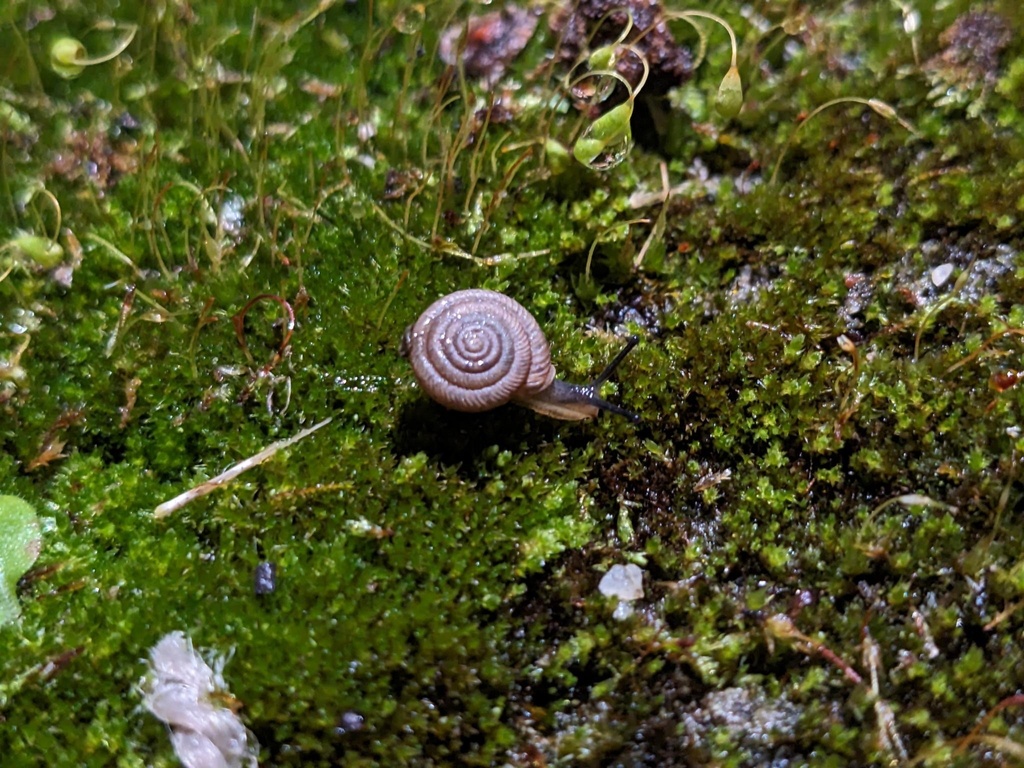
The Southern Flatcoil is a terrestrial gastropod mollusk in the family Polygyridae, characterized by its distinctive flattened, spiral shell. The shell displays a low-spired, disc-like profile with tightly coiled whorls that create a nearly flat appearance when viewed from above. Adult shells typically measure 12-18 mm in diameter with a depressed spire rarely exceeding 4-6 mm in height. The aperture is crescent-shaped and often partially covered by the preceding whorl. Shell coloration ranges from pale yellow-brown to darker brown, often with subtle banding patterns. Historically, Polygyra cereolus occurred across portions of the southeastern United States, with documented populations in Alabama, Georgia, Tennessee, and North Carolina. The species' range has contracted significantly, and current distribution appears limited to scattered locations within its historical range. According to USFWS, the species is federally listed as threatened wherever found as of December 2025. The ECOS database indicates that current range maps show occurrence only within United States jurisdictional boundaries, though the species may have occurred beyond this region historically. Southern Flatcoil snails inhabit deciduous and mixed hardwood forests, typically in areas with rich, well-drained soils and abundant leaf litter. The species shows preference for limestone-derived soils and areas with adequate calcium carbonate for shell development. Microhabitat selection includes fallen logs, rock crevices, and deep leaf litter that provide moisture retention and protection from temperature extremes. Elevation preferences and specific vegetation associations require further documentation. Like other members of the Polygyridae family, Southern Flatcoil snails are primarily detritivorous, feeding on decomposing organic matter, fungi, and microorganisms found in forest floor environments. The species is hermaphroditic, with individuals capable of both egg and sperm production. Reproduction typically occurs during favorable moisture conditions in spring and fall. Eggs are deposited in small clusters within protected microhabitats such as rotting wood or deep soil layers. Development from egg to adult requires one to two years, with sexual maturity reached in the second year. Activity patterns are largely nocturnal and closely tied to humidity levels. The Southern Flatcoil faces significant conservation challenges due to habitat loss and fragmentation from urban development, agricultural conversion, and forestry practices. Forest management activities that remove canopy cover or disturb soil layers can eliminate suitable microhabitats. The species' limited dispersal ability makes isolated populations particularly vulnerable to local extinction. Climate change poses additional threats through altered precipitation patterns and increased temperature extremes that affect soil moisture levels. Small population sizes increase vulnerability to stochastic events and genetic bottlenecks. Conservation efforts focus on habitat protection within remaining forest fragments and monitoring of known populations to assess population trends and threats.
Classification
Class: Gastropoda · Order: Stylommatophora · Family: Polygyridae
Frequently asked questions
How is Polygyra cereolus classified?
Polygyra cereolus belongs to class Gastropoda, order Stylommatophora, family Polygyridae.
What family does Polygyra cereolus belong to?
Polygyra cereolus is in the Polygyridae family.
What is Polygyra cereolus?
The Southern Flatcoil is a terrestrial gastropod mollusk in the family Polygyridae, characterized by its distinctive flattened, spiral shell.
Is Polygyra cereolus found in California?
Yes. Polygyra cereolus is recorded in California in The California Species Project's catalogue.
Related species
Other California species in the same genus, family, or bioregion.
Data from The California Species Project — 14,000+ California species with verified data from CNPS, CDFW, USFWS, and more.