Polyphylla crinita
Long-haired June Beetle
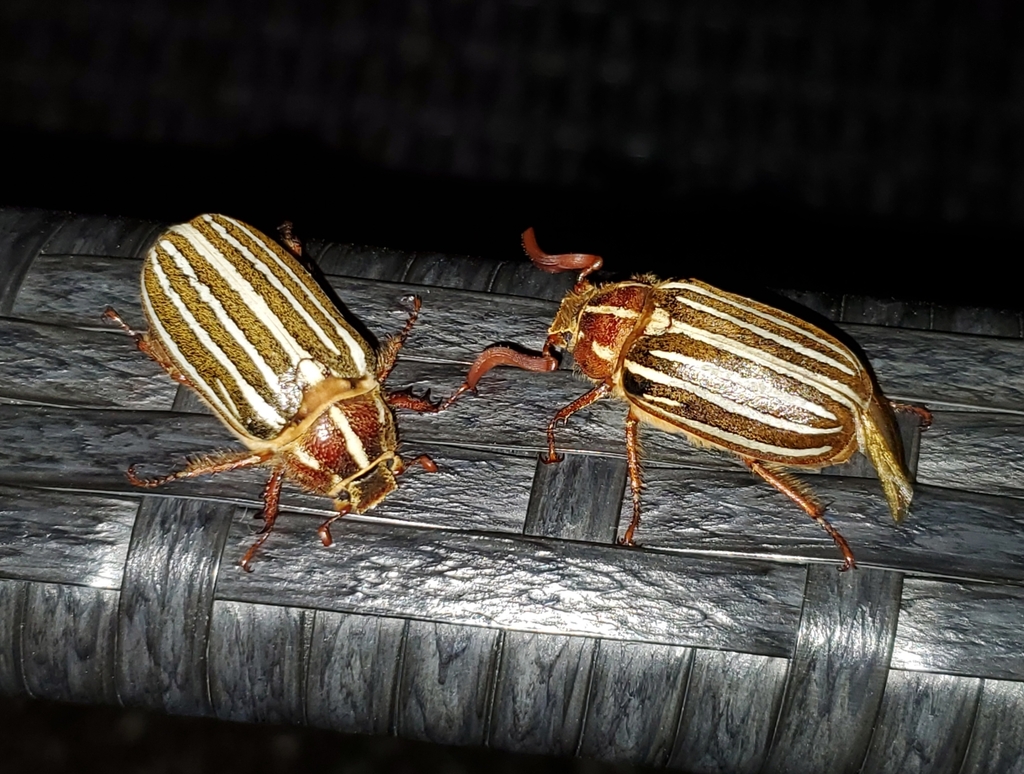
no rights reserved · CC0
Family: Scarabaeidae · Class: Insecta · Order: Coleoptera
Polyphylla crinita (Long-haired June Beetle) is a California animal in the Scarabaeidae family.
The Long-haired June Beetle (Polyphylla crinita) is a scarab beetle belonging to the family Scarabaeidae. Adults are medium-sized beetles characterized by their distinctive long, erect hairs scattered across the elytra (wing covers), which distinguishes them from other Polyphylla species (BugGuide.net). Males typically possess more prominent antennal clubs and are generally smaller than females, which have enlarged abdomens adapted for egg-laying. Polyphylla crinita occurs across western North America, with populations documented in California, Nevada, Utah, Colorado, New Mexico, and Arkansas. In California, the species is found in various regions including the Ben Lomond-Mount Hermon-Scotts Valley area of the Santa Cruz Mountains, where it co-occurs with three other Polyphylla species: P. nigra, P. decemlineata, and the federally endangered Mount Hermon June beetle (P. barbata) (USFWS 1997). The species also occurs in the Mojave Desert region and other sandy habitats throughout the state. This species inhabits sandy soils and is typically associated with grass and coniferous forest environments (BugGuide.net). Like other Polyphylla species, P. crinita shows strong substrate preferences for sandy deposits, which likely contributes to its somewhat patchy distribution. The species is adapted to arid and semi-arid environments, including desert scrub communities and transitional zones between grasslands and forests. Sandy substrates are essential for larval development and adult emergence. Adult Long-haired June Beetles emerge during late spring and early summer months, typically between May and July (BugGuide.net). Males are strong fliers and are attracted to lights during nighttime activity periods (BugGuide.net). Females are largely fossorial, remaining in or near underground burrows and exhibiting limited flight capability due to their enlarged body size. Males locate females through pheromone tracking, following chemical signals to locate potential mates in the sandy substrate. After mating, females dig burrows in sandy soil where they deposit eggs. Larvae develop underground as white grubs, feeding on plant roots and organic matter in the soil. The complete life cycle from egg to adult typically requires two to three years (BugGuide.net). Currently, Polyphylla crinita does not hold federal or state listing status in California. However, the species has been identified as a Species of Greatest Conservation Need in Arkansas (Arkansas Comprehensive Wildlife Conservation Strategy Species Team 2006) and New Mexico, indicating concerns about population trends or knowledge gaps in some portions of its range. The species' dependence on sandy habitats makes it potentially vulnerable to habitat modification, urban development, and changes in land use practices. Climate change and altered precipitation patterns may also affect the sandy ecosystems upon which this species depends. While not immediately threatened, the restricted nature of suitable sandy habitats and the species' specific substrate requirements suggest that monitoring of population trends would be beneficial for long-term conservation planning.
Classification
Class: Insecta · Order: Coleoptera · Family: Scarabaeidae
Frequently asked questions
How is Polyphylla crinita classified?
Polyphylla crinita belongs to class Insecta, order Coleoptera, family Scarabaeidae.
What family does Polyphylla crinita belong to?
Polyphylla crinita is in the Scarabaeidae family.
What is Polyphylla crinita?
The Long-haired June Beetle (Polyphylla crinita) is a scarab beetle belonging to the family Scarabaeidae.
Is Polyphylla crinita found in California?
Yes. Polyphylla crinita is recorded in California in The California Species Project's catalogue.
Related species
Other California species in the same genus, family, or bioregion.
Data from The California Species Project — 14,000+ California species with verified data from CNPS, CDFW, USFWS, and more.