Polyphylla erratica
Death Valley June Beetle
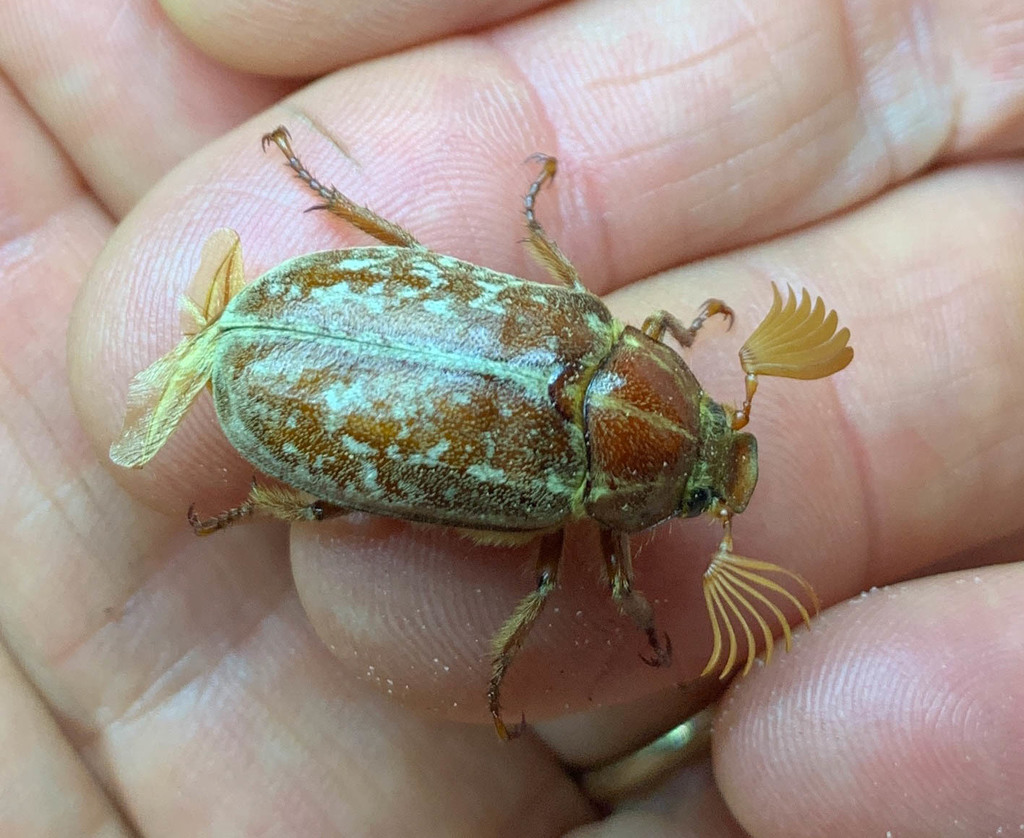
(c) Carrie Seltzer, some rights reserved (CC BY) · licence
Family: Scarabaeidae · Class: Insecta · Order: Coleoptera
Conservation status: G1G2 S1S2
Polyphylla erratica (Death Valley June Beetle) is a California animal in the Scarabaeidae family.
The Death Valley June beetle is a scarab beetle in the genus Polyphylla, distinguished by characteristics typical of its taxonomic group within the family Scarabaeidae, subfamily Melolonthinae. Like other June beetles, adults possess robust bodies with strong legs adapted for burrowing and clinging to vegetation. The species exhibits the typical scarab beetle morphology with elbowed antennae bearing distinctive lamellate clubs used for detecting chemical signals. This beetle is endemic to a highly restricted range in the Death Valley region of California and Nevada. According to the U.S. Fish and Wildlife Service, the species occurs in the Mojave Desert ecosystem, specifically in areas surrounding Death Valley National Park (USFWS 2025). The extremely limited distribution contributes to its conservation concern, with the species known from only a few documented localities within this harsh desert environment. The Death Valley June beetle inhabits desert scrub communities and rocky slopes within the Death Valley ecosystem. This environment is characterized by extreme temperatures, minimal precipitation, and specialized plant communities adapted to harsh desert conditions. The species likely utilizes sandy soils and areas with sparse vegetation typical of the Mojave Desert biome. Elevation ranges and specific microhabitat preferences have not been thoroughly documented, reflecting the limited research on this rare species. Like other members of the genus Polyphylla, this species likely follows a typical scarab beetle life cycle with underground larval development. Adults presumably emerge during warmer months, coinciding with the brief period of increased moisture and plant growth in the desert environment. The larvae probably develop in soil, feeding on organic matter and plant roots, while adults may feed on available vegetation during their brief emergence period. Specific details regarding reproductive behavior, seasonal activity patterns, and dietary preferences remain poorly documented. The Death Valley June beetle currently holds a Species of Concern designation under the U.S. Fish and Wildlife Service, as listed in the ECOS database (USFWS 2025). The species carries a global conservation rank of G1G2 and state rank of S1S2, indicating it is critically imperiled to imperiled both globally and within California. These rankings reflect the species' extremely small population size and restricted range, making it vulnerable to extinction from environmental changes or habitat disturbance. Primary threats likely include habitat degradation, climate change impacts on already extreme desert conditions, and the species' naturally limited distribution. The harsh Death Valley environment, while providing specialized habitat, also makes populations vulnerable to environmental fluctuations. Detailed ecological studies of this species remain limited due to its rarity and the challenging research environment of Death Valley. Current conservation efforts focus on habitat protection within Death Valley National Park and monitoring of known populations. The species' survival depends on maintaining the integrity of its specialized desert habitat and understanding its specific ecological requirements through continued research.
Classification
Class: Insecta · Order: Coleoptera · Family: Scarabaeidae
Conservation status
G1G2 S1S2
Frequently asked questions
How is Polyphylla erratica classified?
Polyphylla erratica belongs to class Insecta, order Coleoptera, family Scarabaeidae.
What family does Polyphylla erratica belong to?
Polyphylla erratica is in the Scarabaeidae family.
Is Polyphylla erratica protected or of conservation concern?
Polyphylla erratica carries the following status: G1G2 S1S2.
What is Polyphylla erratica?
The Death Valley June beetle is a scarab beetle in the genus Polyphylla, distinguished by characteristics typical of its taxonomic group within the family Scarabaeidae, subfamily Melolonthinae.
Is Polyphylla erratica found in California?
Yes. Polyphylla erratica is recorded in California in The California Species Project's catalogue.
Related species
Other California species in the same genus, family, or bioregion.
Data from The California Species Project — 14,000+ California species with verified data from CNPS, CDFW, USFWS, and more.