Polyphylla nubila
Atascadero June Beetle
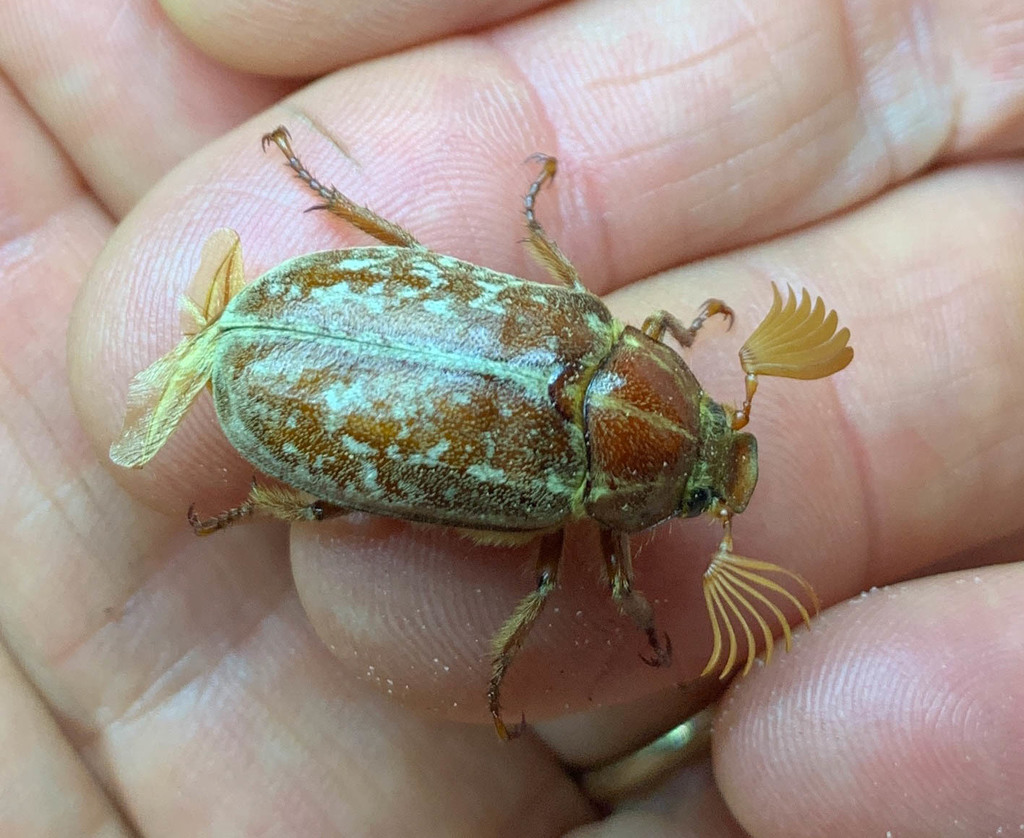
(c) Carrie Seltzer, some rights reserved (CC BY) · licence
Family: Scarabaeidae · Class: Insecta · Order: Coleoptera
Conservation status: G1 S1
Polyphylla nubila (Atascadero June Beetle) is a California animal in the Scarabaeidae family.
The Atascadero June beetle (Polyphylla nubila) is a scarab beetle in the subfamily Melolonthinae, first described by Van Dyke in 1947. This species belongs to the genus Polyphylla, commonly known as lined June beetles, which are characterized by their robust build and distinctive markings. Adult beetles are brown to dark brown in coloration with lighter markings, though detailed morphological descriptions remain limited in the scientific literature. The Atascadero June beetle is endemic to San Luis Obispo County, California, representing one of the most geographically restricted scarab beetles in North America (BugGuide). The species has been documented specifically in the Atascadero area, which gives the beetle its common name. This extremely limited range makes the species particularly vulnerable to habitat loss and environmental changes. Specific habitat requirements for this species have not been well documented in the scientific literature. Like other members of the genus Polyphylla, the Atascadero June beetle likely inhabits areas with suitable soil conditions for larval development and appropriate vegetation for adult feeding. Most Polyphylla species are associated with sandy or well-drained soils where larvae can develop over multiple years, feeding on plant roots. The life cycle and ecological behavior of Polyphylla nubila remain poorly studied. Based on the biology of related species in the genus, adults likely emerge during late spring or early summer months, coinciding with the typical June beetle flight period. Adults are probably attracted to lights during their nocturnal activity periods. Larvae, known as white grubs, presumably develop in soil over a period of two to three years, feeding on roots of various plants. The specific host plants and detailed reproductive biology have not been documented. The Atascadero June beetle is listed on California's Special Animals List maintained by the California Department of Fish and Wildlife, indicating recognized conservation concern (CDFW Special Animals List). The species has a G1 S1 ranking, denoting it as critically imperiled both globally and within California due to its extremely limited range and small population size. This ranking reflects the high risk of extinction facing the species. The beetle also appears as a Species of Concern in USFWS databases, though it lacks formal federal listing status. Primary threats to this species likely include habitat loss from urban development, agricultural conversion, and land use changes within its restricted San Luis Obispo County range. The species' apparent association with the Atascadero area makes it particularly vulnerable to localized disturbances. Climate change may pose additional threats through altered precipitation patterns and temperature regimes that could affect soil moisture conditions necessary for larval development. Scientific documentation for this species remains extremely limited despite its conservation status. The information presented here synthesizes available sources including taxonomic databases and California wildlife inventories. Research on the species' detailed biology, ecology, and population status is urgently needed to inform effective conservation strategies.
Classification
Class: Insecta · Order: Coleoptera · Family: Scarabaeidae
Conservation status
G1 S1
Frequently asked questions
How is Polyphylla nubila classified?
Polyphylla nubila belongs to class Insecta, order Coleoptera, family Scarabaeidae.
What family does Polyphylla nubila belong to?
Polyphylla nubila is in the Scarabaeidae family.
Is Polyphylla nubila protected or of conservation concern?
Polyphylla nubila carries the following status: G1 S1.
What is Polyphylla nubila?
The Atascadero June beetle (Polyphylla nubila) is a scarab beetle in the subfamily Melolonthinae, first described by Van Dyke in 1947.
Is Polyphylla nubila found in California?
Yes. Polyphylla nubila is recorded in California in The California Species Project's catalogue.
Related species
Other California species in the same genus, family, or bioregion.
Data from The California Species Project — 14,000+ California species with verified data from CNPS, CDFW, USFWS, and more.