Polyxenus lagurus
Bristly Millipede
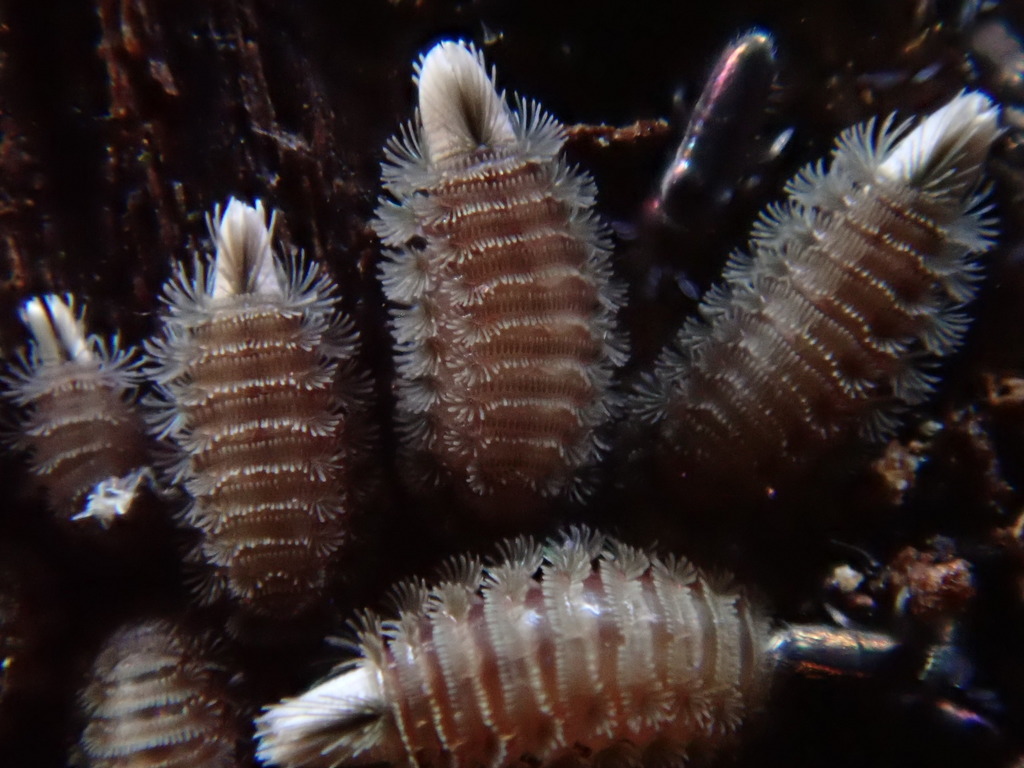
(c) agujaceratops, some rights reserved (CC BY) · licence
Family: Polyxenidae · Class: Diplopoda · Order: Polyxenida
Polyxenus lagurus (Bristly Millipede) is a California animal in the Polyxenidae family.
The bristly millipede (Polyxenus lagurus) is a diminutive arthropod measuring approximately 2 millimeters in length, making it one of the smallest millipedes in North America. This species belongs to the order Polyxenida and is distinguished by its distinctive bristly appearance, earning it alternative common names including fuzzy millipede and pincushion millipede (BugGuide). Unlike typical millipedes, P. lagurus possesses a soft, flexible body covered in characteristic bristles or setae that give it a fuzzy texture. The body is typically pale to light brown in coloration with 13 body segments, each bearing a single pair of legs rather than the two pairs found in most other millipede orders. Polyxenus lagurus has a broad distribution across North America, with documented occurrences spanning from the eastern United States westward. According to BugGuide, the species has been recorded from Maryland to Texas and northward to Illinois, though its full range likely extends beyond these documented localities. The species appears to have a cosmopolitan distribution pattern, possibly aided by human transport activities. This millipede inhabits a variety of microhabitats, typically favoring moist environments with abundant organic matter. The species is commonly found under bark, in leaf litter, beneath stones, and in soil rich in decomposing plant material. Unlike many millipede species that prefer deeper soil layers, P. lagurus tends to occupy surface habitats and shallow soil environments where humidity levels remain relatively stable. Bristly millipedes are detritivores, feeding primarily on decaying organic matter, fungi, and microorganisms found in their leaf litter and soil habitats. Their feeding behavior contributes to nutrient cycling and soil formation processes. The species exhibits typical millipede defensive behavior, curling into a tight coil when threatened. Reproduction involves direct development without a larval stage, with young millipedes resembling miniature adults but possessing fewer body segments. Juveniles molt several times as they mature, adding additional segments and leg pairs with each molt until reaching the adult complement of 13 segments. Polyxenus lagurus does not possess any federal or state conservation listing status and appears to maintain stable populations across its range. However, the species was included on Arkansas's 2006 Species of Greatest Conservation Need list, not due to immediate conservation concerns but because insufficient information exists regarding its taxonomic status, life history, and population trends (BugGuide). This designation reflects the general lack of comprehensive research on small soil arthropods rather than evidence of population decline. The species faces typical threats associated with habitat modification, including soil compaction, pesticide use, and removal of leaf litter and organic matter from natural areas. Climate change may also influence soil moisture regimes that are critical for millipede survival. Despite these potential pressures, the species' broad distribution and apparent adaptability to various microhabitat conditions suggest it remains relatively secure across most of its range.
Classification
Class: Diplopoda · Order: Polyxenida · Family: Polyxenidae
Frequently asked questions
How is Polyxenus lagurus classified?
Polyxenus lagurus belongs to class Diplopoda, order Polyxenida, family Polyxenidae.
What family does Polyxenus lagurus belong to?
Polyxenus lagurus is in the Polyxenidae family.
What is Polyxenus lagurus?
The bristly millipede (Polyxenus lagurus) is a diminutive arthropod measuring approximately 2 millimeters in length, making it one of the smallest millipedes in North America.
Is Polyxenus lagurus found in California?
Yes. Polyxenus lagurus is recorded in California in The California Species Project's catalogue.
More California species
This species has no close relatives in our California data — here are other species to explore.
Data from The California Species Project — 14,000+ California species with verified data from CNPS, CDFW, USFWS, and more.