Pomacea canaliculata
Channeled Apple Snail
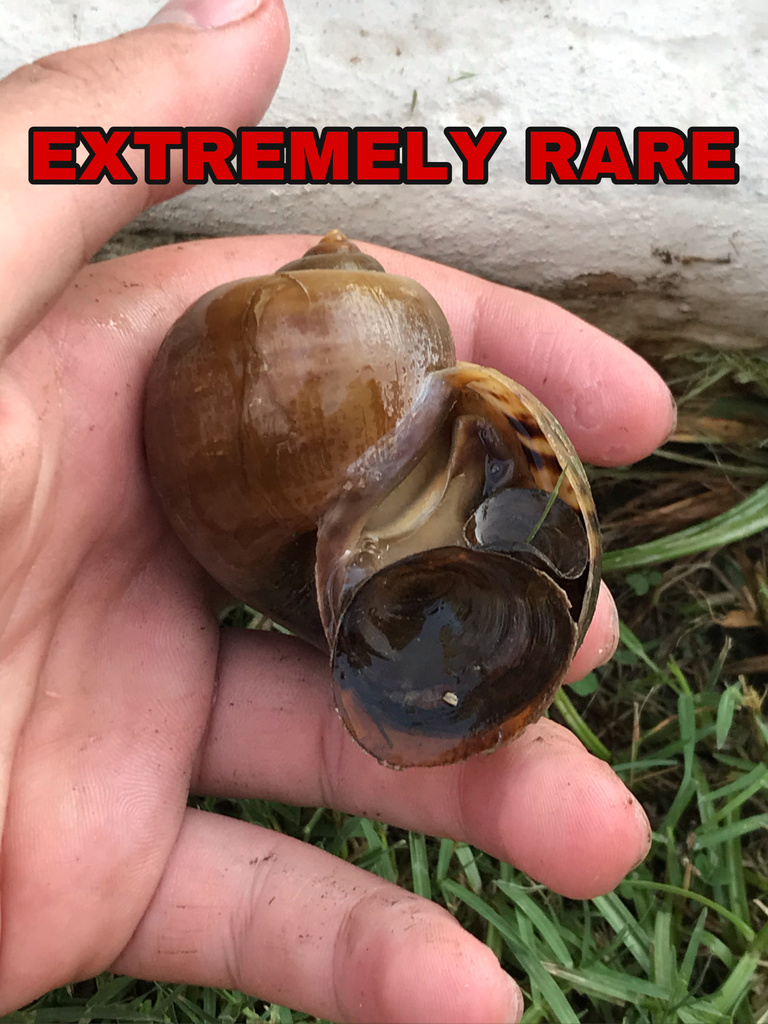
(c) Parsa Fard, some rights reserved (CC BY) · licence
Family: Ampullariidae · Class: Gastropoda · Order: Architaenioglossa
Pomacea canaliculata (Channeled Apple Snail) is a California animal in the Ampullariidae family.
The channeled apple snail is a large freshwater gastropod that grows to over 76 mm (3 inches) in length. The globose shell consists of 5 to 6 whorls separated by a deep groove or channel that gives the species its common name. Shell coloration is highly variable but typically includes bands of brown, black, and yellowish-tan, with some albino and gold color variations documented. The species possesses both gills and a lung, allowing it to survive in and out of water, and has an operculum that seals the shell opening for protection. Native to the Lower Paraná, Uruguay, and La Plata basins in Argentina, Paraguay, Uruguay, and southern Brazil, the channeled apple snail has been introduced worldwide, often initially for aquaculture purposes. In California, the species was first discovered in the late 1990s and has since been documented in multiple counties (CDFW 2022). Recent surveys have confirmed established populations in San Joaquin County, with discoveries in community ponds in Manteca in 2021. The species continues to expand its range within the state through both natural dispersal and human-mediated transport. Channeled apple snails inhabit freshwater environments including ponds, lakes, slow-moving rivers, canals, and wetlands. They prefer shallow waters with abundant aquatic vegetation and can tolerate a wide range of water conditions. The species thrives in tropical and subtropical climates but demonstrates adaptability to temperate conditions. During dry periods, individuals can survive out of water for extended periods by sealing themselves within their shells. This species exhibits rapid reproductive capabilities, with females depositing bright pink or orange egg masses above the waterline on vegetation, rocks, or artificial structures. Each clutch can contain 200 to 600 eggs, and females may produce multiple clutches throughout the breeding season. Channeled apple snails are generalist herbivores that consume aquatic macrophytes, algae, detritus, and occasionally carrion. Their feeding behavior can dramatically alter aquatic ecosystems through intensive consumption of native vegetation. The channeled apple snail is considered one of the world's most destructive aquatic invasive species. In California, it is classified as a restricted species under Section 671 of the California Code of Regulations, prohibiting importation, transportation, and possession without permits. The species poses significant ecological threats through competition with native mollusks, alteration of aquatic plant communities, and potential impacts on waterfowl habitat. Economic impacts include damage to agricultural crops, particularly rice, and interference with irrigation systems. The species also serves as an intermediate host for the rat lungworm parasite, though infections in North American populations remain poorly documented. Management efforts focus on early detection, rapid response protocols, and public education to prevent further spread through the aquarium trade and illegal releases.
Classification
Class: Gastropoda · Order: Architaenioglossa · Family: Ampullariidae
Frequently asked questions
How is Pomacea canaliculata classified?
Pomacea canaliculata belongs to class Gastropoda, order Architaenioglossa, family Ampullariidae.
What family does Pomacea canaliculata belong to?
Pomacea canaliculata is in the Ampullariidae family.
What is Pomacea canaliculata?
The channeled apple snail is a large freshwater gastropod that grows to over 76 mm (3 inches) in length.
Is Pomacea canaliculata found in California?
Yes. Pomacea canaliculata is recorded in California in The California Species Project's catalogue.
More California species
This species has no close relatives in our California data — here are other species to explore.
Data from The California Species Project — 14,000+ California species with verified data from CNPS, CDFW, USFWS, and more.