Pomatiopsis chacei
Marsh Walker
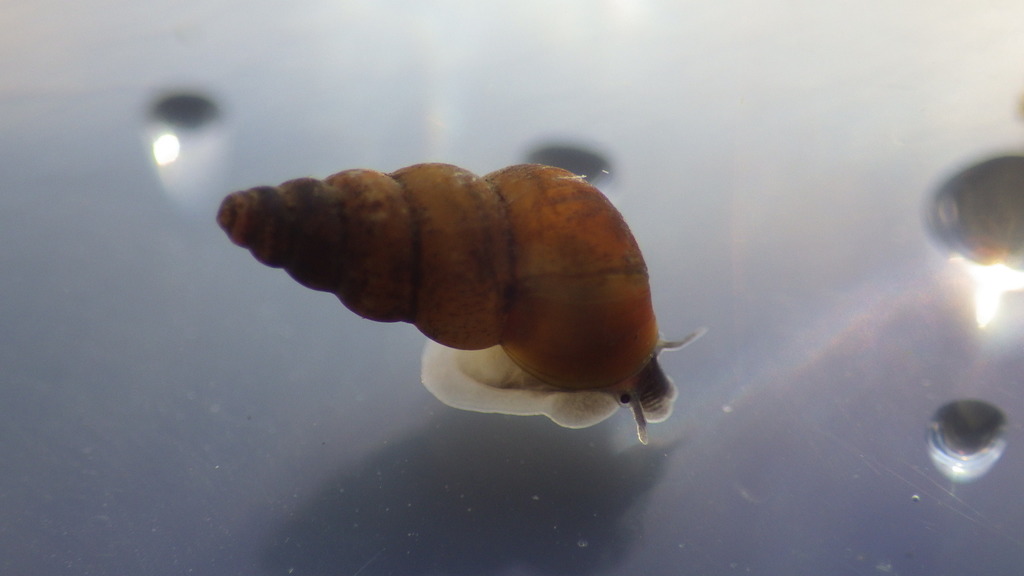
no rights reserved · CC0
Family: Pomatiopsidae · Class: Gastropoda · Order: Littorinimorpha
Conservation status: G1 S2
Pomatiopsis chacei (Marsh Walker) is a California animal in the Pomatiopsidae family.
The Marsh Walker (Pomatiopsis chacei) is a small amphibious gastropod in the family Pomatiopsidae. This freshwater snail possesses both gills and an operculum that seals the shell aperture when the animal withdraws into its shell. Like other members of the genus Pomatiopsis, this species exhibits amphibious capabilities, able to survive in both aquatic and terrestrial environments within wetland systems. The Marsh Walker has an extremely limited distribution, with its range restricted to specific tidal marsh ecosystems of northern and central California. According to NatureServe Explorer, the species has a Global Status of G1, indicating it is critically imperiled with five or fewer occurrences or very few remaining individuals. The species' California state ranking of S2 reflects its imperiled status within the state, with six to twenty occurrences documented. This species inhabits tidal marsh ecosystems, which represent some of the most threatened habitats in California. These environments are characterized by periodic tidal inundation, brackish to freshwater conditions, and specialized vegetation communities adapted to fluctuating salinity levels. The Marsh Walker's amphibious nature allows it to exploit the dynamic conditions of these transitional zones between terrestrial and aquatic environments. Tidal marshes provide the specific hydrological conditions required by this specialized gastropod, including areas that experience regular wetting and drying cycles. As a member of the Pomatiopsidae family, the Marsh Walker likely feeds on detritus, algae, and organic matter within its marsh habitat. The species' gill-breathing capability allows it to remain submerged during high tides, while its ability to seal its shell with an operculum helps prevent desiccation during low tide periods when marsh areas may be exposed. Reproduction likely involves the deposition of eggs in suitable microhabitats within the marsh environment, though specific breeding behaviors and timing have not been well documented for this rare species. The Marsh Walker faces severe conservation challenges due to its extremely limited distribution and the ongoing loss of tidal marsh habitat throughout California. Historically, California has lost approximately 95% of its tidal marsh ecosystems to development, agriculture, and water diversions. Current threats include habitat destruction from urban development, altered hydrology from water management activities, pollution, invasive species, and climate change impacts such as sea level rise and altered precipitation patterns. The U.S. Fish and Wildlife Service has developed recovery plans for tidal marsh ecosystems that may benefit this species, though specific conservation actions for the Marsh Walker have not been well documented. The species' G1 global ranking indicates an urgent need for habitat protection and population monitoring to prevent extinction. Given the continuing loss and degradation of California's remaining tidal marsh habitats, immediate conservation action is critical for the long-term survival of this critically imperiled gastropod.
Classification
Class: Gastropoda · Order: Littorinimorpha · Family: Pomatiopsidae
Conservation status
G1 S2
Frequently asked questions
How is Pomatiopsis chacei classified?
Pomatiopsis chacei belongs to class Gastropoda, order Littorinimorpha, family Pomatiopsidae.
What family does Pomatiopsis chacei belong to?
Pomatiopsis chacei is in the Pomatiopsidae family.
Is Pomatiopsis chacei protected or of conservation concern?
Pomatiopsis chacei carries the following status: G1 S2.
What is Pomatiopsis chacei?
The Marsh Walker (Pomatiopsis chacei) is a small amphibious gastropod in the family Pomatiopsidae.
Is Pomatiopsis chacei found in California?
Yes. Pomatiopsis chacei is recorded in California in The California Species Project's catalogue.
Related species
Other California species in the same genus, family, or bioregion.
Data from The California Species Project — 14,000+ California species with verified data from CNPS, CDFW, USFWS, and more.