Pomoxis annularis
White crappie
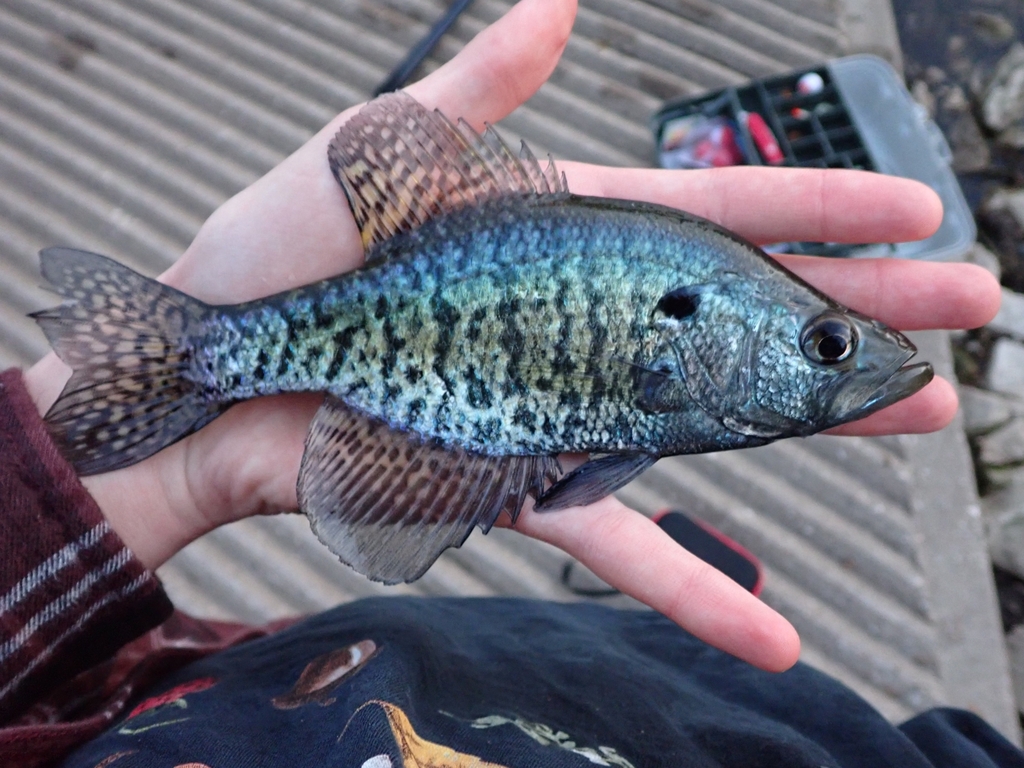
(c) Rorey, some rights reserved (CC BY) · licence
Family: Centrarchidae · Class: Actinopterygii · Order: Centrarchiformes
Pomoxis annularis (White crappie) is a California animal in the Centrarchidae family.
The white crappie is a laterally compressed freshwater fish in the sunfish family Centrarchidae. Adults typically measure 200 to 300 mm (8 to 12 inches) in total length, with some individuals reaching up to 430 mm (17 inches). The body is deep and slab-sided, with a relatively small head and large mouth that extends to below the eye. The species displays silvery-white coloration with darker vertical bars or blotches along the sides, distinguishing it from the black crappie which shows more irregular dark markings. White crappies possess 5 to 6 dorsal fin spines, compared to 7 to 8 in black crappies, providing a reliable field identification characteristic. Native to the central and eastern United States, white crappie originally ranged from the Great Lakes region south to the Gulf of Mexico and from the eastern seaboard west to the Great Plains. In California, this species is non-native, having been introduced through stocking programs and aquaculture activities. White crappies now occur in numerous reservoirs, lakes, and slow-moving rivers throughout the Central Valley, coastal regions, and southern California. Established populations exist in major water bodies including Clear Lake, the California Aqueduct system, and various reservoirs in the Los Angeles and San Diego metropolitan areas. White crappies inhabit warm, turbid waters with abundant vegetation or submerged structure. They prefer areas with soft substrates and typically occur in shallow bays, coves, and backwater areas of lakes and reservoirs. The species tolerates a wide range of water conditions but thrives in eutrophic environments with temperatures between 18 and 24 degrees Celsius (64 to 75 degrees Fahrenheit). White crappies commonly associate with submerged logs, brush piles, dock pilings, and aquatic vegetation beds that provide cover and feeding opportunities. White crappies are opportunistic predators that feed primarily on zooplankton, aquatic insects, and small fish. Juveniles consume copepods, cladocerans, and chironomid larvae, while adults prey on small fish including young sunfish, minnows, and their own species. Spawning occurs from March through June when water temperatures reach 14 to 20 degrees Celsius (57 to 68 degrees Fahrenheit). Males construct shallow nests in sandy or gravelly areas, typically 0.5 to 2 meters deep. Females deposit 27,000 to 204,000 adhesive eggs, which males guard until hatching occurs in 3 to 5 days. White crappie holds no federal or state conservation status in California, as it is a non-native species. The species is considered established and self-sustaining in many California water bodies. While not listed as invasive, white crappies may compete with native fish species for resources and habitat. Population management focuses on monitoring distribution and assessing potential impacts on native fish communities rather than conservation efforts. The species supports recreational fisheries in many California reservoirs and is managed under general freshwater fishing regulations.
Classification
Class: Actinopterygii · Order: Centrarchiformes · Family: Centrarchidae
Frequently asked questions
How is Pomoxis annularis classified?
Pomoxis annularis belongs to class Actinopterygii, order Centrarchiformes, family Centrarchidae.
What family does Pomoxis annularis belong to?
Pomoxis annularis is in the Centrarchidae family.
What is Pomoxis annularis?
The white crappie is a laterally compressed freshwater fish in the sunfish family Centrarchidae.
Is Pomoxis annularis found in California?
Yes. Pomoxis annularis is recorded in California in The California Species Project's catalogue.
Related species
Other California species in the same genus, family, or bioregion.
Data from The California Species Project — 14,000+ California species with verified data from CNPS, CDFW, USFWS, and more.