Pomoxis nigromaculatus
Ck crappie
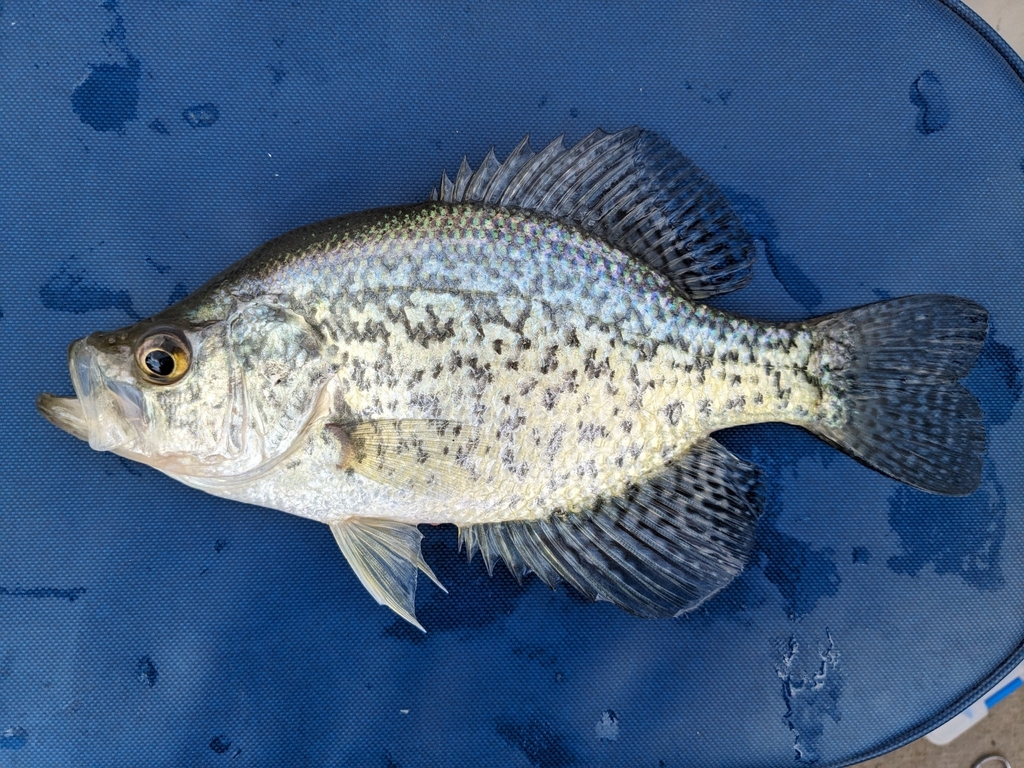
(c) Quinn, some rights reserved (CC BY) · licence
Family: Centrarchidae · Class: Actinopterygii · Order: Centrarchiformes
Pomoxis nigromaculatus (Ck crappie) is a California animal in the Centrarchidae family.
The black crappie (Pomoxis nigromaculatus) is a freshwater game fish in the sunfish family Centrarchidae. Adults typically reach 200-300 mm (8-12 inches) in length, though some individuals may exceed 380 mm (15 inches). The species is characterized by its laterally compressed, deep body and distinctive irregular black blotches or spots scattered across silvery sides. Black crappies can be distinguished from white crappies by their more random spotting pattern and typically seven to eight dorsal fin spines, compared to the white crappie's five to six spines. Black crappies are native to eastern North America, with their natural range extending from southern Canada through the Great Lakes region and Mississippi River basin to the Gulf Coast. The species has been widely introduced beyond its native range, including throughout much of the western United States. In California, black crappies are established in numerous reservoirs, lakes, and slow-moving rivers, though they are considered a non-native species. This species inhabits quiet, warm temperate waters including lakes, reservoirs, ponds, and slow-moving sections of rivers and streams (USFWS). Black crappies prefer areas with moderate vegetation cover and typically avoid waters with strong currents. They are commonly found in depths ranging from shallow nearshore areas to deeper offshore waters, often associating with submerged structures such as fallen trees, brush piles, or artificial cover. Black crappies often form schools and exhibit peak feeding activity during early morning hours (USFWS). They are opportunistic predators, feeding primarily on zooplankton when young and transitioning to a diet of small fish, aquatic insects, and crustaceans as adults. Spawning occurs in spring when water temperatures reach 14-20°C (57-68°F). Males construct nests by clearing circular depressions in sand, mud, or gravel bottoms, typically in shallow water near protective cover (FishBase). Females may spawn with multiple males across different nests, depositing adhesive eggs that males guard until hatching. Black crappies can live up to 10 years and reach sexual maturity at 2-4 years of age. Black crappies are not federally listed and face no significant conservation concerns in their native range, where they remain abundant and support important recreational fisheries. As a popular game fish, the species is actively managed through stocking programs in many states. However, in areas where they have been introduced, black crappies may compete with native fish species for food and habitat resources. Their ability to reproduce successfully in a variety of aquatic environments has contributed to their establishment in non-native waters throughout North America. The species' adaptability and tolerance for various water conditions continue to support both native populations and introduced populations across diverse geographic regions.
Classification
Class: Actinopterygii · Order: Centrarchiformes · Family: Centrarchidae
Frequently asked questions
How is Pomoxis nigromaculatus classified?
Pomoxis nigromaculatus belongs to class Actinopterygii, order Centrarchiformes, family Centrarchidae.
What family does Pomoxis nigromaculatus belong to?
Pomoxis nigromaculatus is in the Centrarchidae family.
What is Pomoxis nigromaculatus?
The black crappie (Pomoxis nigromaculatus) is a freshwater game fish in the sunfish family Centrarchidae.
Is Pomoxis nigromaculatus found in California?
Yes. Pomoxis nigromaculatus is recorded in California in The California Species Project's catalogue.
Related species
Other California species in the same genus, family, or bioregion.
Data from The California Species Project — 14,000+ California species with verified data from CNPS, CDFW, USFWS, and more.