Ponometia elegantula
Arizona Bird Dropping Moth
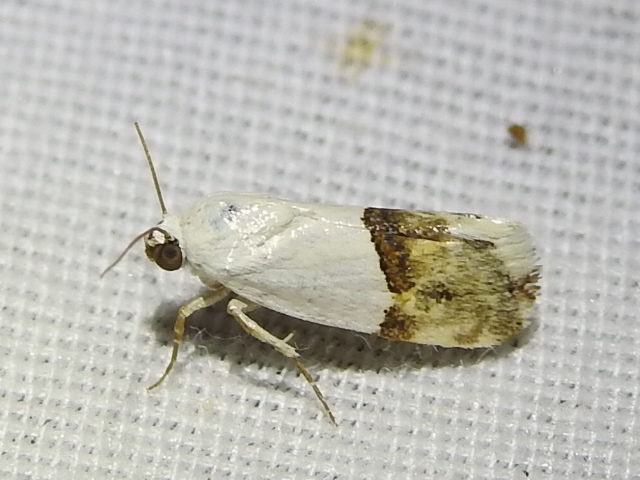
(c) Sam Kieschnick, some rights reserved (CC BY) · licence
Family: Noctuidae · Class: Insecta · Order: Lepidoptera
Ponometia elegantula (Arizona Bird Dropping Moth) is a California animal in the Noctuidae family.
The Arizona Bird Dropping Moth (Ponometia elegantula) is a small nocturnal moth in the family Noctuidae. Adults have a wingspan of approximately 18-22 mm (0.7-0.9 inches), with forewings that display distinctive white and dark brown markings that closely resemble bird droppings when the moth is at rest. The forewings feature irregular white patches bordered by dark brown to black areas, creating an effective cryptic coloration pattern. The hindwings are typically pale gray to white with minimal markings. The thorax and head are mottled brown and white, continuing the camouflage pattern. The antennae are filiform in both sexes, and the body is compact and cylindrical. Despite its common name referencing Arizona, Ponometia elegantula has a broader western North American distribution. The species occurs in Arizona, California, Nevada, and extends into Baja California, Mexico. In California, the moth has been documented in desert and semi-arid regions of the southeastern counties, including Imperial, Riverside, and San Bernardino counties. The species appears to have a patchy distribution within suitable habitat areas. The Arizona Bird Dropping Moth inhabits arid and semi-arid environments, typically at elevations below 1,000 meters (3,280 feet). Primary habitat includes desert scrubland, chaparral edges, and areas with scattered shrub vegetation. The species shows a preference for areas with creosote bush (Larrea tridentata) communities and mixed desert shrub associations. Adults are often found near washes and canyon bottoms where moisture levels are slightly higher and host plant diversity increases. Adults are nocturnal and are attracted to artificial lights. Flight period extends from March through October, with peak activity typically occurring during warmer months from May through September. During daylight hours, moths rest motionless on tree bark, rocks, or wooden surfaces where their bird dropping mimicry provides protection from predators. Larvae feed on various plants in the family Chenopodiaceae, including saltbush (Atriplex species) and other desert shrubs. The species likely produces multiple broods per year in favorable conditions. Eggs are laid singly on host plant foliage, and larvae construct silk shelters among leaves and stems. Currently, Ponometia elegantula lacks formal conservation status designations at federal, state, or international levels. The species does not appear on the U.S. Fish and Wildlife Service Endangered Species List, California's Species of Special Concern list, or the IUCN Red List. Population trends are not well documented, but the moth's association with desert ecosystems suggests potential vulnerability to habitat loss from urban development, agriculture, and climate change impacts on arid environments. The species' relatively restricted range in California and dependence on specific desert plant communities may warrant monitoring. Loss of native desert vegetation through development and invasion by non-native plants could affect local populations, though the species' broader southwestern range may provide some demographic stability.
Classification
Class: Insecta · Order: Lepidoptera · Family: Noctuidae
Frequently asked questions
How is Ponometia elegantula classified?
Ponometia elegantula belongs to class Insecta, order Lepidoptera, family Noctuidae.
What family does Ponometia elegantula belong to?
Ponometia elegantula is in the Noctuidae family.
What is Ponometia elegantula?
The Arizona Bird Dropping Moth (Ponometia elegantula) is a small nocturnal moth in the family Noctuidae.
Is Ponometia elegantula found in California?
Yes. Ponometia elegantula is recorded in California in The California Species Project's catalogue.
Related species
Other California species in the same genus, family, or bioregion.
Data from The California Species Project — 14,000+ California species with verified data from CNPS, CDFW, USFWS, and more.