Pontia occidentalis
Western White
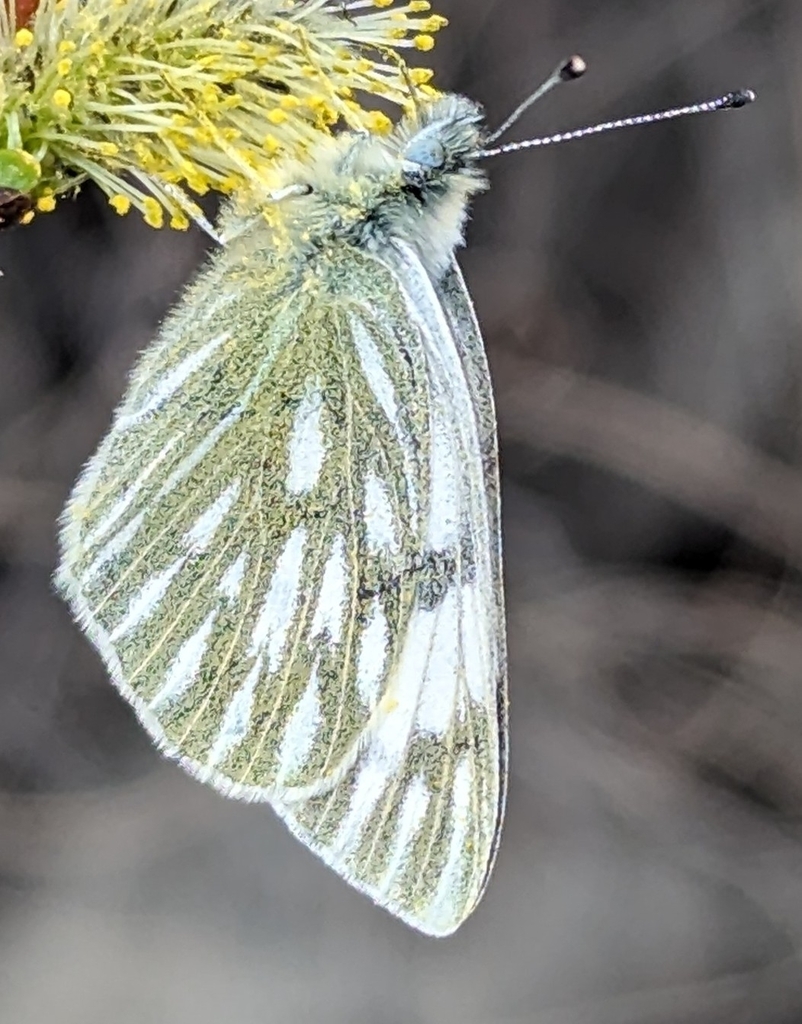
no rights reserved · CC0
Family: Pieridae · Class: Insecta · Order: Lepidoptera
Pontia occidentalis (Western White) is a California animal in the Pieridae family.
The Western White is a medium-sized butterfly in the family Pieridae, with adults displaying distinctive white wings marked by variable dark patterns. Males typically measure 38-50 mm (1.5-2.0 inches) in wingspan, while females are slightly larger at 42-54 mm (1.7-2.1 inches). The dorsal wing surfaces are predominantly white with black markings along the wing margins and veins. Males exhibit more pronounced dark markings, particularly along the forewing costa and apex. The ventral hindwings display greenish-yellow veining with scattered dark scales, creating a marbled appearance that aids in camouflage when perched. Sexual dimorphism is evident, with females showing broader dark wing borders and more extensive markings than males. Pontia occidentalis ranges from Alaska south to central California, northern Arizona, and northern New Mexico, extending eastward to North Dakota and central Ontario. In California, the species occurs primarily in the northern counties and along the Sierra Nevada range, with populations documented in montane and subalpine environments. The distribution reflects the species' preference for cooler climates and higher elevation habitats compared to closely related Pontia species. The Western White inhabits diverse environments including mountain meadows, forest clearings, alpine slopes, and disturbed areas such as roadsides and agricultural edges. The species occurs from near sea level in northern portions of its range to elevations exceeding 3,000 meters (9,800 feet) in mountainous regions. Adults are commonly found in areas with abundant flowering plants and nearby host plant populations. The species demonstrates considerable habitat flexibility, occupying both pristine natural areas and human-modified landscapes. Adults are active fliers during daylight hours, with peak activity occurring in mid-morning and early afternoon. Flight periods vary with elevation and latitude, typically extending from May through September at lower elevations and June through August at higher elevations. Males patrol territories and engage in courtship flights, often pursuing potential mates with rapid, erratic flight patterns. Females deposit eggs singly on host plants, primarily selecting various members of the mustard family (Brassicaceae). Larvae feed on flowers and developing fruits of their host plants, consuming both petals and seed pods. The species typically produces one to two generations per year, depending on local climate conditions and elevation. The Western White is not currently listed under federal or state endangered species legislation and appears to maintain stable populations across most of its range. The species' broad distribution, habitat flexibility, and ability to utilize both native and introduced Brassicaceae species contribute to its overall population stability. However, local populations may face pressures from habitat modification, pesticide applications in agricultural areas, and climate change effects on montane ecosystems. The species' reliance on mustard family plants, which include both native and weedy introduced species, provides some resilience against habitat changes but may also create conservation complexities in managed landscapes.
Classification
Class: Insecta · Order: Lepidoptera · Family: Pieridae
Frequently asked questions
How is Pontia occidentalis classified?
Pontia occidentalis belongs to class Insecta, order Lepidoptera, family Pieridae.
What family does Pontia occidentalis belong to?
Pontia occidentalis is in the Pieridae family.
What is Pontia occidentalis?
The Western White is a medium-sized butterfly in the family Pieridae, with adults displaying distinctive white wings marked by variable dark patterns.
Is Pontia occidentalis found in California?
Yes. Pontia occidentalis is recorded in California in The California Species Project's catalogue.
Related species
Other California species in the same genus, family, or bioregion.
Data from The California Species Project — 14,000+ California species with verified data from CNPS, CDFW, USFWS, and more.