Pontia protodice
Checkered White
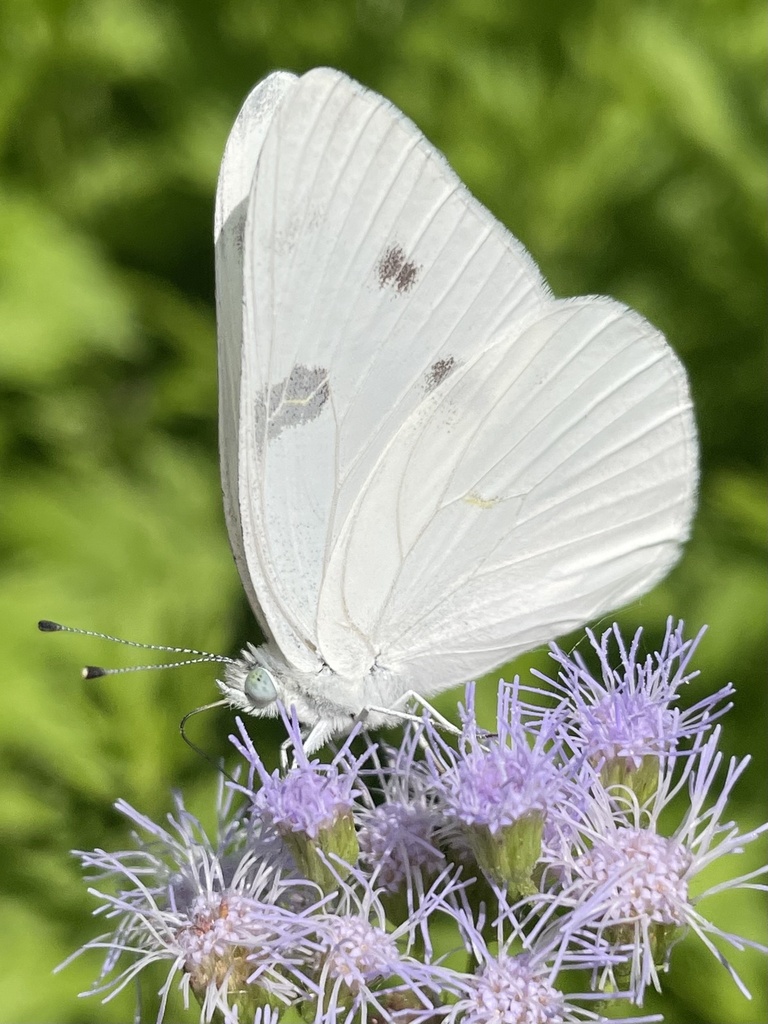
no rights reserved · CC0
Family: Pieridae · Class: Insecta · Order: Lepidoptera
Pontia protodice (Checkered White) is a California animal in the Pieridae family.
The checkered white (Pontia protodice) is a medium-sized butterfly in the family Pieridae, with adults displaying a wingspan of 32 to 51 mm (1.3 to 2.0 inches). Males exhibit white dorsal wing surfaces with dark checkered markings along the forewings, particularly prominent near the wing tips. The hindwings typically show minimal dark markings. Females are more heavily marked, with extensive dark scaling that can create a grayish appearance, especially along wing borders and veins. The ventral wing surfaces are white to pale yellow with dark veining more pronounced in females. Both sexes have black antennae with white clubs and dark bodies with white scaling. The checkered white maintains permanent resident populations in the southern United States and northern Mexico, with temporary colonization extending northward into the northern United States and southern Canada during favorable conditions. The species does not occur in most of New England. In California, populations are established in suitable habitat throughout much of the state, with greatest abundance in areas supporting native and cultivated mustard family plants. The species exhibits strong dispersal capabilities, allowing for seasonal range expansion and recolonization of areas where populations may not survive winter conditions. Checkered whites inhabit diverse environments including agricultural areas, disturbed sites, gardens, desert washes, grasslands, and open woodlands. The species shows particular affinity for areas with abundant flowering plants and suitable host vegetation. Elevation tolerance ranges from sea level to approximately 2,400 meters (7,900 feet) in mountainous regions. Adults prefer open, sunny locations and are commonly observed in areas with mixed native and non-native vegetation. This species is multivoltine, producing multiple generations per year in warmer climates, with breeding activity extending from early spring through late fall in favorable conditions. Females deposit single, yellow eggs on host plant leaves and flower buds. Larvae feed on plants in the mustard family (Brassicaceae), including cultivated cabbage (Brassica oleraceae) and various wild mustards, as well as plants in the caper family (Capparidaceae) such as Rocky Mountain bee-plant (Cleome serrulata). Caterpillars are green with yellow stripes and develop through five instars before pupating. Adults are active fliers and feed on nectar from various flowering plants including asters, mints, and members of the mustard family. The checkered white is not federally or state listed and appears to maintain stable populations across much of its range. The species benefits from human-modified landscapes that create suitable habitat and food sources, particularly agricultural areas and disturbed sites where host plants thrive. Climate variability affects northern range limits, with population expansion during warmer periods and contraction during cooler cycles. The adaptability to diverse host plants and habitat types, combined with strong dispersal ability, contributes to the species' resilience to environmental changes.
Classification
Class: Insecta · Order: Lepidoptera · Family: Pieridae
Frequently asked questions
How is Pontia protodice classified?
Pontia protodice belongs to class Insecta, order Lepidoptera, family Pieridae.
What family does Pontia protodice belong to?
Pontia protodice is in the Pieridae family.
What is Pontia protodice?
The checkered white (Pontia protodice) is a medium-sized butterfly in the family Pieridae, with adults displaying a wingspan of 32 to 51 mm (1.3 to 2.0 inches).
Is Pontia protodice found in California?
Yes. Pontia protodice is recorded in California in The California Species Project's catalogue.
Related species
Other California species in the same genus, family, or bioregion.
Data from The California Species Project — 14,000+ California species with verified data from CNPS, CDFW, USFWS, and more.