Pooecetes gramineus
Vesper Sparrow
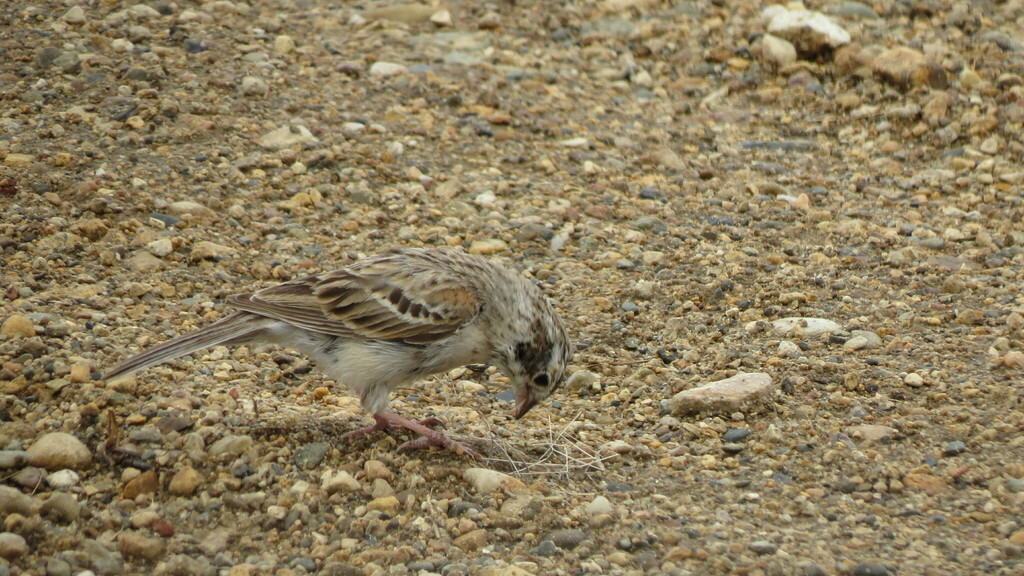
(c) Dani Alba, some rights reserved (CC BY) · licence
Family: Passerellidae · Class: Aves · Order: Passeriformes
Pooecetes gramineus (Vesper Sparrow) is a California animal in the Passerellidae family.
The Vesper Sparrow is a medium-sized grassland songbird measuring 14-17 cm (5.5-6.7 inches) in length with a wingspan of 24 cm (9.4 inches). Adults weigh 20-28 grams. The species exhibits subtle but distinctive plumage characteristics, with streaked brown and gray upperparts and pale underparts marked by fine dark streaking on the breast and flanks. The tail shows prominent white outer feathers, particularly visible in flight, and a distinctive white eye-ring contrasts with the brown face pattern. The bill is pale with a dark culmen, and the legs are pinkish-brown. Historically, Vesper Sparrows bred across much of California's Central Valley, coastal valleys, and montane meadows. The species' current breeding range in California has contracted significantly, with populations now largely restricted to northeastern counties including Modoc, Lassen, and Siskiyou. Small breeding populations may persist in the northern Sierra Nevada and scattered locations in the Coast Ranges. During winter, the species occurs more widely throughout California's lowlands and valleys. Vesper Sparrows inhabit open grasslands, agricultural areas, and sparsely vegetated terrain with scattered shrubs or fence posts for singing perches. Breeding habitat typically consists of short-grass prairie, fallow fields, pastures, and meadows at elevations from sea level to 2,100 meters (6,900 feet). The species shows preference for areas with 25-75% bare ground and requires elevated perches within territories. Nest sites are selected in slight depressions on the ground, often beside grass clumps or small shrubs that provide partial concealment. Breeding occurs from April through July, with peak activity in May and June. Females construct cup-shaped nests of grasses and plant fibers, laying 3-5 eggs that are incubated for 11-13 days. Nestlings fledge after 7-10 days but remain dependent on parents for an additional 20-25 days. The species typically produces two broods per season in favorable conditions. Vesper Sparrows are primarily granivorous, consuming seeds of grasses and forbs, particularly during fall and winter. During the breeding season, adults supplement their diet with insects including beetles, moths, caterpillars, and grasshoppers, which provide essential protein for developing young. Vesper Sparrows are not federally or state listed in California, but populations have declined substantially throughout much of their historical range. According to North American Breeding Bird Survey data, California populations decreased by approximately 3.8% annually from 1966-2019. Primary threats include conversion of grassland habitat to intensive agriculture, urban development, and changes in grazing practices that alter vegetation structure. Fire suppression has contributed to encroachment of woody vegetation in some grassland habitats. Climate change may further impact the species through altered precipitation patterns affecting grassland ecosystems and seed production.
Classification
Class: Aves · Order: Passeriformes · Family: Passerellidae
Frequently asked questions
How is Pooecetes gramineus classified?
Pooecetes gramineus belongs to class Aves, order Passeriformes, family Passerellidae.
What family does Pooecetes gramineus belong to?
Pooecetes gramineus is in the Passerellidae family.
What is Pooecetes gramineus?
The Vesper Sparrow is a medium-sized grassland songbird measuring 14-17 cm (5.5-6.7 inches) in length with a wingspan of 24 cm (9.4 inches).
Is Pooecetes gramineus found in California?
Yes. Pooecetes gramineus is recorded in California in The California Species Project's catalogue.
Related species
Other California species in the same genus, family, or bioregion.
Data from The California Species Project — 14,000+ California species with verified data from CNPS, CDFW, USFWS, and more.