Pooecetes gramineus affinis
Oregon Vesper Sparrow
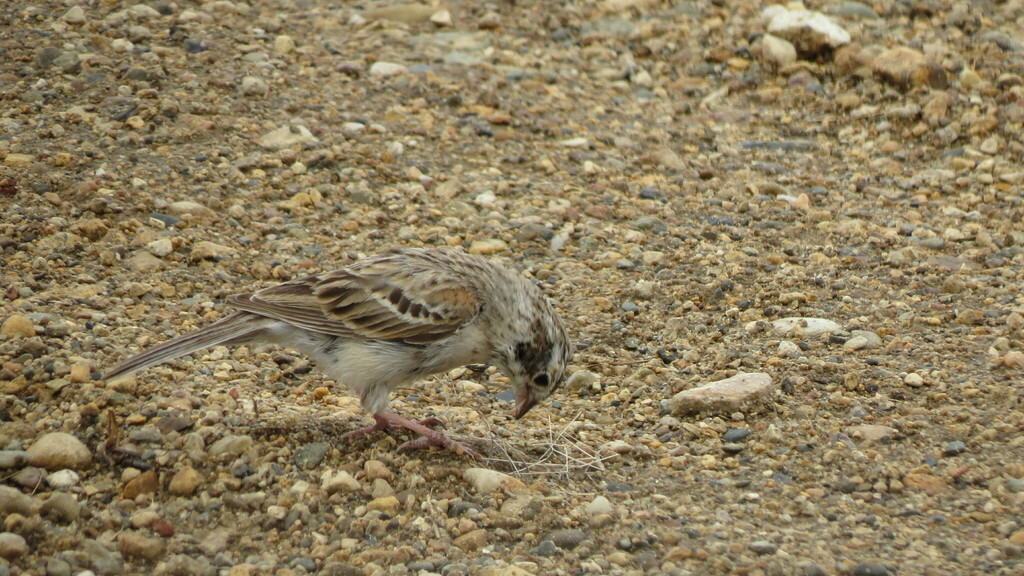
(c) Dani Alba, some rights reserved (CC BY) · licence
Family: Passerellidae · Class: Aves · Order: Passeriformes
Conservation status: G5T2 S2
Pooecetes gramineus affinis (Oregon Vesper Sparrow) is a California animal in the Passerellidae family.
The Oregon vesper sparrow is a subspecies of vesper sparrow endemic to the Pacific Northwest of North America. Adults measure approximately 14-16 cm (5.5-6.3 inches) in length with brownish-gray upperparts, streaked with darker brown markings. The breast and flanks display fine dark streaking on a buff-white background, while the belly remains predominantly white. Key identifying features include white outer tail feathers visible in flight, a partial white eye-ring, and a pale bill with a dark tip. The species can be distinguished from other vesper sparrow subspecies by its slightly smaller size and more subdued coloration. Historically, the Oregon vesper sparrow bred in western Washington and Oregon west of the Cascade Mountains, with a small population discovered in coastal dunes of Del Norte County, California in the late 1970s. However, surveys conducted in 2016 found no vesper sparrows remaining in the California breeding area (American Bird Conservancy 2017). The subspecies now appears to be extirpated from California as a breeding bird. The species winters almost entirely in California's Central Valley and adjacent foothill areas (USFWS 2018). Breeding habitat consists of grasslands, prairies, and open areas with scattered shrubs or trees in the Pacific Northwest. These areas typically feature native bunch grasses and forbs with minimal canopy cover. During winter in California, Oregon vesper sparrows utilize agricultural areas, weedy fields, grasslands, and oak savanna habitats in the Central Valley. The species requires areas with adequate ground cover for foraging and escape from predators, along with elevated perches for singing and territorial displays. Oregon vesper sparrows are ground-foraging granivores, feeding primarily on grass seeds, forb seeds, and small invertebrates during the breeding season. Nesting occurs from April through July, with females constructing cup-shaped nests on the ground, often concealed under grass clumps or low shrubs. Clutch size typically ranges from 3-5 eggs, with incubation lasting 11-13 days. Males establish territories through song from prominent perches and engage in aerial displays during courtship. The species is migratory, departing breeding grounds in late summer and returning in early spring. The Oregon vesper sparrow carries a global rank of G5T2, indicating it is imperiled as a subspecies despite the parent species being globally secure. The subspecies has experienced severe population decline due to habitat loss from agricultural conversion, urban development, and invasive plant species. In 2017, American Bird Conservancy petitioned to list the Oregon vesper sparrow as threatened or endangered under the Endangered Species Act. The U.S. Fish and Wildlife Service issued a 90-day finding in 2018 determining that listing may be warranted, but no final determination has been made as of December 2025. The species appears on the U.S. Fish and Wildlife Service's Birds of Conservation Concern list (USFWS 2021). Conservation efforts focus on habitat restoration and protection of remaining grassland areas within the subspecies' breeding range in Washington and Oregon, along with maintaining suitable wintering habitat in California's Central Valley.
Classification
Class: Aves · Order: Passeriformes · Family: Passerellidae
Conservation status
G5T2 S2
Frequently asked questions
How is Pooecetes gramineus affinis classified?
Pooecetes gramineus affinis belongs to class Aves, order Passeriformes, family Passerellidae.
What family does Pooecetes gramineus affinis belong to?
Pooecetes gramineus affinis is in the Passerellidae family.
Is Pooecetes gramineus affinis protected or of conservation concern?
Pooecetes gramineus affinis carries the following status: G5T2 S2.
What is Pooecetes gramineus affinis?
The Oregon vesper sparrow is a subspecies of vesper sparrow endemic to the Pacific Northwest of North America.
Is Pooecetes gramineus affinis found in California?
Yes. Pooecetes gramineus affinis is recorded in California in The California Species Project's catalogue.
Related species
Other California species in the same genus, family, or bioregion.
Data from The California Species Project — 14,000+ California species with verified data from CNPS, CDFW, USFWS, and more.