Porzana carolina
Sora
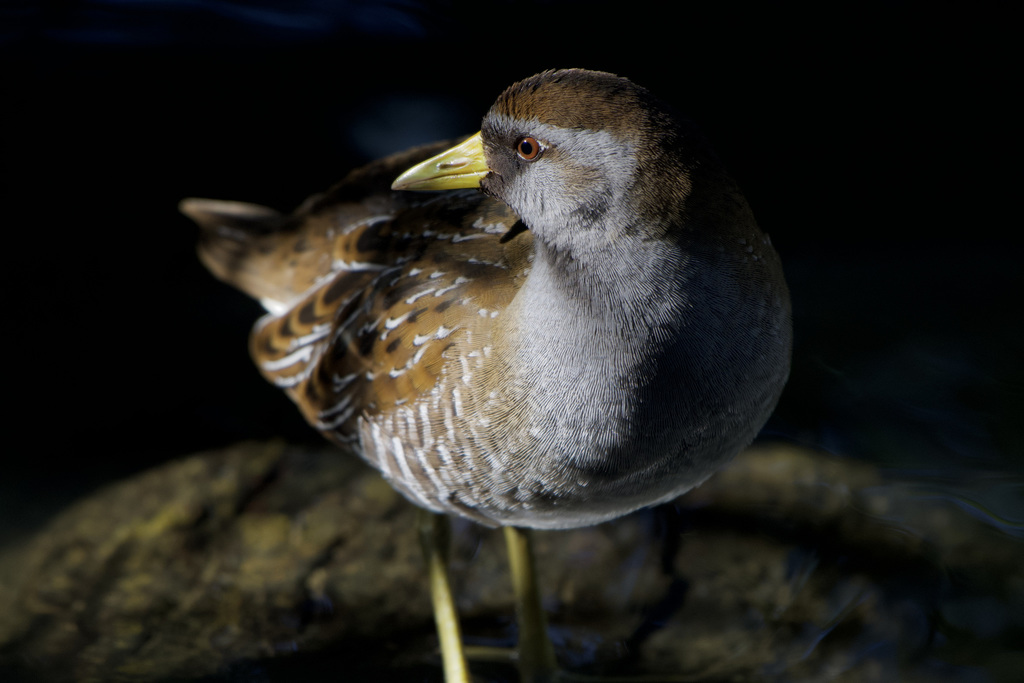
no rights reserved · CC0
Family: Rallidae · Class: Aves · Order: Gruiformes
Porzana carolina (Sora) is a California animal in the Rallidae family.
The Sora is a small, secretive rail measuring 19 to 24 cm (7.5 to 9.4 inches) in length with a wingspan of 32 to 37 cm (12.6 to 14.6 inches). Adults weigh between 49 to 112 grams (1.7 to 4.0 ounces). Breeding adults display a distinctive slate-gray face and throat contrasting with a bright yellow bill. The upperparts are olive-brown with black streaking, while the underparts are gray grading to white with prominent black and white barring on the flanks. A black patch extends from the base of the bill through the eye. Non-breeding adults and juveniles lack the gray coloration and black facial markings, appearing more brownish overall. The short tail is frequently cocked upward, revealing white undertail coverts with black barring. Soras breed across much of North America from southern Canada to the northern United States, including suitable wetland habitats throughout California. The species occurs in the Central Valley, coastal regions, and montane areas up to elevations of 2,400 meters (7,900 feet). California supports both breeding and wintering populations, with some individuals present year-round in suitable habitat. During migration and winter, Soras expand their range to include the southern United States, Mexico, and parts of Central America. The species inhabits freshwater and brackish marshes with emergent vegetation, particularly areas dominated by cattails, sedges, rushes, and bulrushes. Soras require shallow water depths typically ranging from 2.5 to 25 cm (1 to 10 inches) with dense vegetative cover for nesting and foraging. They utilize seasonal wetlands, permanent ponds, irrigation ditches, flooded agricultural fields, and restored wetland areas. Water level stability during the breeding season is critical for successful reproduction. Soras are omnivorous, consuming seeds of aquatic plants, small invertebrates including snails, worms, and insects, and occasionally small fish and amphibians. The breeding season extends from April through August in California. Females construct platform nests of dead vegetation in dense marsh growth, typically 15 to 46 cm (6 to 18 inches) above water level. Clutches contain 6 to 18 eggs, with an average of 10 to 12 eggs. Incubation lasts 18 to 20 days, and the precocial chicks leave the nest within hours of hatching. Soras can produce two broods per year under favorable conditions. The Sora is not federally or state listed and maintains stable populations across much of its range as of December 2025. However, the species faces ongoing challenges from wetland loss and degradation throughout its range. In California, habitat conversion, water diversions, and altered hydrology have reduced available breeding habitat. Climate change poses additional threats through shifts in precipitation patterns and increased drought frequency. Conservation efforts focus on wetland restoration and management, water level manipulation in managed areas, and protection of remaining natural marsh habitats through programs such as the North American Waterfowl Management Plan.
Classification
Class: Aves · Order: Gruiformes · Family: Rallidae
Frequently asked questions
How is Porzana carolina classified?
Porzana carolina belongs to class Aves, order Gruiformes, family Rallidae.
What family does Porzana carolina belong to?
Porzana carolina is in the Rallidae family.
What is Porzana carolina?
The Sora is a small, secretive rail measuring 19 to 24 cm (7.5 to 9.4 inches) in length with a wingspan of 32 to 37 cm (12.6 to 14.6 inches).
Is Porzana carolina found in California?
Yes. Porzana carolina is recorded in California in The California Species Project's catalogue.
Related species
Other California species in the same genus, family, or bioregion.
Data from The California Species Project — 14,000+ California species with verified data from CNPS, CDFW, USFWS, and more.