Potamopyrgus antipodarum
New Zealand Mudsnail
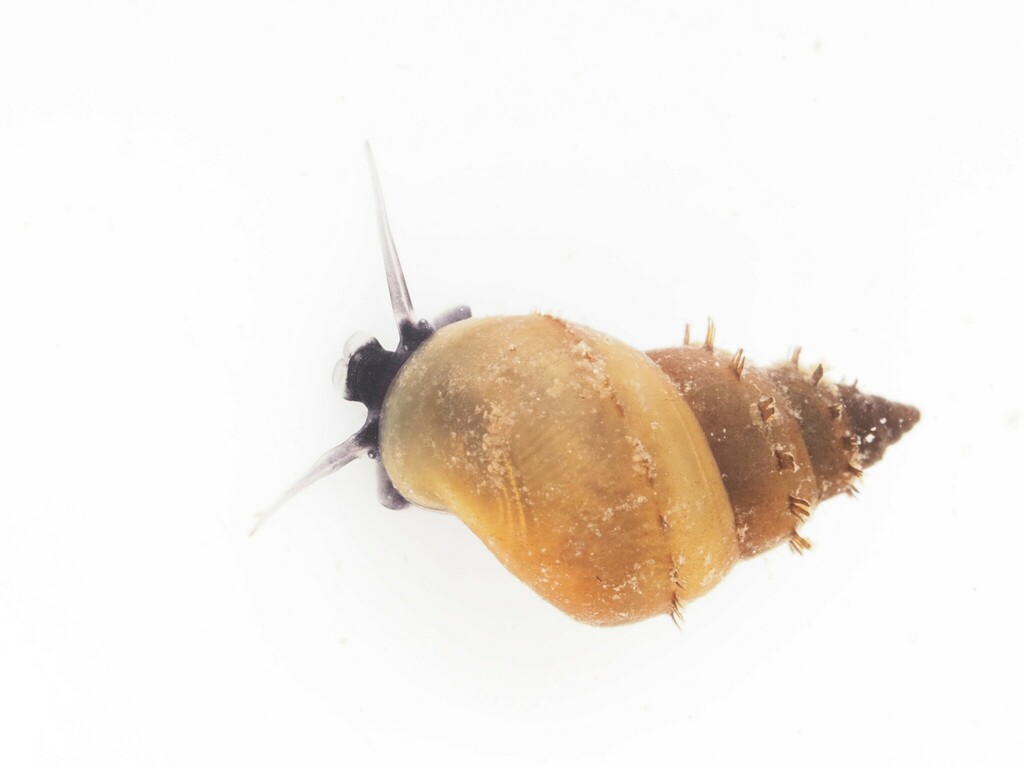
(c) Saryu Mae 前 朝琉, some rights reserved (CC BY) · licence
Family: Tateidae · Class: Gastropoda · Order: Littorinimorpha
Potamopyrgus antipodarum (New Zealand Mudsnail) is a California animal in the Tateidae family.
The New Zealand mudsnail is a small, freshwater gastropod measuring 4-6 mm (0.16-0.24 inches) in length in the western United States. The shell is elongated with right-handed coiling, typically consisting of 5-6 whorls, though some specimens may have up to 8 whorls. Shell coloration varies from gray to light or dark brown. The species exhibits an operculum, a plate-like structure that can seal the shell opening when the animal retracts. Native to New Zealand and adjacent islands, this species was first discovered in the United States in the Snake River in Idaho in 1987 (USFWS 2015). The mudsnail was first detected in California in 2000 in the Owens River and has since spread throughout the western United States (CDFW). In California, populations are now established in numerous water systems including the Owens, Klamath, Russian, Lower American, Stanislaus, Merced, San Joaquin, and Sacramento rivers and their tributaries. In February 2016, the species was discovered in the lower Yuba and lower Feather rivers. As of December 2025, the mudsnail has been detected at Warm Springs Fish Hatchery near Lake Sonoma. New Zealand mudsnails inhabit a wide variety of substrates and vegetation in fresh and brackish lakes, rivers, streams, and estuaries. They demonstrate high tolerance for environmental variability, including turbidity, siltation, and poor water quality conditions. The species can reproduce in salinities up to 15 parts per thousand and survive short periods in salinities up to 35 parts per thousand. Mudsnails can withstand water temperatures up to 93°F (34°C) but do not tolerate freezing temperatures. They can also survive brief periods of desiccation when in cool, damp environments. This species exhibits ovoviviparity and parthenogenesis, releasing live young rather than laying eggs, with offspring being clonal females genetically identical to the parent. This reproductive strategy enables rapid population establishment and growth. The mudsnails are detritivores and algae grazers, feeding on organic matter and periphyton. Dense colonies can reach extremely high densities, with populations exceeding 300,000 individuals per square meter reported in some locations. The New Zealand mudsnail is classified as an invasive species that causes significant economic and environmental harm. Dense populations outcompete native mollusks, macroinvertebrates, and other organisms for food and habitat, altering ecosystem structure and function. The species negatively impacts native snails, mussels, clams, and organisms that support higher trophic levels including fish and amphibians. Initial introduction to western rivers likely occurred through shipments of live sportfish, but subsequent spread results primarily from recreational activities (CDFW). The Aquatic Nuisance Species Task Force developed a National Management and Control Plan for this species, first published in 2007. California Department of Fish and Wildlife lists the New Zealand mudsnail as a restricted species, prohibiting import, transport, or possession without permits. Prevention efforts focus on equipment decontamination and "clean, drain, and dry" protocols for recreational users.
Classification
Class: Gastropoda · Order: Littorinimorpha · Family: Tateidae
Frequently asked questions
How is Potamopyrgus antipodarum classified?
Potamopyrgus antipodarum belongs to class Gastropoda, order Littorinimorpha, family Tateidae.
What family does Potamopyrgus antipodarum belong to?
Potamopyrgus antipodarum is in the Tateidae family.
What is Potamopyrgus antipodarum?
The New Zealand mudsnail is a small, freshwater gastropod measuring 4-6 mm (0.16-0.24 inches) in length in the western United States.
Is Potamopyrgus antipodarum found in California?
Yes. Potamopyrgus antipodarum is recorded in California in The California Species Project's catalogue.
More California species
This species has no close relatives in our California data — here are other species to explore.
Data from The California Species Project — 14,000+ California species with verified data from CNPS, CDFW, USFWS, and more.