Prasinalia imperialis
Algodones White Wax Jewel Beetle
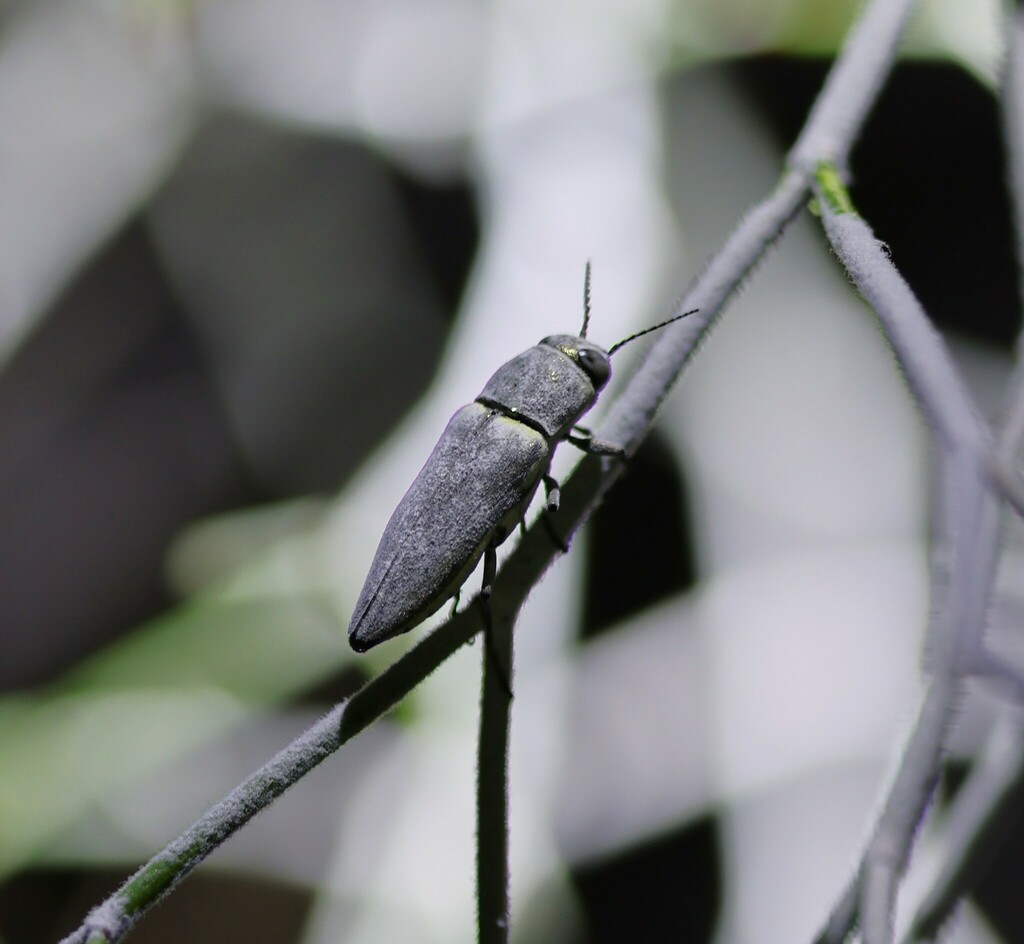
(c) nmoorhatch, some rights reserved (CC BY) · licence
Family: Buprestidae · Class: Insecta · Order: Coleoptera
Conservation status: G2 S2
Prasinalia imperialis (Algodones White Wax Jewel Beetle) is a California animal in the Buprestidae family.
The Algodones white wax jewel beetle (Prasinalia imperialis) is a small metallic wood-boring beetle in the family Buprestidae, subfamily Chrysochroinae. This species belongs to the tribe Dicercini, subtribe Hippomelanina, and represents one of the specialized desert-dwelling jewel beetles endemic to California's Imperial Valley region. Prasinalia imperialis is distinguished by its metallic coloration typical of jewel beetles, though specific morphological details and size measurements have not been well documented in the scientific literature. As a member of the Buprestidae family, adults likely possess the characteristic compact, elongated body form and metallic sheen that gives jewel beetles their common name. This species occurs exclusively in the Algodones Dunes of Imperial County, California (Velten and Bellamy 1987). The Algodones Dunes represent one of the largest sand dune systems in California, extending approximately 45 miles north-south along the eastern edge of Imperial County near the Arizona border. All known collections of P. imperialis have been recorded from this unique desert ecosystem, making it one of several beetle species endemic to this specialized habitat. The Algodones white wax jewel beetle inhabits the active sand dune environment of the Algodones Dunes system. This habitat consists of shifting sand formations with sparse vegetation adapted to extreme desert conditions, including high temperatures, low precipitation, and unstable sandy substrates. The dunes support specialized plant communities that have evolved to tolerate burial by sand and extreme aridity. Specific microhabitat requirements and host plant associations for P. imperialis have not been documented. Detailed information on the behavior, ecology, reproduction, and life history of this species remains extremely limited. As with most jewel beetles, larvae likely develop as wood borers or stem miners in host plants, while adults may feed on plant foliage or flowers. Activity patterns, seasonal occurrence, reproduction timing, and mortality factors have not been studied or documented for this species. Prasinalia imperialis currently holds a global rank of G2 (imperiled) and state rank of S2 (imperiled in California), indicating that populations face significant conservation concerns. The U.S. Fish and Wildlife Service has designated this species as a 'Species of Concern' but it does not currently hold federal protection under the Endangered Species Act (USFWS 2006). The species was considered for listing along with 15 other Algodones Dunes insect species in 2006, but the Service determined that listing was not warranted at that time due to insufficient information on population status and threats. Primary conservation concerns for P. imperialis likely include habitat disruption from off-highway vehicle recreation, military activities, and border security infrastructure development within the Algodones Dunes. Climate change may pose additional threats through altered precipitation patterns and increased temperature extremes. The species' extremely limited range makes it particularly vulnerable to localized habitat disturbances. Scientific documentation for this species remains limited. This species is included on the California Department of Fish and Wildlife's Special Animals List. The information presented here is based on federal documents and taxonomic references. Additional field studies are needed to better understand the biology, distribution, and conservation needs of this endemic desert beetle.
Classification
Class: Insecta · Order: Coleoptera · Family: Buprestidae
Conservation status
G2 S2
Frequently asked questions
How is Prasinalia imperialis classified?
Prasinalia imperialis belongs to class Insecta, order Coleoptera, family Buprestidae.
What family does Prasinalia imperialis belong to?
Prasinalia imperialis is in the Buprestidae family.
Is Prasinalia imperialis protected or of conservation concern?
Prasinalia imperialis carries the following status: G2 S2.
What is Prasinalia imperialis?
The Algodones white wax jewel beetle (Prasinalia imperialis) is a small metallic wood-boring beetle in the family Buprestidae, subfamily Chrysochroinae.
Is Prasinalia imperialis found in California?
Yes. Prasinalia imperialis is recorded in California in The California Species Project's catalogue.
Related species
Other California species in the same genus, family, or bioregion.
Data from The California Species Project — 14,000+ California species with verified data from CNPS, CDFW, USFWS, and more.