Prionyx parkeri
Parker's Thread-waisted Wasp
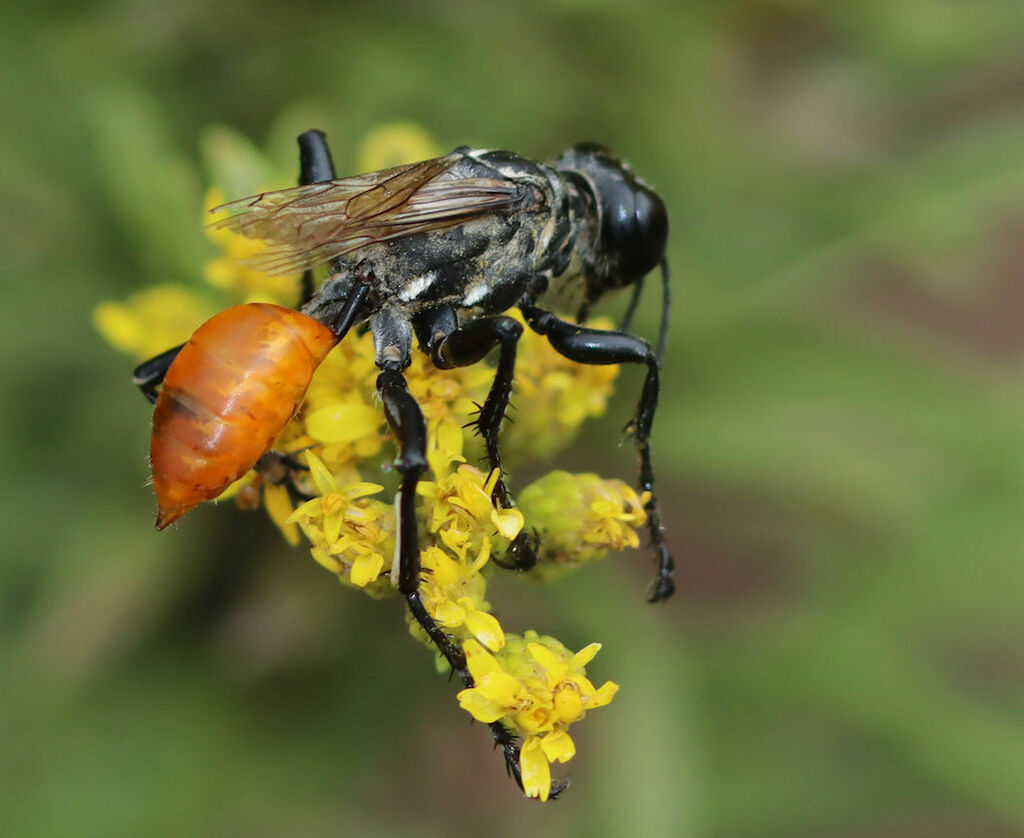
(c) hr_dragonfly, some rights reserved (CC BY) · licence
Family: Sphecidae · Class: Insecta · Order: Hymenoptera
Prionyx parkeri (Parker's Thread-waisted Wasp) is a California animal in the Sphecidae family.
Parker's Thread-waisted Wasp (Prionyx parkeri) is a solitary hunting wasp in the family Sphecidae, subfamily Sphecinae. This species belongs to the tribe Prionychini and represents one of several North American Prionyx species. Like other thread-waisted wasps, P. parkeri exhibits the characteristic narrow waist (petiole) connecting the thorax and abdomen, giving the family its common name. The distribution of Prionyx parkeri appears to be limited within North America, though specific range data remains poorly documented in the scientific literature. The species has been recorded from select locations, but comprehensive distributional surveys have not been conducted. Based on available records, the species occurs in portions of the continental United States, though the exact extent of its range requires further investigation. Habitat preferences for P. parkeri follow the general pattern observed in other Prionyx species. According to BugGuide, members of this genus typically inhabit open areas including prairies, deserts, vacant lots, and fields (BugGuide). These wasps require areas with suitable nesting sites, typically sandy or loose soil for excavating burrows, and adequate populations of prey species. The availability of flowering plants for adult nectar feeding also influences habitat suitability. As a member of the Sphecidae, Parker's Thread-waisted Wasp exhibits typical sphecid hunting behavior. Adult females are solitary hunters that capture and paralyze prey to provision their nests. Like other Prionyx species, adults feed on flower nectar (BugGuide), while females hunt specific prey species to stock their underground burrows. The female constructs burrows in sandy or loose soil, where she places paralyzed prey items along with a single egg. The developing larva feeds on the provided prey until pupation. Males typically emerge first and may be observed at flowers or patrolling territories where they seek mates. Reproductive behavior follows the standard sphecid pattern, with females assuming sole responsibility for nest construction, hunting, and offspring provisioning. Mating occurs after male emergence, followed by the female's intensive period of nest construction and prey capture. Each burrow typically contains multiple cells, with the female placing one paralyzed prey item and a single egg in each cell before sealing it. Conservation status information for Prionyx parkeri is extremely limited. The species does not appear on federal or state endangered species lists as of December 2025. However, the lack of comprehensive surveys and ecological studies makes it difficult to assess population trends or conservation needs. Like many specialized solitary wasps, habitat loss and fragmentation of open areas suitable for nesting may pose potential threats. The species' dependence on specific prey species and nesting habitat requirements could make it vulnerable to environmental changes, though quantitative population data are lacking. Detailed ecological studies of Parker's Thread-waisted Wasp remain limited. The information presented here synthesizes available taxonomic and general ecological data. Additional research on distribution, prey preferences, nesting biology, and population status would significantly enhance understanding of this species' ecology and conservation needs.
Classification
Class: Insecta · Order: Hymenoptera · Family: Sphecidae
Frequently asked questions
How is Prionyx parkeri classified?
Prionyx parkeri belongs to class Insecta, order Hymenoptera, family Sphecidae.
What family does Prionyx parkeri belong to?
Prionyx parkeri is in the Sphecidae family.
What is Prionyx parkeri?
Parker's Thread-waisted Wasp (Prionyx parkeri) is a solitary hunting wasp in the family Sphecidae, subfamily Sphecinae.
Is Prionyx parkeri found in California?
Yes. Prionyx parkeri is recorded in California in The California Species Project's catalogue.
Related species
Other California species in the same genus, family, or bioregion.
Data from The California Species Project — 14,000+ California species with verified data from CNPS, CDFW, USFWS, and more.