Pristiloma shepardae
Shepard's Snail
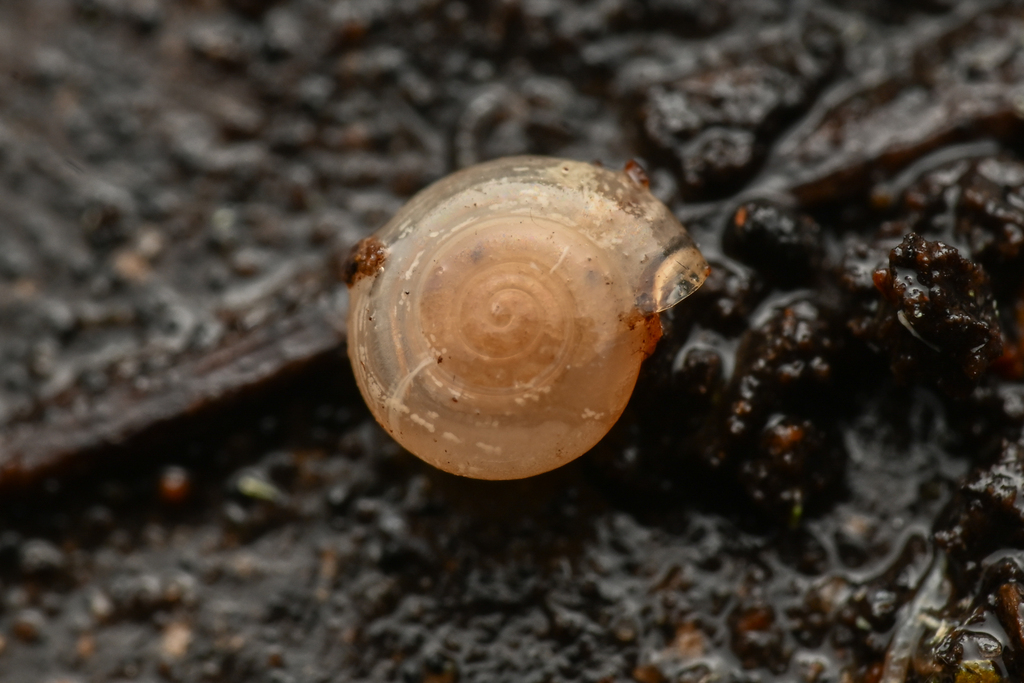
(c) Trevor Van Loon, some rights reserved (CC BY) · licence
Family: Zonitidae · Class: Gastropoda · Order: Stylommatophora
Conservation status: G1 S1
Pristiloma shepardae (Shepard's Snail) is a California animal in the Zonitidae family.
Shepard's snail (Pristiloma shepardae) is a terrestrial gastropod mollusk endemic to California. This small land snail belongs to the family Zonitidae and represents one of the state's most narrowly distributed invertebrate species. Physical characteristics of this species have not been extensively documented in the scientific literature, though like other members of the genus Pristiloma, it likely possesses a low, flattened shell typical of forest floor-dwelling snails. The species has an extremely restricted range within California, though specific locality information remains limited in published sources. The Global/State Rank of G1 S1 indicates this species is critically imperiled both globally and within California, with typically fewer than 5 occurrences or very few remaining individuals. This ranking suggests the species faces an extremely high risk of extinction due to rarity. Habitat requirements for Shepard's snail have not been well documented in the available literature. Terrestrial snails in the family Zonitidae typically inhabit moist forest environments, often found in leaf litter, under logs, or among moss and organic debris on the forest floor. These microhabitats provide the humidity necessary for preventing desiccation, a critical requirement for all terrestrial gastropods. The species likely requires stable moisture conditions and may be sensitive to habitat disturbance. Ecological information about Shepard's snail is extremely limited. Like other terrestrial snails, the species is presumably herbivorous, feeding on decaying plant matter, fungi, and possibly algae. Reproductive biology has not been documented, though terrestrial snails are typically hermaphroditic and lay eggs in moist soil or organic matter. Seasonal activity patterns and population dynamics remain unknown. The conservation status of Shepard's snail reflects its extreme rarity. The G1 S1 ranking indicates critical imperilment, with the species facing immediate risk of extinction. Primary threats likely include habitat loss and fragmentation, though specific threat assessments have not been published. Climate change may pose additional risks through altered precipitation patterns and temperature regimes that could affect the moist microhabitats required by terrestrial gastropods. The species does not appear to have federal protection under the Endangered Species Act as of December 2025. Detailed ecological studies of this species are lacking. The information presented here is based on taxonomic records and conservation rankings from authoritative databases. The extreme rarity indicated by the G1 S1 status suggests urgent need for systematic surveys to locate extant populations and assess habitat requirements. This species is included on the California Department of Fish and Wildlife's Special Animals List. Research priorities should include basic life history studies, habitat characterization, and threat assessment to inform conservation planning. We welcome contributions of verified scientific data, photographs, or field observations to enhance this species account.
Classification
Class: Gastropoda · Order: Stylommatophora · Family: Zonitidae
Conservation status
G1 S1
Frequently asked questions
How is Pristiloma shepardae classified?
Pristiloma shepardae belongs to class Gastropoda, order Stylommatophora, family Zonitidae.
What family does Pristiloma shepardae belong to?
Pristiloma shepardae is in the Zonitidae family.
Is Pristiloma shepardae protected or of conservation concern?
Pristiloma shepardae carries the following status: G1 S1.
What is Pristiloma shepardae?
Shepard's snail (Pristiloma shepardae) is a terrestrial gastropod mollusk endemic to California.
Is Pristiloma shepardae found in California?
Yes. Pristiloma shepardae is recorded in California in The California Species Project's catalogue.
More California species
This species has no close relatives in our California data — here are other species to explore.
Data from The California Species Project — 14,000+ California species with verified data from CNPS, CDFW, USFWS, and more.