Prochoerodes forficaria
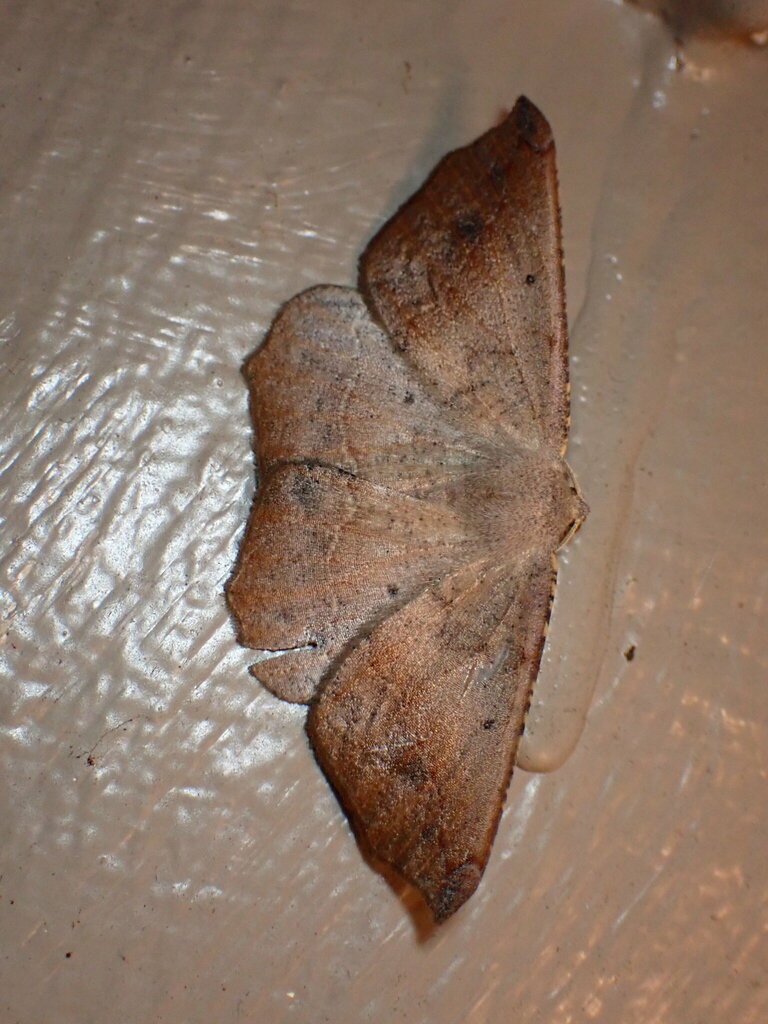
(c) Cricket Raspet, some rights reserved (CC BY) · licence
Family: Geometridae · Class: Insecta · Order: Lepidoptera
Prochoerodes forficaria is a California animal in the Geometridae family.
Prochoerodes forficaria is a moth in the family Geometridae, subfamily Ennominae, belonging to the tribe Ourapterygini. This species represents one of the geometrid moths found in western North America, though detailed morphological descriptions remain limited in the scientific literature. The species occurs across multiple western states, with documented records from Montana, Idaho, Colorado, and New Mexico. In Montana, specimens have been collected at locations including South Fork Cold Creek near Condon in Missoula County and Melita Island in Flathead Lake (News of the Lepidopterists' Society 2013). Idaho records include collections from Deadwood Campground in Boise County and Palisades Reservoir in Bonneville County (News of the Lepidopterists' Society 2019). Colorado populations have been documented in Las Animas County, though the species has not been observed there since 1993 (News of the Lepidopterists' Society 1998). New Mexico records include collections from Las Huertas Canyon in the Sandia Mountains of Sandoval County (News of the Lepidopterists' Society 2008). Habitat preferences for P. forficaria appear to include montane and foothill environments, based on collection localities. Montana specimens were documented at elevations near Flathead Lake and in forested canyon systems. Idaho collections occurred at campground locations in forested settings, while Colorado records originated from areas supporting diverse geometrid moth communities. The species appears to favor areas with mixed coniferous and deciduous vegetation typical of western montane ecosystems. Adult flight period extends from late spring through late summer, with documented collection dates ranging from July to August. Montana specimens were collected in July and August, while Idaho records span from July to July (News of the Lepidopterists' Society 2019). The species appears to be nocturnal, as evidenced by collection methods using ultraviolet light traps. Peak activity periods and specific habitat microsite preferences within its range require further documentation. Larval host plants and detailed life history information for P. forficaria have not been well documented in available literature. Like many geometrid moths, larvae likely feed on woody plants, but specific host relationships remain to be determined through field studies. Reproductive behavior, overwintering strategies, and population dynamics are poorly understood aspects of this species' biology. No federal or state conservation status has been assigned to P. forficaria. The species appears to have a relatively broad distribution across western montane regions, though local population trends and habitat requirements are not well studied. Some historical collection sites, such as locations in Colorado, have not yielded specimens in recent decades, suggesting possible local population declines or habitat changes. The apparent absence from Colorado sites since 1993 warrants investigation to determine whether this represents actual population loss or sampling gaps. Continued monitoring and taxonomic research would benefit understanding of this species' conservation needs and ecological role in western North American forest ecosystems.
Classification
Class: Insecta · Order: Lepidoptera · Family: Geometridae
Frequently asked questions
How is Prochoerodes forficaria classified?
Prochoerodes forficaria belongs to class Insecta, order Lepidoptera, family Geometridae.
What family does Prochoerodes forficaria belong to?
Prochoerodes forficaria is in the Geometridae family.
What is Prochoerodes forficaria?
Prochoerodes forficaria is a moth in the family Geometridae, subfamily Ennominae, belonging to the tribe Ourapterygini.
Is Prochoerodes forficaria found in California?
Yes. Prochoerodes forficaria is recorded in California in The California Species Project's catalogue.
Related species
Other California species in the same genus, family, or bioregion.
Data from The California Species Project — 14,000+ California species with verified data from CNPS, CDFW, USFWS, and more.