Prochoerodes truxaliata
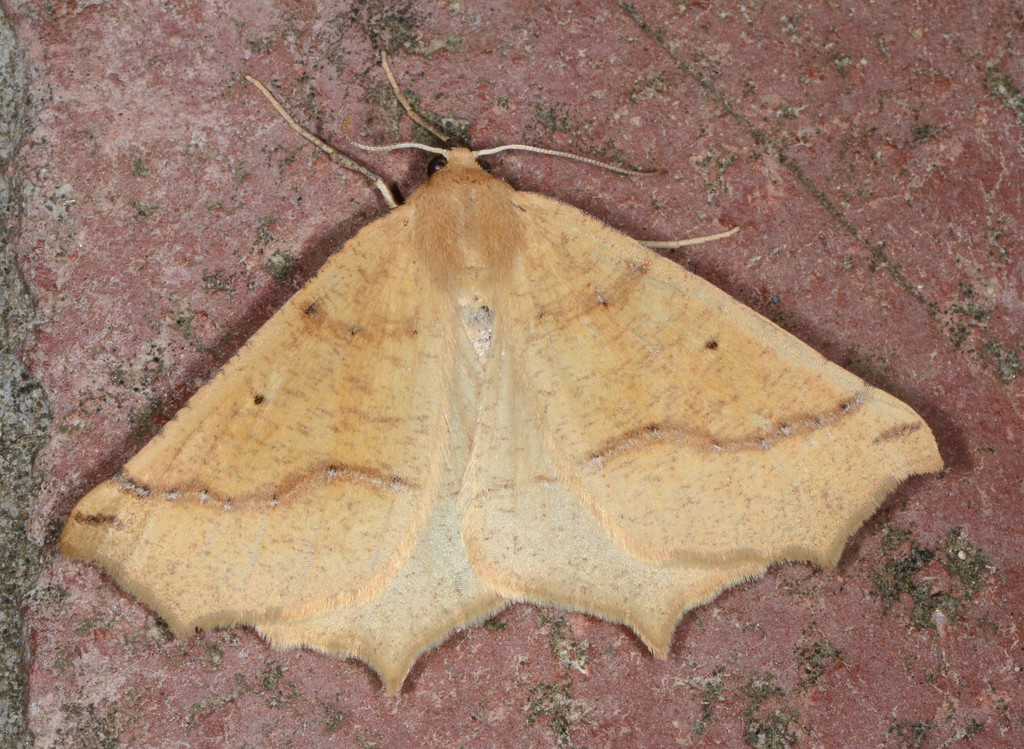
(c) Don Loarie, some rights reserved (CC BY) · licence
Family: Geometridae · Class: Insecta · Order: Lepidoptera
Prochoerodes truxaliata is a California animal in the Geometridae family.
Prochoerodes truxaliata is a geometrid moth in the family Geometridae, subfamily Ennominae. This species belongs to a genus of moths commonly known as large maple spanworms or spanworm moths. Adult moths typically display the characteristic wing patterns of geometrids, with forewings measuring approximately 15-20 mm in length. The wings exhibit earth-tone coloration with subtle banding patterns that provide camouflage against tree bark and dried vegetation. Like other members of the Geometridae family, adults hold their wings horizontally when at rest, creating a triangular silhouette. The range and specific distribution of Prochoerodes truxaliata within California remains poorly documented in current literature. The genus Prochoerodes occurs across North America, with several species recorded from western states including California. However, detailed distributional data for this particular species is limited, and its presence in specific California counties or regions requires further verification through systematic surveys. Habitat preferences for Prochoerodes truxaliata are inferred from related species in the genus, which typically inhabit deciduous and mixed forests where their larval host plants occur. The species likely occupies woodland and forest edge environments at various elevations, though specific elevation ranges have not been definitively established. Adults are attracted to artificial lights and may be encountered near forest clearings, riparian areas, and suburban locations adjacent to suitable habitat. Like other geometrid moths, Prochoerodes truxaliata undergoes complete metamorphosis. Larvae are caterpillars known as inchworms or spanworms, characterized by their distinctive looping locomotion caused by having fewer prolegs than most caterpillars. The larvae likely feed on deciduous trees and shrubs, though specific host plant relationships for this species require confirmation. Pupation typically occurs in soil or leaf litter. Adult flight periods and generational patterns are not well-documented for this species, but related Prochoerodes species generally have one generation per year with adults active during spring or early summer months. The conservation status of Prochoerodes truxaliata is not formally assessed by state or federal agencies. The species lacks designated conservation rankings from IUCN, NatureServe, or California Department of Fish and Wildlife. This absence of status information reflects the limited research attention given to many moth species, particularly those without obvious economic importance or conservation concern. The species may be naturally uncommon, have a restricted range, or simply be under-surveyed. Like many forest-associated moths, potential threats could include habitat loss from development, forest management practices, and climate change effects on host plant distributions. However, without baseline population data or detailed ecological studies, the actual conservation needs of this species remain unknown.
Classification
Class: Insecta · Order: Lepidoptera · Family: Geometridae
Frequently asked questions
How is Prochoerodes truxaliata classified?
Prochoerodes truxaliata belongs to class Insecta, order Lepidoptera, family Geometridae.
What family does Prochoerodes truxaliata belong to?
Prochoerodes truxaliata is in the Geometridae family.
What is Prochoerodes truxaliata?
Prochoerodes truxaliata is a geometrid moth in the family Geometridae, subfamily Ennominae.
Is Prochoerodes truxaliata found in California?
Yes. Prochoerodes truxaliata is recorded in California in The California Species Project's catalogue.
Related species
Other California species in the same genus, family, or bioregion.
Data from The California Species Project — 14,000+ California species with verified data from CNPS, CDFW, USFWS, and more.