Prochoreutis sororculella
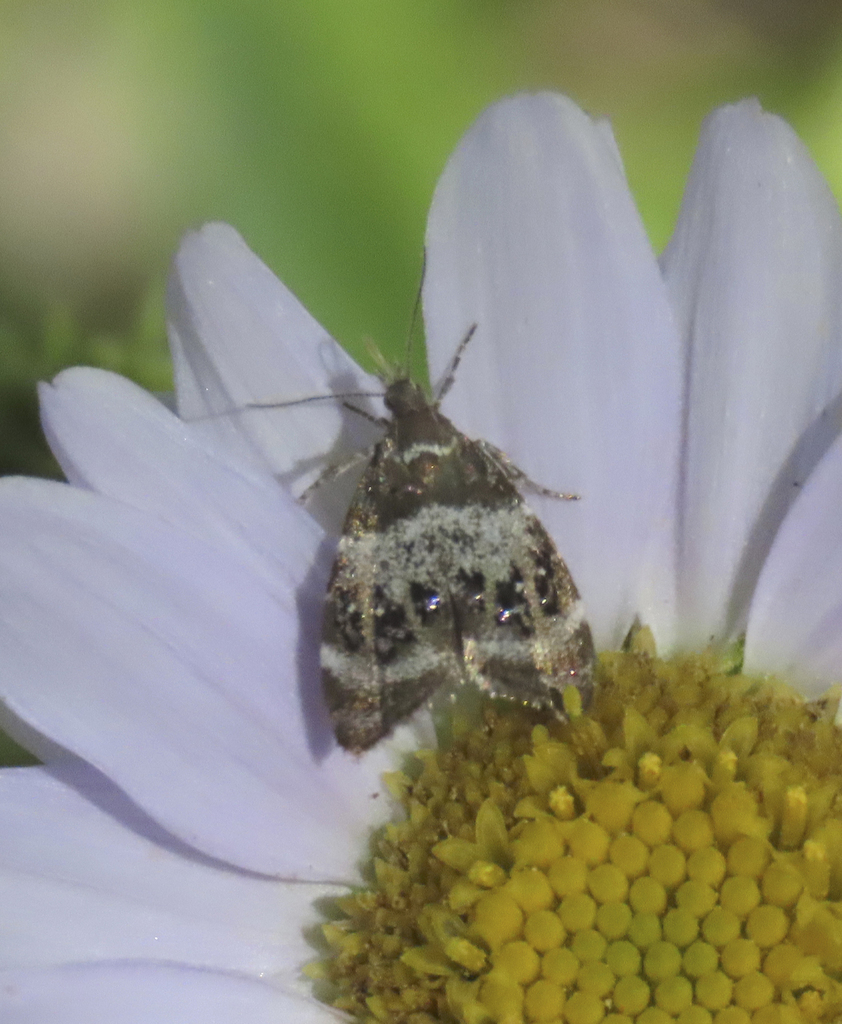
(c) Nancy Overholtz, some rights reserved (CC BY-SA) · licence
Family: Choreutidae · Class: Insecta · Order: Lepidoptera
Prochoreutis sororculella is a California animal in the Choreutidae family.
Protochoreutis sororculella is a small moth in the family Choreutidae, representing a taxonomically significant species within North American Lepidoptera. This species was originally described by Dyar in 1900 under the genus Choreutis and was subsequently transferred to Prochoreutis before being designated as the type species of the newly established genus Protochoreutis by Heppner in 2020 (Moth Photographers Group). Like other members of the Choreutidae family, P. sororculella is a small moth with distinctive wing patterns and structural characteristics typical of this specialized group. The forewings typically display intricate markings and coloration patterns that aid in species identification, though detailed morphological descriptions of this particular species remain limited in accessible literature. The species bears the taxonomic designation MONA 2630 in the standardized checklist of North American moths. The geographic distribution of Protochoreutis sororculella within California and broader North America has not been comprehensively documented in readily available sources. As with many microlepidoptera species, detailed range maps and occurrence records may be scattered across specialized entomological collections and regional surveys. The species likely occurs in suitable habitats throughout portions of western North America, consistent with the distribution patterns of related choreutid moths. Habitat requirements for P. sororculella have not been well documented in the scientific literature. Members of the Choreutidae family typically inhabit diverse terrestrial environments where their host plants occur, ranging from woodland edges to shrubland communities. Many choreutid species are associated with specific plant families, and their larvae often feed within plant tissues as leaf miners or stem borers, creating characteristic damage patterns. The life history and ecological behavior of Protochoreutis sororculella remain poorly studied. Like other choreutid moths, this species likely undergoes complete metamorphosis with egg, larval, pupal, and adult stages. Adult moths are typically active during specific seasonal periods, often coinciding with host plant phenology and favorable environmental conditions. Larval feeding habits and host plant associations for this particular species have not been definitively established in the available literature. The conservation status of Protochoreutis sororculella has not been formally assessed by state or federal agencies. As a microlepidoptera species with limited distributional data, it faces the common challenges affecting many small moth species, including habitat modification, pesticide use, and the general lack of focused research attention. The recent taxonomic revision establishing the genus Protochoreutis highlights the ongoing need for systematic studies of choreutid diversity and classification. Scientific documentation for this species remains limited despite its taxonomic importance. The information presented here synthesizes available sources from the Moth Photographers Group database and taxonomic literature. Enhanced field surveys, ecological studies, and molecular analyses would significantly contribute to understanding the distribution, habitat requirements, and conservation needs of this species. Research priorities should include documenting host plant relationships, mapping current distribution, and assessing population status to inform potential conservation strategies.
Classification
Class: Insecta · Order: Lepidoptera · Family: Choreutidae
Frequently asked questions
How is Prochoreutis sororculella classified?
Prochoreutis sororculella belongs to class Insecta, order Lepidoptera, family Choreutidae.
What family does Prochoreutis sororculella belong to?
Prochoreutis sororculella is in the Choreutidae family.
What is Prochoreutis sororculella?
Protochoreutis sororculella is a small moth in the family Choreutidae, representing a taxonomically significant species within North American Lepidoptera.
Is Prochoreutis sororculella found in California?
Yes. Prochoreutis sororculella is recorded in California in The California Species Project's catalogue.
More California species
This species has no close relatives in our California data — here are other species to explore.
Data from The California Species Project — 14,000+ California species with verified data from CNPS, CDFW, USFWS, and more.