Procyon lotor
Raccoon
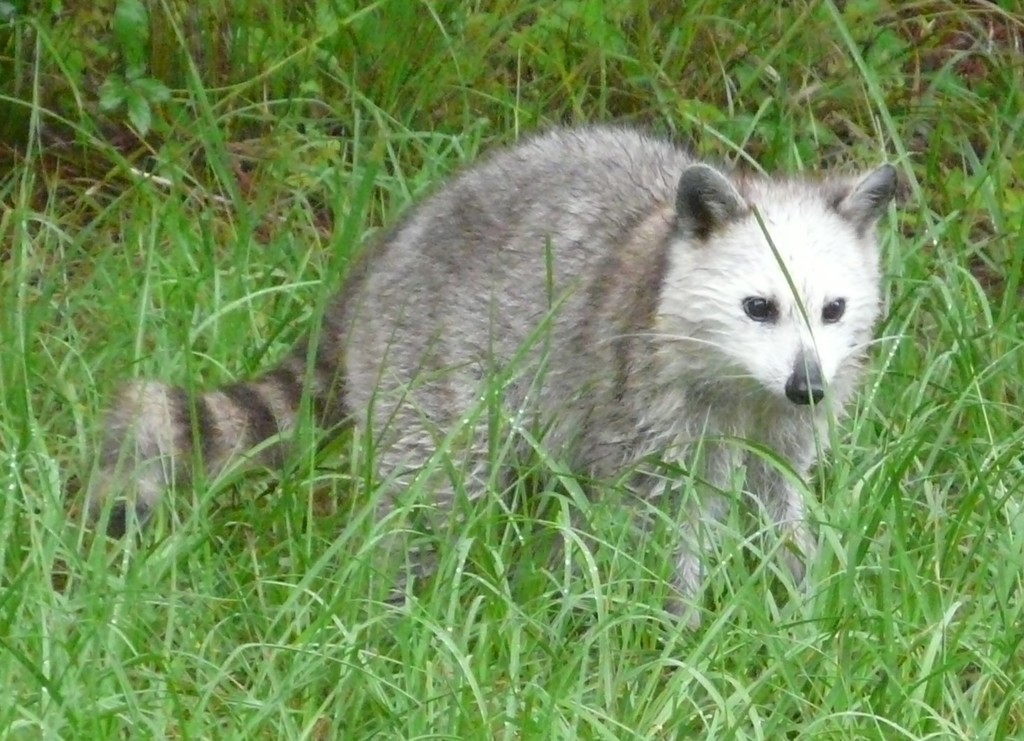
no rights reserved · CC0
Family: Procyonidae · Class: Mammalia · Order: Carnivora
Procyon lotor (Raccoon) is a California animal in the Procyonidae family.
The raccoon is a medium-sized carnivore native to North America, characterized by its distinctive facial markings and dexterous front paws. Adults typically measure 60 to 95 centimeters (24 to 37 inches) in body length, with tails adding an additional 20 to 40 centimeters (8 to 16 inches). Body weight ranges from 5 to 26 kilograms (11 to 57 pounds), with males generally larger than females. The species displays a grizzled gray-brown coat with darker guard hairs, a distinctive black facial mask outlined in white, and alternating dark and light bands on the tail. The front paws are highly sensitive and lack webbing, allowing for precise manipulation of objects. Raccoons occur throughout California, from sea level to elevations exceeding 2,700 meters (8,900 feet) in the Sierra Nevada. The species ranges across all 58 counties and has expanded its distribution since European settlement, aided by human-modified landscapes. Historically native to eastern North America, raccoons were introduced to western regions and have established populations throughout their current range. The species inhabits diverse environments including riparian woodlands, urban areas, agricultural lands, coastal marshes, and mixed forests. Raccoons show strong preference for areas near water sources and demonstrate high adaptability to human-modified habitats. Den sites include tree cavities, rock crevices, abandoned buildings, storm drains, and attics in urban settings. The species requires access to water for foraging and food manipulation behaviors. Raccoons are primarily nocturnal and semi-arboreal, with excellent climbing abilities. They are omnivorous opportunists, consuming fruits, nuts, insects, small mammals, birds, eggs, fish, crayfish, and amphibians. In urban environments, they commonly exploit garbage, pet food, and garden crops. Foraging behavior includes the characteristic washing or dunking of food items in water. Mating occurs from January through March, with females producing litters of 2 to 5 kits after a gestation period of 63 to 65 days. Kits remain with the mother through their first winter, reaching sexual maturity at one year of age. Raccoons maintain stable populations throughout California and are not listed under state or federal endangered species legislation. The species is classified as Least Concern by the International Union for Conservation of Nature. Population densities vary widely based on habitat quality, ranging from less than one individual per square kilometer in natural areas to over 100 individuals per square kilometer in optimal urban habitats. Primary mortality factors include vehicle strikes, disease, and regulated hunting and trapping. The species serves as a reservoir for various pathogens, including rabies virus and raccoon roundworm, though rabies occurrence in California raccoons remains rare. Climate change may affect distribution patterns, particularly in mountainous regions where snow depth influences winter survival.
Classification
Class: Mammalia · Order: Carnivora · Family: Procyonidae
Frequently asked questions
How is Procyon lotor classified?
Procyon lotor belongs to class Mammalia, order Carnivora, family Procyonidae.
What family does Procyon lotor belong to?
Procyon lotor is in the Procyonidae family.
What is Procyon lotor?
The raccoon is a medium-sized carnivore native to North America, characterized by its distinctive facial markings and dexterous front paws.
Is Procyon lotor found in California?
Yes. Procyon lotor is recorded in California in The California Species Project's catalogue.
Related species
Other California species in the same genus, family, or bioregion.
Data from The California Species Project — 14,000+ California species with verified data from CNPS, CDFW, USFWS, and more.