Prodoxus quinquepunctellus
Five-spotted Bogus Yucca Moth
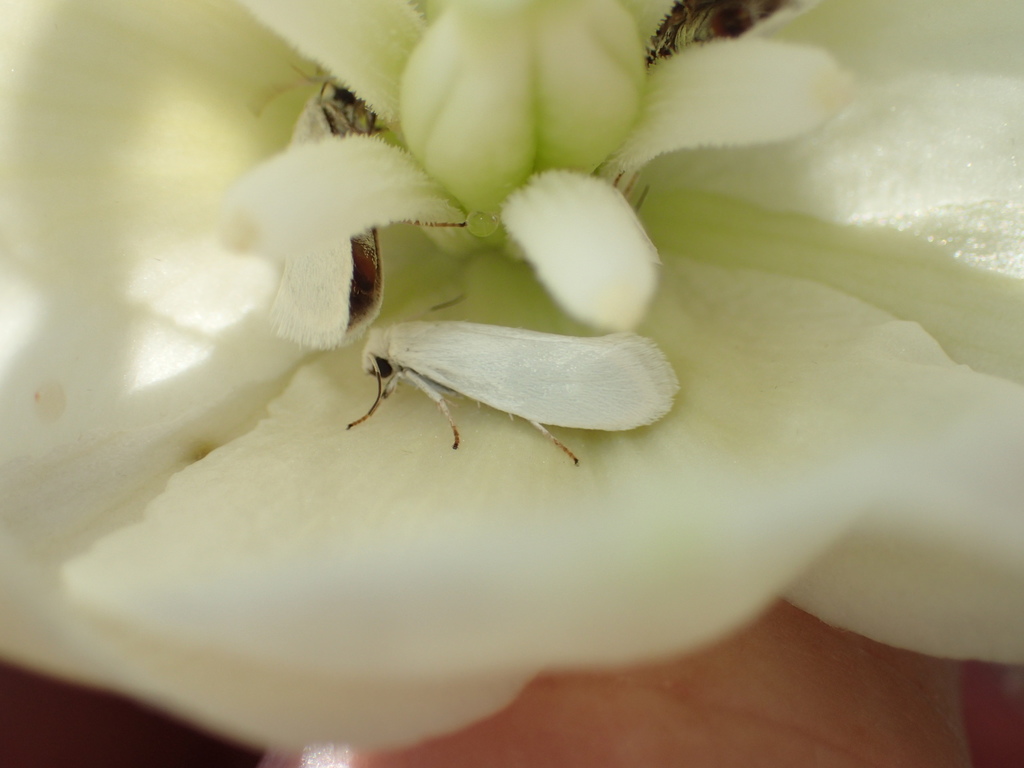
(c) John P Friel, some rights reserved (CC BY) · licence
Family: Prodoxidae · Class: Insecta · Order: Lepidoptera
Prodoxus quinquepunctellus (Five-spotted Bogus Yucca Moth) is a California animal in the Prodoxidae family.
The Five-spotted Bogus Yucca Moth (Prodoxus quinquepunctellus) is a small moth in the family Prodoxidae, measuring approximately 10-15 mm in wingspan. Adults display mottled gray and brown forewings with five distinctive dark spots that give the species its common name. The hindwings are typically pale gray to white with minimal markings. Unlike true yucca moths in the genus Tegeticula, this species lacks the specialized tentacle-like maxillae used for active pollination. The species occupies a broad distribution across the south-central United States, ranging from southern Montana and northwestern Wyoming south through the Great Plains and into the southwestern states. The range extends from southwestern South Dakota and western Nebraska through eastern Colorado, the southwestern half of Kansas, and southwestern Missouri. The distribution continues south through the southeastern half of New Mexico, western and central Texas, and Oklahoma. This extensive range reflects the moth's association with various yucca species across different ecological zones. Five-spotted Bogus Yucca Moths inhabit arid and semi-arid environments where their host plants occur, including grasslands, desert scrublands, and open woodlands. Elevational preferences vary across the range, from low desert elevations in Texas and New Mexico to higher grassland elevations in Montana and Wyoming. The species is closely tied to areas supporting healthy yucca populations, as larvae depend entirely on yucca plants for development. This species exhibits an obligate relationship with multiple yucca species, including Yucca pallida, Y. rostrata (including Y. rigida), Y. glauca, Y. angustissima (including Y. kanabensis), Y. baileyi (including Y. intermedia, Y. navajoa, and Y. standleyi), Y. elata, and Y. harrimaniae (including Y. gilbertiana and Y. neomexicana). Unlike the mutualistic pollinator relationship of true yucca moths, Five-spotted Bogus Yucca Moths are considered commensals or parasites. Females oviposit in yucca flower stalks, seed pods, or stems. Larvae bore into plant tissues, feeding on seeds, developing fruits, or stem pith without providing pollination services in return. This feeding behavior can reduce seed production in host plants. Adult flight periods typically coincide with yucca blooming seasons, varying by latitude and elevation across the species' range. In southern portions of the range, adults may emerge as early as March, while northern populations typically emerge later in spring or early summer. The species completes one generation annually, with larvae overwintering within host plant tissues. Currently, Prodoxus quinquepunctellus lacks formal conservation status designation at federal or state levels. However, populations may face localized pressures from habitat conversion, particularly in agricultural regions where native grasslands and yucca populations have declined. The species' broad host plant range and extensive geographic distribution likely provide some resilience against population-level threats. Long-term conservation depends on maintaining viable yucca populations across the moth's range, as the obligate relationship makes the species vulnerable to factors affecting host plant communities.
Classification
Class: Insecta · Order: Lepidoptera · Family: Prodoxidae
Frequently asked questions
How is Prodoxus quinquepunctellus classified?
Prodoxus quinquepunctellus belongs to class Insecta, order Lepidoptera, family Prodoxidae.
What family does Prodoxus quinquepunctellus belong to?
Prodoxus quinquepunctellus is in the Prodoxidae family.
What is Prodoxus quinquepunctellus?
The Five-spotted Bogus Yucca Moth (Prodoxus quinquepunctellus) is a small moth in the family Prodoxidae, measuring approximately 10-15 mm in wingspan.
Is Prodoxus quinquepunctellus found in California?
Yes. Prodoxus quinquepunctellus is recorded in California in The California Species Project's catalogue.
Related species
Other California species in the same genus, family, or bioregion.
Data from The California Species Project — 14,000+ California species with verified data from CNPS, CDFW, USFWS, and more.