Progne subis
Purple Martin
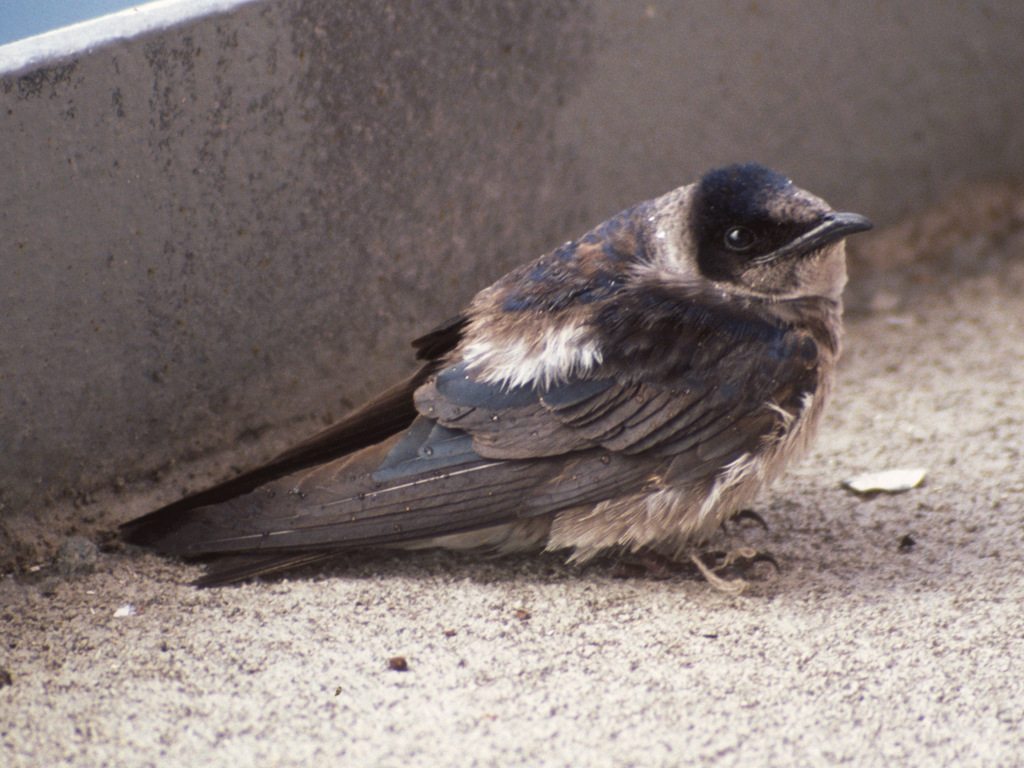
(c) B. Phalan, some rights reserved (CC BY) · licence
Family: Hirundinidae · Class: Aves · Order: Passeriformes
Conservation status: G5 S3
Progne subis (Purple Martin) is a California animal in the Hirundinidae family.
The Purple Martin is North America's largest swallow, with adults measuring 19 to 20 cm (7.5 to 7.9 inches) in length and weighing 45 to 60 grams. Males display iridescent dark blue-purple plumage across the head, back, wings, and tail, with the underparts appearing nearly black. Adult females and juveniles show duller coloration with grayish-brown backs and lighter underparts with variable dark streaking. The species exhibits a distinctive forked tail, broad chest, and relatively short, triangular bill adapted for aerial insectivory. Historically, Purple Martins bred throughout California's Central Valley, coastal regions, and foothills. The species has experienced significant range contraction since the mid-20th century, with current breeding populations largely restricted to scattered locations in the Central Valley, coastal areas from Sonoma County south to Santa Barbara County, and isolated sites in the Sierra Nevada foothills. Year-round residents occur primarily in southern California, while northern populations migrate to South America for winter. Purple Martins inhabit open areas near water sources, including agricultural lands, suburban areas, parks, and woodland edges. The species shows strong preference for elevations below 1,200 meters (4,000 feet) and requires suitable nesting sites with nearby foraging areas. In California, the species has become increasingly dependent on artificial nest structures, including specially designed martin houses and gourds, as natural cavity sites in snags and cliffs have declined. As aerial insectivores, Purple Martins feed exclusively on flying insects captured during flight, including flying ants, beetles, flies, wasps, and flying termites. Contrary to popular belief, mosquitoes comprise less than three percent of their diet. Breeding occurs from March through August, with pairs typically producing one brood per season. Females lay three to five white eggs in nest cavities, with incubation lasting 15 to 16 days. Nestlings fledge after 28 to 35 days but may return to the colony for several weeks. Purple Martins are highly colonial, with successful breeding sites often supporting multiple pairs in close proximity. With a global rank of G5 (secure globally) but California state rank of S3 (vulnerable), Purple Martins face significant conservation challenges within the state. According to the North American Breeding Bird Survey, California populations have declined by approximately 60 percent since 1980. Primary threats include loss of suitable nesting habitat, competition with introduced European Starlings and House Sparrows for cavity sites, pesticide use reducing insect prey availability, and climate change affecting insect emergence patterns. Conservation efforts focus on establishing and maintaining artificial nest structures, habitat restoration, and monitoring programs. The Purple Martin Conservation Association coordinates citizen science efforts to track populations and manage nest sites throughout the species' range. Recovery success depends heavily on continued human management of artificial nesting colonies, as natural nesting sites remain severely limited across most of California's suitable habitat.
Classification
Class: Aves · Order: Passeriformes · Family: Hirundinidae
Conservation status
G5 S3
Frequently asked questions
How is Progne subis classified?
Progne subis belongs to class Aves, order Passeriformes, family Hirundinidae.
What family does Progne subis belong to?
Progne subis is in the Hirundinidae family.
Is Progne subis protected or of conservation concern?
Progne subis carries the following status: G5 S3.
What is Progne subis?
The Purple Martin is North America's largest swallow, with adults measuring 19 to 20 cm (7.5 to 7.9 inches) in length and weighing 45 to 60 grams.
Is Progne subis found in California?
Yes. Progne subis is recorded in California in The California Species Project's catalogue.
Related species
Other California species in the same genus, family, or bioregion.
Data from The California Species Project — 14,000+ California species with verified data from CNPS, CDFW, USFWS, and more.