Progomphus borealis
Gray Sanddragon
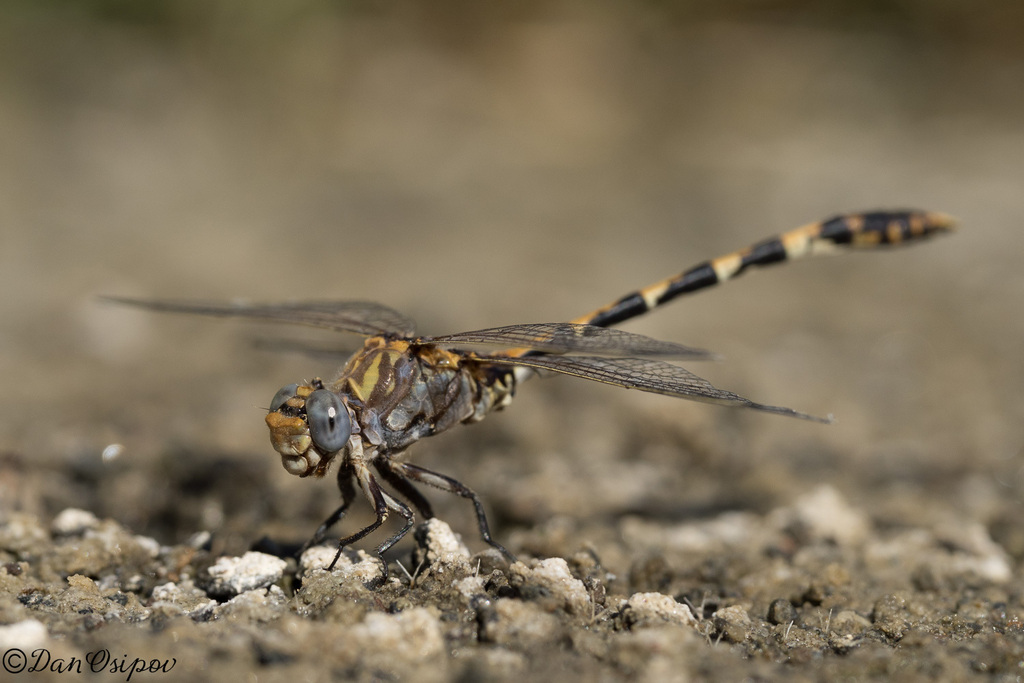
(c) Dan Osipov, some rights reserved (CC BY) · licence
Family: Gomphidae · Class: Insecta · Order: Odonata
Progomphus borealis (Gray Sanddragon) is a California animal in the Gomphidae family.
The Gray Sanddragon is a medium-sized dragonfly belonging to the clubtail family (Gomphidae). Adults typically measure 50 to 65 mm (2.0 to 2.6 inches) in body length with a wingspan of approximately 70 to 80 mm (2.8 to 3.1 inches) (Paulson 2011). The species exhibits the characteristic clubtail morphology with enlarged terminal abdominal segments forming a distinct club shape (Abbott 2005). Males display yellow and black striping on the thorax with gray-brown coloration on the abdomen, while females tend to be more subdued in coloration with brownish tones predominating. The eyes are separated and do not touch, distinguishing clubtails from other dragonfly families (Paulson 2011). Progomphus borealis has a broad distribution across North America, extending from southern Canada through much of the United States. The species occurs throughout most of California, with documented populations in both mountainous and lowland regions. NatureServe assigns this species a global conservation rank of G5, indicating it is secure globally with populations stable across its extensive range. The northern portion of its range extends into Canada, while southern populations reach into Mexico. Gray Sanddragons inhabit flowing water systems including streams, rivers, and occasionally large creek systems. Adults are typically found along wooded waterways with sandy or gravel substrates, which provide suitable conditions for larval development (Dunkle 2000). The species shows preference for areas with moderate current flow and clean water conditions. Elevation ranges from sea level to approximately 2,000 meters (6,500 feet), though most populations occur at lower elevations (Paulson 2011). Riparian vegetation provides important perching sites for adults and shade that helps maintain suitable water temperatures. Adult Gray Sanddragons are active fliers that hunt aerial prey including mosquitoes, midges, and other small flying insects. Males establish territories along stream margins and engage in patrol flights to defend optimal egg-laying sites (Dunkle 2000). Mating occurs during flight, after which females oviposit by dipping their abdomen into flowing water to release eggs. The aquatic larval stage, known as a naiad, burrows into sandy or muddy stream bottoms where it develops over multiple years before emerging as an adult (Abbott 2005). Naiads are predaceous, feeding on aquatic invertebrates and small fish. Adults typically emerge during late spring through early summer, with peak activity occurring from May through July depending on local climate conditions (Paulson 2011). As of December 2025, Progomphus borealis has no federal or state listing status and is considered secure throughout most of its range. The species' wide distribution and adaptability to various stream types contribute to its stable conservation status. However, like many aquatic insects, Gray Sanddragons face potential threats from habitat degradation, water pollution, and stream alteration from development activities. Climate change may affect stream flow patterns and water temperatures, potentially impacting larval development. Conservation efforts focus on maintaining water quality and preserving riparian corridors that support healthy aquatic ecosystems.
Classification
Class: Insecta · Order: Odonata · Family: Gomphidae
Frequently asked questions
How is Progomphus borealis classified?
Progomphus borealis belongs to class Insecta, order Odonata, family Gomphidae.
What family does Progomphus borealis belong to?
Progomphus borealis is in the Gomphidae family.
What is Progomphus borealis?
The Gray Sanddragon is a medium-sized dragonfly belonging to the clubtail family (Gomphidae).
Is Progomphus borealis found in California?
Yes. Progomphus borealis is recorded in California in The California Species Project's catalogue.
Related species
Other California species in the same genus, family, or bioregion.
Data from The California Species Project — 14,000+ California species with verified data from CNPS, CDFW, USFWS, and more.