Prophysaon andersonii
Reticulate Taildropper
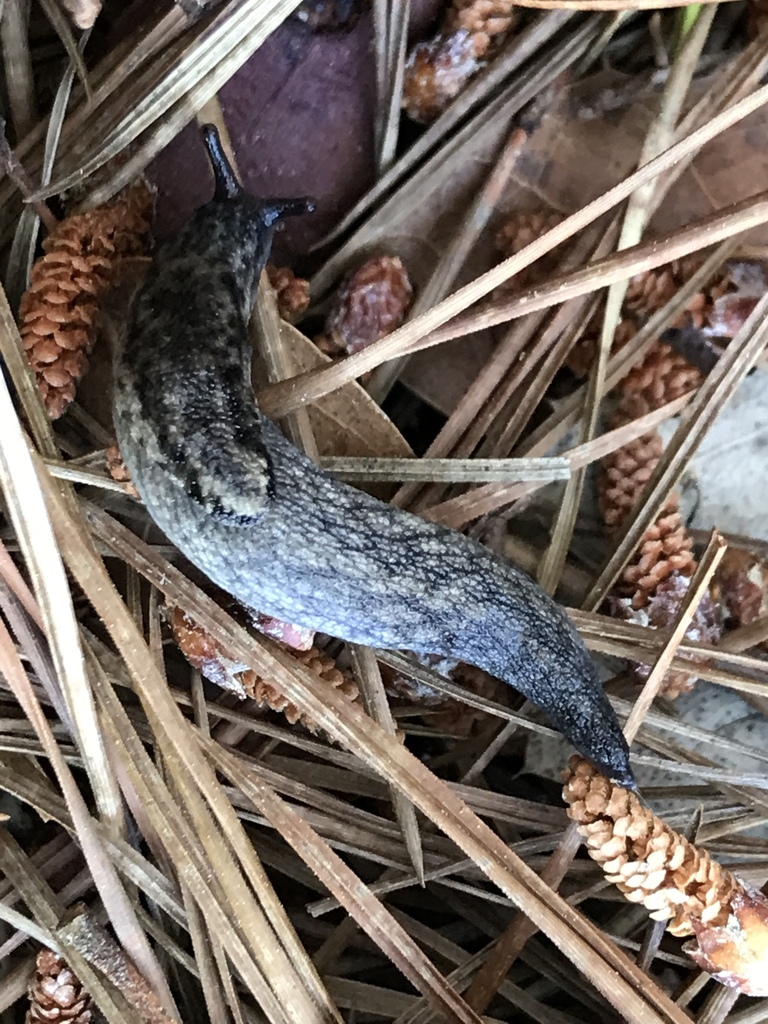
no rights reserved · CC0
Family: Arionidae · Class: Gastropoda · Order: Stylommatophora
Prophysaon andersonii (Reticulate Taildropper) is a California animal in the Arionidae family.
The Reticulate Taildropper (Prophysaon andersonii) is a terrestrial slug belonging to the family Arionidae within the order Stylommatophora. This gastropod mollusk is part of a genus known for its distinctive tail-dropping defensive behavior, where individuals can autotomize their tail when threatened by predators. Like other members of the genus Prophysaon, this species likely possesses a semi-slug morphology with a reduced internal shell covered by the mantle. The common name 'reticulate' suggests the presence of a net-like or mesh pattern on the body surface, though detailed morphological descriptions are not well documented in available literature. Adult size and specific coloration patterns have not been comprehensively described in accessible scientific sources. The genus Prophysaon is distinguished from other slug families by anatomical features including the position of the breathing pore and reproductive openings. According to NatureServe Explorer, P. andersonii was discovered in the Ktunaxa Traditional Territory in southeastern British Columbia, extending from near the Canada-US border north to approximately 50 kilometers. The species' range in relation to California is not clearly established in current databases, though other Prophysaon species are known from Pacific Northwest forests. The specific habitat requirements for P. andersonii have not been well documented. Other members of the genus typically inhabit moist forest environments, often found under logs, in leaf litter, or among moss and decaying organic matter in coniferous and mixed forests. These slugs generally require high humidity levels and are most active during periods of moisture. Behavioral and ecological information specific to P. andersonii is limited in available scientific literature. Members of the genus Prophysaon are generally detritivores, feeding on decomposing plant material, fungi, and organic debris. Reproduction likely follows the hermaphroditic pattern typical of terrestrial gastropods, with individuals capable of both egg production and sperm transfer. Seasonal activity patterns and specific dietary preferences have not been documented for this species. The conservation status of P. andersonii is not currently established in major databases, with no federal or state listing designations found. The species does not appear in current USFWS ECOS databases or California Department of Fish and Wildlife listings as of December 2025. Limited distribution data and taxonomic uncertainty may contribute to its absence from formal conservation assessments. Scientific documentation for this species remains limited. The information presented here is based on available sources including NatureServe Explorer and taxonomic databases. If you have additional verified information about this species' biology, distribution, or ecology, please contact us to help improve this species account.
Classification
Class: Gastropoda · Order: Stylommatophora · Family: Arionidae
Frequently asked questions
How is Prophysaon andersonii classified?
Prophysaon andersonii belongs to class Gastropoda, order Stylommatophora, family Arionidae.
What family does Prophysaon andersonii belong to?
Prophysaon andersonii is in the Arionidae family.
What is Prophysaon andersonii?
The Reticulate Taildropper (Prophysaon andersonii) is a terrestrial slug belonging to the family Arionidae within the order Stylommatophora.
Is Prophysaon andersonii found in California?
Yes. Prophysaon andersonii is recorded in California in The California Species Project's catalogue.
Related species
Other California species in the same genus, family, or bioregion.
Data from The California Species Project — 14,000+ California species with verified data from CNPS, CDFW, USFWS, and more.