Protonotaria citrea
Prothonotary Warbler
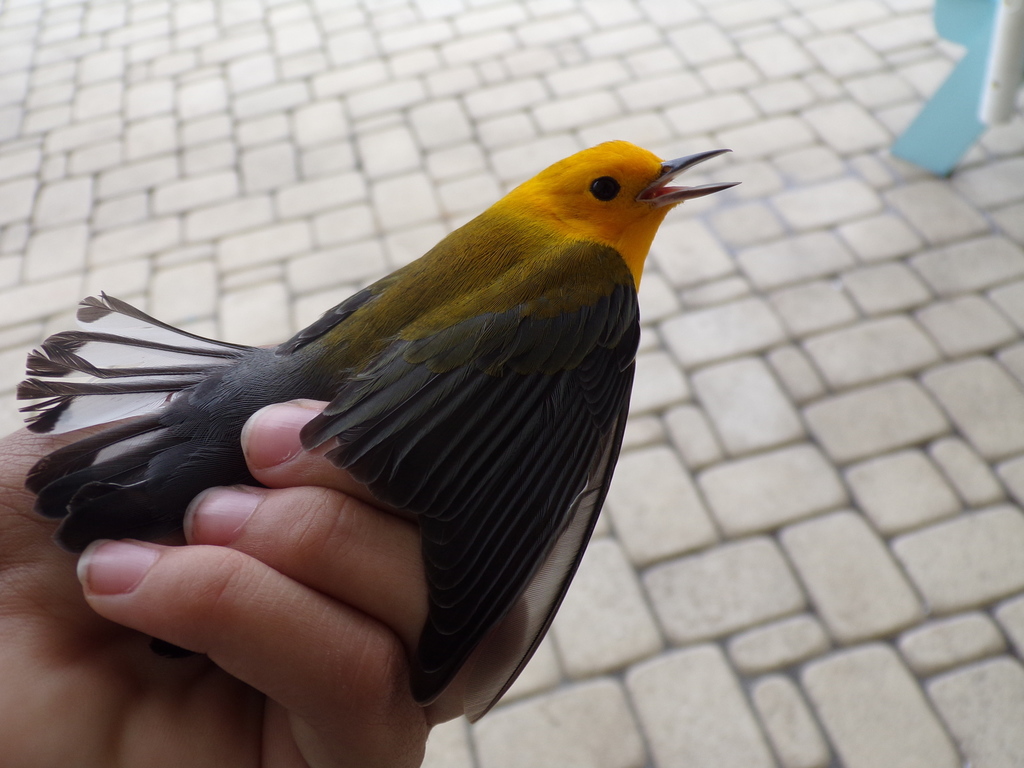
(c) chloe ⋆˚꩜。, some rights reserved (CC BY-SA) · licence
Family: Parulidae · Class: Aves · Order: Passeriformes
Protonotaria citrea (Prothonotary Warbler) is a California animal in the Parulidae family.
The Prothonotary Warbler is a medium-sized songbird measuring 12.5 to 14 cm (4.9 to 5.5 inches) in length with a wingspan of 22 cm (8.7 inches). Adults weigh 12 to 14 grams. Breeding males display bright golden-yellow heads and underparts, olive-green backs, and blue-gray wings and tail. Females are similar but duller, with less vibrant yellow coloration. Both sexes have dark eyes, straight pointed bills, and white undertail coverts. The species lacks wing bars, distinguishing it from other yellow warblers. The Prothonotary Warbler breeds primarily in the eastern United States, from southern New York and southern Minnesota south to eastern Texas and northern Florida. The species is extremely rare in California, occurring only as an occasional vagrant during migration. California Department of Fish and Wildlife records indicate fewer than 50 documented occurrences in the state, primarily along the coast and in desert oases during fall migration from August through October. Most California records come from Point Reyes, the Farallon Islands, and southeastern desert areas including the Salton Sea region. Breeding habitat consists of forested wetlands, wooded swamps, and riparian forests with standing dead trees or nest cavities. The species requires mature deciduous or mixed forests adjacent to water, including bottomland hardwood forests, cypress swamps, and wooded areas along streams and rivers. Nest sites are typically 1 to 8 meters above ground in natural tree cavities, old woodpecker holes, or artificial nest boxes. In California, vagrants are typically found in riparian woodlands, park settings with water features, and desert oases. Prothonotary Warblers are insectivorous, feeding primarily on beetles, flies, caterpillars, and other arthropods during the breeding season. They also consume fruits and seeds, particularly during migration and winter. Foraging occurs by gleaning insects from bark, leaves, and branches, and occasionally by flycatching. The species is monogamous during the breeding season, with males establishing territories and attracting females through song. Females lay 3 to 7 eggs in moss-lined cavities, incubating them for 12 to 14 days. Young fledge after 10 to 11 days. The species typically produces one brood per year, occasionally two in southern portions of the range. The Prothonotary Warbler is not federally listed but is considered a species of conservation concern due to habitat loss and degradation. According to the North American Breeding Bird Survey, populations declined by approximately 26 percent between 1966 and 2019. Primary threats include loss of bottomland hardwood forests, nest site competition with House Wrens and other cavity-nesting species, and habitat degradation on wintering grounds in Central and South America. Climate change may further impact breeding and wintering habitats. In California, the species' vagrant status means it faces no specific conservation threats within the state.
Classification
Class: Aves · Order: Passeriformes · Family: Parulidae
Frequently asked questions
How is Protonotaria citrea classified?
Protonotaria citrea belongs to class Aves, order Passeriformes, family Parulidae.
What family does Protonotaria citrea belong to?
Protonotaria citrea is in the Parulidae family.
What is Protonotaria citrea?
The Prothonotary Warbler is a medium-sized songbird measuring 12.5 to 14 cm (4.9 to 5.5 inches) in length with a wingspan of 22 cm (8.7 inches).
Is Protonotaria citrea found in California?
Yes. Protonotaria citrea is recorded in California in The California Species Project's catalogue.
Related species
Other California species in the same genus, family, or bioregion.
Data from The California Species Project — 14,000+ California species with verified data from CNPS, CDFW, USFWS, and more.